
Discover Jedlnia-Letnisko: Reservoir and Wooden Architecture
Accommodation in Jedlnia-Letnisko
An artificial reservoir, protected old-growth trees and several styles of wooden architecture give Jedlnia-Letnisko a multifaceted character. When choosing a destination, you might consider whether the landscape, architectural history or an annual festival in May best suits the purpose of your trip.
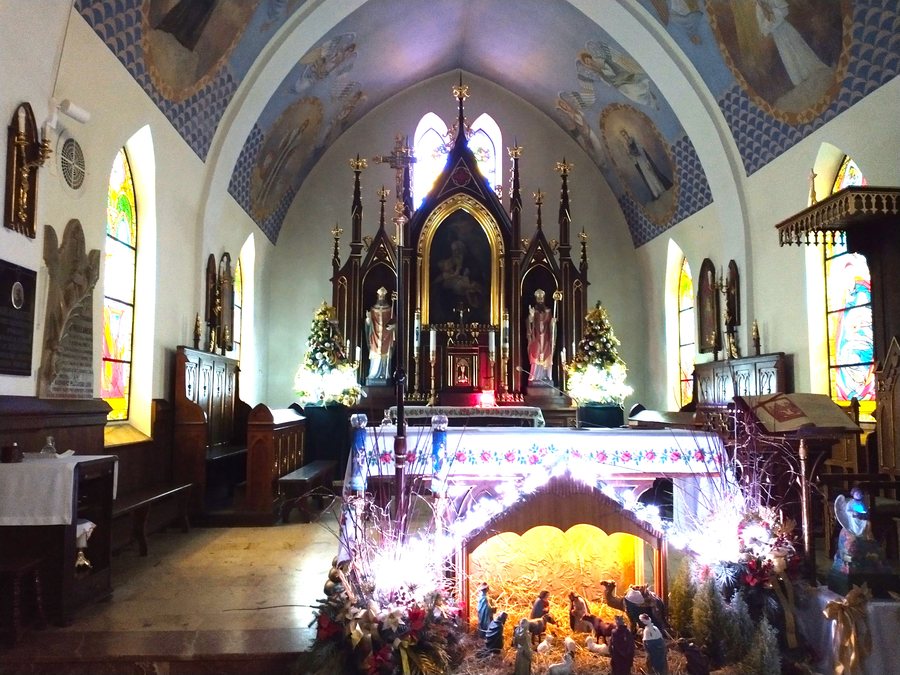
Jedlnia-Letnisko at a glance
- The reservoir, created on the Gzówka in 1976, covers 40 ha; its shores have sandy and grassy beaches.
- The “Jedlnia” nature reserve protects old-growth trees on the reservoir’s right bank.
- The Church of St Joseph is a wooden church in the Zakopane style.
- The Święto Polskiej Niezapominajki takes place every year in mid-May at the Leśny Ośrodek Edukacyjny im. red. Andrzeja Zalewskiego.
What shapes the landscape around the reservoir?
The reservoir was artificially created on the Gzówka in 1976 and covers an area of 40 ha. These details describe both its origins and its size. Sandy and grassy beaches line its shores, while the “Jedlnia” nature reserve protects old-growth trees on the right bank. The water and protected woodland are thus two distinct landscape features directly associated with the reservoir.
If you are interested in nature and landscape, it is worth distinguishing between these features: the beaches describe the character of the shoreline, while the nature reserve focuses on the old-growth trees on the right bank. Together, they create a picture shaped by both an artificial body of water and protected natural vegetation. The area of 40 ha adds a specific measure of its size.
What does the wooden architecture tell us about the town’s history?
Several distinct architectural themes can be found side by side in Jedlnia-Letnisko. The Church of St Joseph is a wooden church in the Zakopane style. Another historical trace is the summer houses on present-day Ulica Nadrzeczna: they were built around the turn of the 20th century, modelled on the Świdermajer villas from the Warsaw area.
One villa can be dated precisely: one of the villas more than a hundred years old that still survive was built in 1898 by Czesław Golczewski. These provide different reference points for comparing the architectural history: the church and its style, the early summer houses and their Warsaw-area inspiration, and the villa with a recorded construction date and builder. They do not tell the same story, but offer different ways to explore the townscape.
If architecture is your focus, you can distinguish between the terms Zakopane style and Świdermajer rather than treating them as a single style. To place the buildings in time, it is also helpful to distinguish between the summer houses built around the turn of the century and the villa built in 1898. This lets you explore the architectural history through specific examples without conflating their distinct influences.
When does the annual festival fit into your travel plans?
The Święto Polskiej Niezapominajki takes place every year in mid-May at the Leśny Ośrodek Edukacyjny im. red. Andrzeja Zalewskiego. This makes the festival a seasonal point of reference if you would like to plan your stay around the event. The recurring time of year is a useful starting point; also check the dates for the particular edition before finalising your trip.
The event adds a recurring date in the calendar to the landscape and architecture themes. This gives you different possible focuses for your stay: the shoreline and woodland landscape, the wooden architecture or the festival in May.
Discover more destinations: Jedlińsk, Pionki, Waliny, Mleczków, Iłża, Skaryszew, Jedlanka Stara, Radom.
FAQ
When does the Święto Polskiej Niezapominajki take place?
The festival takes place every year in mid-May at the Leśny Ośrodek Edukacyjny im. red. Andrzeja Zalewskiego. Check the dates for the particular edition when planning your trip.
What style is the Church of St Joseph?
It is a wooden church in the Zakopane style.
What does the “Jedlnia” nature reserve protect?
It protects old-growth trees on the reservoir’s right bank.
For the broader travel guide: Radom.

