
Sokołów Podlaski: City History and Culture
Accommodation in Sokołów Podlaski
Sokołów Podlaski offers several distinct ways to explore its history: a route with 15 panels, a route to preserved Uniate churches in several localities, and the museum’s interpretation of the Szlak Wielkiego Gościńca Litewskiego. When planning your stay, you can choose a theme to start with: city history, religious history or cultural interpretation.
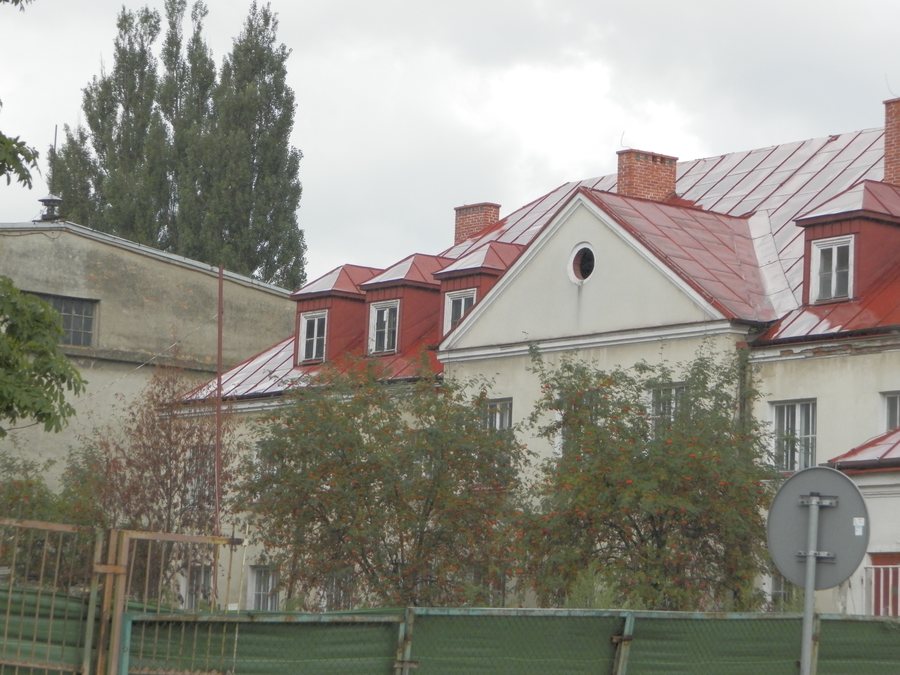 File:Cukrownia Elżbietów budynek biurowy 01.JPG
Photo: Pogorulez via Wikimedia Commons, CC BY-SA 3.0 pl
Quick Facts about Sokołów Podlaski
- The Sokołowski Szlak Historyczny uses 15 panels to present events from almost six centuries of the city’s history.
- The Szlak Unitów Sokołowskich begins at Skwer Unitów Podlaskich and leads to places with preserved Uniate churches.
- The Muzeum Wielkiego Gościńca Litewskiego „Stacja Sokołów“ presents the city’s heritage in the context of the history of this route.
- A wooden wayside chapel with a folk-style figure of Saint John of Nepomuk was built in 1806.
- The palace and park of Prince Michał Kleofas Ogiński recall his ownership of Przeździatka from 1788 to 1808.
Which historical routes shape the themes?
The Sokołowski Szlak Historyczny uses its 15 panels to guide visitors through events from almost six centuries of the city’s history. It focuses on the city’s past and dramatic periods in the lives of the city and its residents. The route thus offers a local historical perspective that explicitly includes both the city and its people.
The Szlak Unitów Sokołowskich takes a different approach. It begins at Skwer Unitów Podlaskich, where their Orthodox church once stood, and leads to places with preserved Uniate churches in Rogów, Szkopy, Sawice, Gródek, Seroczyn and Grodzisk. The route can therefore be followed via a specific starting point and several destinations. By comparison, the Sokołowski Szlak Historyczny presents events through its panels. When choosing cultural themes for your stay, you can therefore distinguish between a panel route focused on city history and a route to churches in several localities.
What cultural themes does Stacja Sokołów present?
The Muzeum Wielkiego Gościńca Litewskiego „Stacja Sokołów“ presents the city’s heritage in the context of the history of the Szlak Wielkiego Gościńca Litewskiego. This connection to the named route adds a second cultural perspective to the local history of the city. In 2022, visitors viewed an exhibition and took part in calligraphy workshops. These activities illustrate two different ways of engaging with culture that year: an exhibition and hands-on writing.
What historical landmarks can visitors explore?
The wooden wayside chapel in Sokołów Podlaski features a folk-style figure of Saint John of Nepomuk; it was built in 1806. Another historical connection leads to Przeździatka, a district of Sokołów Podlaski: the palace and park of Prince Michał Kleofas Ogiński recall that he owned the district from 1788 to 1808. The dates therefore refer to different things: 1806 is the year the chapel was built, while 1788 to 1808 marks Ogiński’s period of ownership.
If you want to plan your trip around specific historical themes, these distinctions can help you choose. The routes each present history in their own way, while the chapel, palace and park offer further clearly identified points of interest.
Discover more travel destinations: Sterdyń, Krzemień-Wieś, Debe, Wyszomierz.
FAQ
What period does the Sokołowski Szlak Historyczny cover?
The route uses 15 panels to present events from almost six centuries of the city’s history and recalls the past and dramatic periods in the lives of the city and its residents.
Where does the Szlak Unitów Sokołowskich lead?
It begins at Skwer Unitów Podlaskich in Sokołów Podlaski and leads to places with preserved Uniate churches in Rogów, Szkopy, Sawice, Gródek, Seroczyn and Grodzisk.
What do the dates 1806 and 1788 to 1808 refer to?
1806 is the year the wooden wayside chapel with the figure of Saint John of Nepomuk was built. The years 1788 to 1808 refer to Michał Kleofas Ogiński’s ownership of Przeździatka.
For the broader travel overview: Sokołowski.

