
Sterdyń
Accommodation in Sterdyń
Sterdyń offers travelers a cultural focus shaped by architectural history, religious art, and places of remembrance. If you are considering whether the town matches your interests, here are some specific points to consider: from the late Baroque parish church to the palace history and monuments with diverse historical associations.
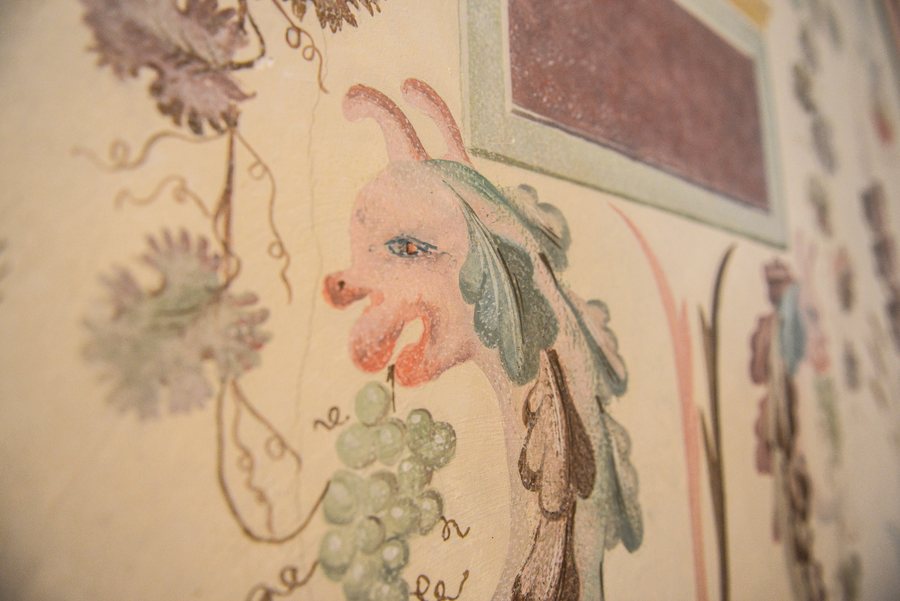 Polichromia w Pałacu Ossolińskich w Sterdyni
Photo: EmiliaKrasińska via Wikimedia Commons, CC BY-SA 4.0
Polichromia w Pałacu Ossolińskich w Sterdyni
Photo: EmiliaKrasińska via Wikimedia Commons, CC BY-SA 4.0
Sterdyń facts at a glance
- The Church of St. Anne was built between 1779 and 1783 in the late Baroque style.
- The palace and park complex dates from the turn of the 17th and 18th centuries; the Ossoliński Palace is dated to the 18th century.
- Sterdyń has wayside shrines dating from the late 18th century and 1856.
- Several monuments commemorate historical events and people, including the emancipation of the peasants in 1863.
What architectural history can you encounter in Sterdyń?
The Church of St. Anne is a prominent point of reference for the town’s architectural history: its late Baroque building was constructed between 1779 and 1783. The main altar is another notable feature. It is adorned with sculptures of Saints Joseph, Matthew, Jude Thaddeus, and James the Greater. The church thus brings both its period of construction and its artistic decoration into focus.
The palace’s history offers another historical perspective. The palace and park complex in Sterdyń dates from the turn of the 17th and 18th centuries. The Ossoliński Palace is dated to the 18th century and underwent extensive alterations in the 19th century. The former Baroque residence is recorded as having been extended and remodeled in the early 19th century to a design by Jakub Kubicki for Stanisław Ossoliński. These details provide different chronological reference points: the creation of the complex, the dating of the palace, and the later remodeling of the residence.
Which wayside shrines and monuments shape the town’s history?
Two wayside shrines each make their own mark: one dates from the late 18th century and bears a sculpture of Saint Florian. Another was made in 1856 and depicts the Immaculate Conception of Mary. Together, they show different religious figures; their respective dates help identify them as distinct historical testimonies.
The monuments commemorate different events and groups. A monument erected in 1963 commemorates the emancipation of the peasants by the National Government in 1863 and was installed on the centenary of the event. A large granite boulder is dedicated to the soldiers of the Home Army (Armia Krajowa). A memorial stone with a plaque in a green space on ul. Tadeusza Kościuszki also commemorates eleven residents of Paulinów and Stary Ratyniec. They were murdered during the war because they had rescued Jews. This site adds a different, personal dimension to local remembrance.
Which themes suit your travel interests?
If you are particularly interested in architecture, the church and palace history offer different chronological reference points. Art enthusiasts can focus on the sculptures and figures mentioned above. Those interested in history and remembrance will find several monuments with distinct dedications and stories. This makes it possible to assess Sterdyń through specific cultural themes without conflating its architectural history with its memorial sites.
Discover more destinations: Debe, Krzemień-Wieś, Wyszomierz, Sokołów Podlaski.
FAQ
Which saints are depicted on the parish church’s main altar?
The main altar of the Church of St. Anne is adorned with sculptures of Saints Joseph, Matthew, Jude Thaddeus, and James the Greater.
What do the monuments in Sterdyń commemorate?
One monument commemorates the emancipation of the peasants in 1863, and a granite boulder is dedicated to the soldiers of the Home Army (Armia Krajowa). A memorial stone commemorates eleven murdered residents of Paulinów and Stary Ratyniec who had rescued Jews.
How is the palace history dated?
The palace and park complex dates from the turn of the 17th and 18th centuries. The Ossoliński Palace dates to the 18th century and underwent extensive alterations in the 19th century.
For the broader travel overview: Sokołowski.

