
Zaborów: Church, Palace and Kampinos Routes
Accommodation in Zaborów
On the southern edge of Puszcza Kampinoska, Zaborów offers two distinct starting points for planning a trip: a long history of the church and the town, and routes connected with the palace and park complex. Historical dates and route information can help you explore these topics in more detail.
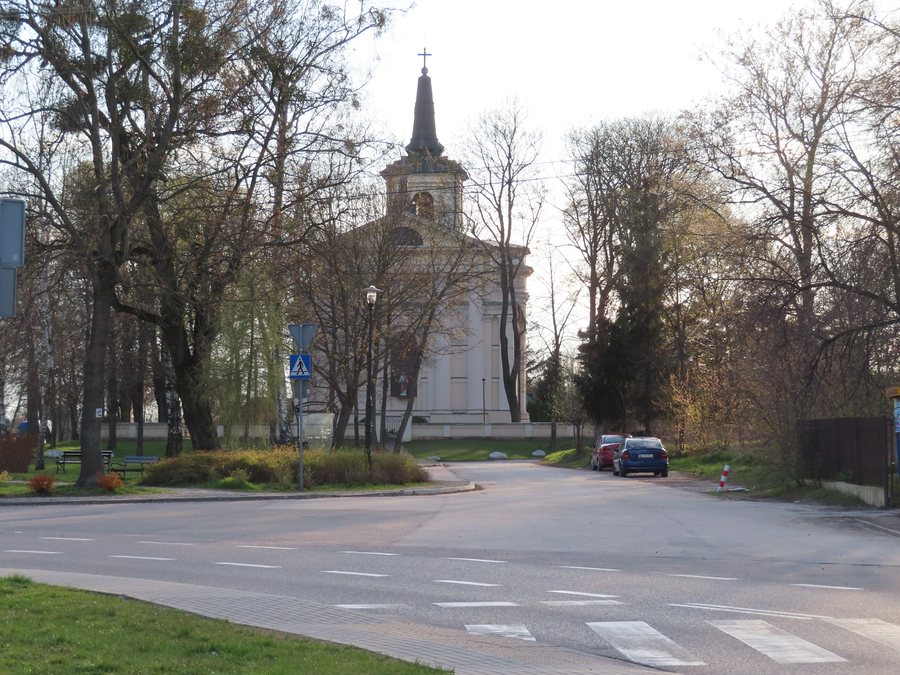
Zaborów at a glance
- Zaborów is located on the southern edge of Puszcza Kampinoska.
- The present-day church was built in 1791 to a design by Hilary Szpilowski and was finally consecrated in 1909.
- The parish was established in 1465; the first wooden church dates from that time.
- The eclectic palace was built between 1901 and 1903 to a design by Franciszek Lilpop and Karol Jankowski.
- The Dąbrowa Leśna–Kampinos route and the Kampinoski Szlak Rowerowy pass by the palace and park complex.
What story does the church tell?
The church’s history goes back further than the present-day building. The parish in Zaborów was established in 1465; the first wooden church dates from that time. In 1661, Zofia Kryska z Lubieńskich, Chancellor of the Crown, endowed another wooden church. It burned down in 1700. Another church was built that same year and was demolished toward the end of the 18th century. This clearly distinguishes the early churches from the present-day church, which was built later.
The present-day church was built in 1791 to a design by Hilary Szpilowski and endowed by Karolina and Placyd Izbińscy. Renovations took place in 1839 and 1905, followed by its final consecration in 1909. This sequence distinguishes the construction period, later work and consecration, giving the town’s history several points of reference.
Mother Teresa is also connected with Zaborów: she prayed in the church in 1983 and founded a novitiate of her religious order in Zaborów. These two connections complement the building’s history with the religious history of the town; they relate both to the church building and to the religious order.
What characterizes the palace in Zaborów?
Another architectural landmark is the eclectic palace. It was built between 1901 and 1903 to a design by Franciszek Lilpop and Karol Jankowski. Its construction therefore took place considerably later than that of the present-day church, built in 1791. Exploring Zaborów through its architecture allows you to compare two different periods of construction and types of building: the church and the palace. Each design is attributed to specific architects, so the two building histories can be considered separately.
Which routes pass by the palace and park complex?
The palace and park complex lies on the Dąbrowa Leśna–Kampinos route. This route is listed as 48.9 kilometres long and taking 13 hours. The complex is also on the Kampinoski Szlak Rowerowy. This cycling route runs between Laski, polana Opaleń, and Tułowice and is listed as 74.8 kilometres long.
The information answers different planning questions: both a distance and a duration are given for the Dąbrowa Leśna–Kampinos route, while the Kampinoski Szlak Rowerowy is described by its route and length. The 13 hours and 74.8 kilometres are therefore different kinds of route information. If you plan to include either route in your trip, check the current route conditions beforehand.
Discover more destinations: Bronisze, Mory, Kępiaste, Klaudyn, Zalesie, Święcice, Izabelin C, Duchnice.
FAQ
When was the present-day church in Zaborów built?
It was built in 1791 to a design by Hilary Szpilowski and was finally consecrated in 1909.
What historical connection does Mother Teresa have with Zaborów?
Mother Teresa prayed in the church in 1983 and founded a novitiate of her religious order in Zaborów.
What route information is available for the palace and park complex?
The Dąbrowa Leśna–Kampinos route is listed as 48.9 kilometres long and taking 13 hours. The Kampinoski Szlak Rowerowy runs between Laski, polana Opaleń, and Tułowice and is 74.8 kilometres long.
For the broader travel overview: Warsaw West.

