
Węgrowski – Church Art and the Liwiec Valley
Accommodation in Węgrowski
Węgrów gives Węgrowski a distinct cultural focus: frescoes, sacred buildings and a wooden Lutheran church appeal to different architectural and historical interests. The Zalew nad Liwcem also offers outdoor recreation.
Węgrowski at a glance
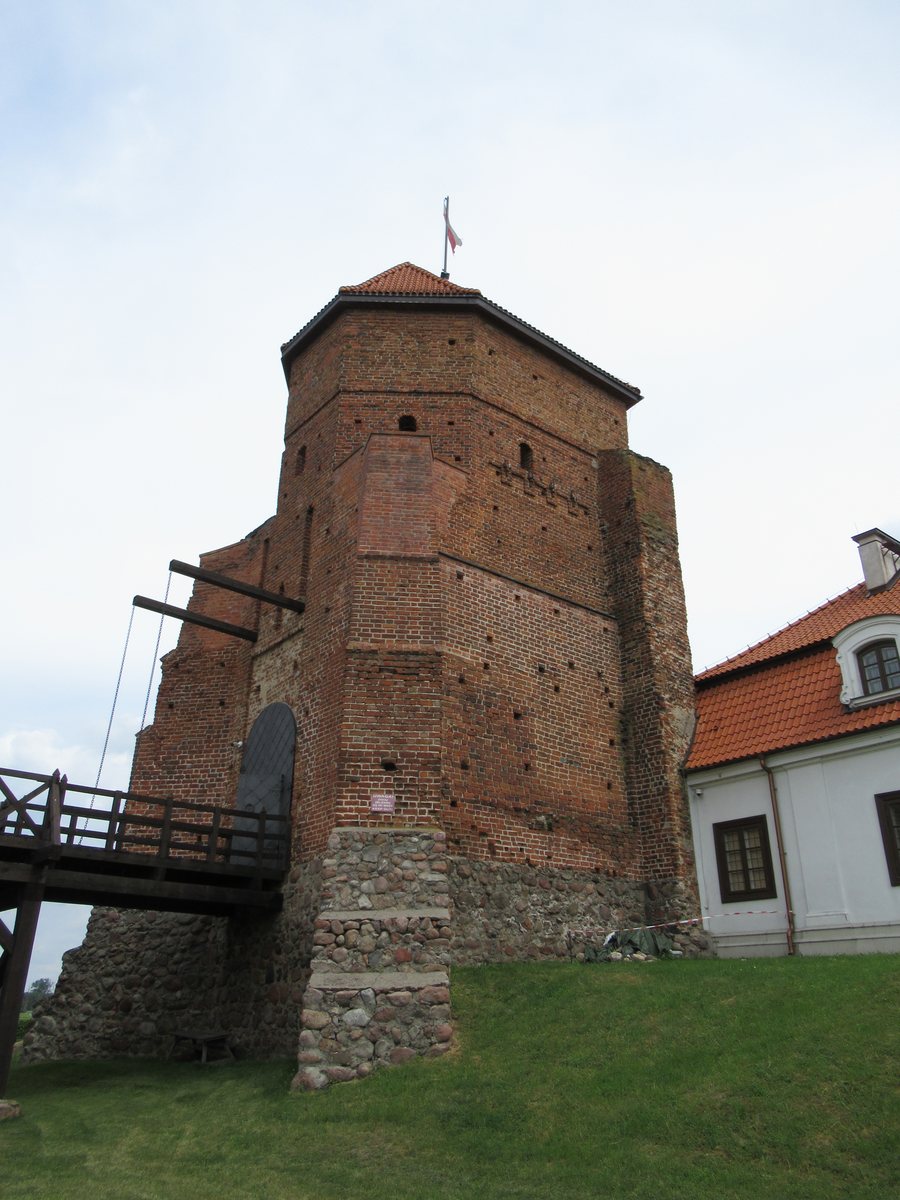
Węgrów lies in the Liwiec Valley, where the river separates the historic regions of Masovia and Podlasie. The town is considered the heart of the Liwiec Valley; the river is also a boundary between Masovia and Podlasie. Notable cultural highlights include Węgrów’s churches and frescoes, a Baroque house on the market square and a 17th-century wooden Lutheran church.
What church art defines Węgrów?
The collegiate church in Węgrów was elevated to the status of a minor basilica on 4 April 1997. The Minor Basilica of the Assumption of the Blessed Virgin Mary is the oldest building in Węgrów. Its sacristy houses the Twardowski Mirror, which dates from the second half of the 16th century. This means that the history of the building and its objects, which you can explore at this site, spans several centuries.
The frescoes also offer a tangible point of interest for a trip focused on cultural history. Between 1706 and 1709, Michał Anioł Palloni created nine large wall paintings in Węgrów’s parish church. Nine more of his frescoes are in the Reformed Franciscan church. The associated Reformed Franciscan complex consists of a monastery and the Church of Saints Peter of Alcántara and Anthony of Padua. This makes it possible to explore different sacred sites and their respective interiors as distinct themes.
What architectural history can you discover?
A wooden Lutheran church made of larch stands in the Protestant cemetery in Węgrów. Built in 1679, it is considered the oldest wooden architectural monument in the area. Its materials and date of construction give it a different character from the city’s frescoes and stone sacred buildings. Visitors particularly interested in historic wooden architecture will find a distinctive highlight here.
Another building with a clear connection to the town is the Gdański House: this Baroque building dates from the mid-18th century and stands on the north side of the market square. Węgrów’s Evangelical Church also preserves the only original instrument by M. R. Müller in central Poland. Podlasie’s bell-founding tradition is also of interest to those exploring the region’s craft history: it dates back to the mid-19th century, when the first bell foundry was established in Węgrów.
What does the Zalew nad Liwcem offer?
The Zalew nad Liwcem has ten fishing spots and piers. For outdoor activities, there are 2.3 kilometres of cycling paths and sports courts for volleyball, basketball and badminton. Playgrounds and picnic areas complete the offering. Alongside the cultural highlights, visitors can choose from specific options for fishing, cycling, sports and taking a break outdoors.
Which of these highlights suits your trip depends on whether you are most interested in church art and architectural history, wooden architecture or the facilities at the Zalew. If you would like to compare other places in Węgrowski individually, you can also visit the pages for Baczki, Grębków, Węgrów, Łochów, Korytnica and Ugoszcz. For a broader destination search, you can also explore Warsaw and Sochaczewski.
FAQ
What role does the Liwiec play for Węgrów?
Węgrów lies in the Liwiec Valley. The river separates the historic regions of Masovia and Podlasie.
Which frescoes did Michał Anioł Palloni create in Węgrów?
Between 1706 and 1709, he created nine large wall paintings in the parish church. He painted nine more frescoes in the Reformed Franciscan church.
When was the wooden Lutheran church built?
The wooden Lutheran church in the Protestant cemetery was built of larch in 1679.
What facilities are available at the Zalew nad Liwcem?
There are ten fishing spots, piers, 2.3 kilometres of cycling paths, children’s playgrounds, sports courts for volleyball, basketball and badminton, and picnic areas.
For the broader travel overview: Masovia.

