
Ugoszcz
Accommodation in Ugoszcz
Ugoszcz combines a rich church history with its location in the Nadbużański Landscape Park. The history of the local parish church and the protected landscape offer two concrete points of reference to help you put the place in context for your trip.
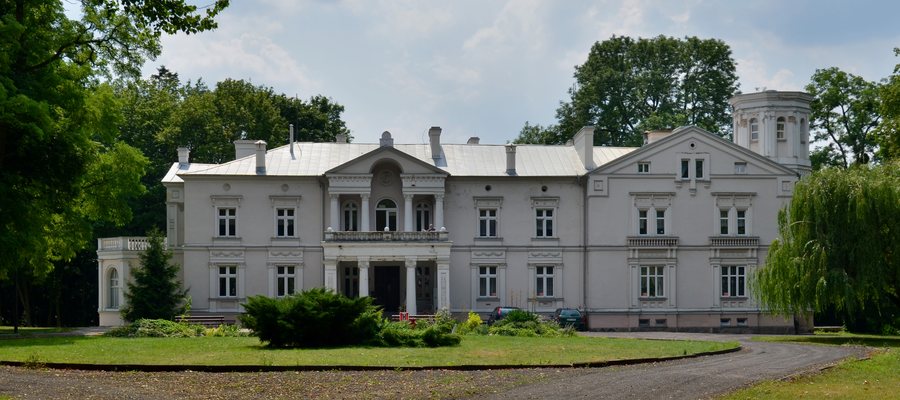
Ugoszcz at a glance
- Ugoszcz is located in the Nadbużański Landscape Park.
- The first written record of the village dates to 1436.
- The parish church is listed in the monument register under number A-830.
- An officially listed route passes through Ugoszcz, among other places.
What does the church’s history tell us about Ugoszcz?
The first written record of Ugoszcz dates to 1436. Several events from 1919 are also recorded in connection with the development of the local parish: a temporary, rectangular wooden chapel made of poplar wood was built that year. It had a thatched roof and a fieldstone foundation. Initially, it served as a pastoral outstation of the Miedzna parish; the first Mass was celebrated there on April 20, 1919.
A separate chapter in the history followed in 1923. By decree dated July 30, an independent parish was established in Ugoszcz, becoming independent on September 1 of the same year. The new church in Ugoszcz, dedicated to Christ the King, was consecrated on September 13, 1931. The dates mark different stages: the first Mass in the temporary chapel, the establishment of the parish, and later the consecration of the new church.
What details characterize the church and churchyard?
The church’s polychrome decoration was created by artist Jan Molga in 1977. The subjects depicted include Saint Maximilian, Our Lady of Fatima, and the Assumption of Mary. Those interested in religious art will find specific subjects here, distinct from the parish’s historical dates.
The church has a bell tower, consecrated in 2009. It contains two old bells; one is named “Antoni.” The churchyard also features a memorial cross to the holy missions and a chapel or wayside shrine depicting Christ at Rest. The parish church is listed in the monument register under number A-830.
What is the landscape around Ugoszcz like?
Ugoszcz is located within the Nadbużański Landscape Park. The park was established to protect the natural Bug River valley. Characteristic features of the valley include the river’s meandering course and its numerous oxbow lakes and side channels. River and floodplain landscapes are also prominent features of the wider region: the Ugoszcz River is part of the park.
The Nadbużański Landscape Park also preserves a landscape that has undergone little change, where agricultural land and wooded areas form a mosaic. Thus, natural river features and a varied cultural landscape sit side by side in the park. A Scots pine (Pinus sylvestris) in Ugoszcz is also designated a natural monument.
Which route is listed for orientation?
An officially listed route passes through Węgrów, Miedzna, Wrotnów, Międzyleś, Ugoszcz, and Rostki. The sequence lists the places included on this route. If you would like to compare pages for other places, you can find Łochów, Korytnica, Węgrów, Grębków, and Baczki here.
FAQ
When was Ugoszcz first mentioned in writing?
The first written record of Ugoszcz dates to 1436.
What natural features characterize the Nadbużański Landscape Park?
The park protects the natural Bug River valley, with its meandering riverbed, numerous oxbow lakes, and side channels. Its landscape combines agricultural land and wooded areas in a mosaic.
What subjects are shown in the church’s decoration?
The polychrome decoration created by Jan Molga in 1977 depicts Saint Maximilian, Our Lady of Fatima, and the Assumption of Mary.
For the broader travel overview: Węgrowski.

.jpg)