
Grębków: Church History and the Liwiec Valley Hiking Trail
Accommodation in Grębków
For travel planning, Grębków can be considered in terms of two specific topics: the town’s church history and the starting point of the Liwiec Valley Hiking Trail. In the nearby area around Sucha, the Kostrzyn River, a complex of ponds, and woodland near a larch avenue add to the picture of the landscape.
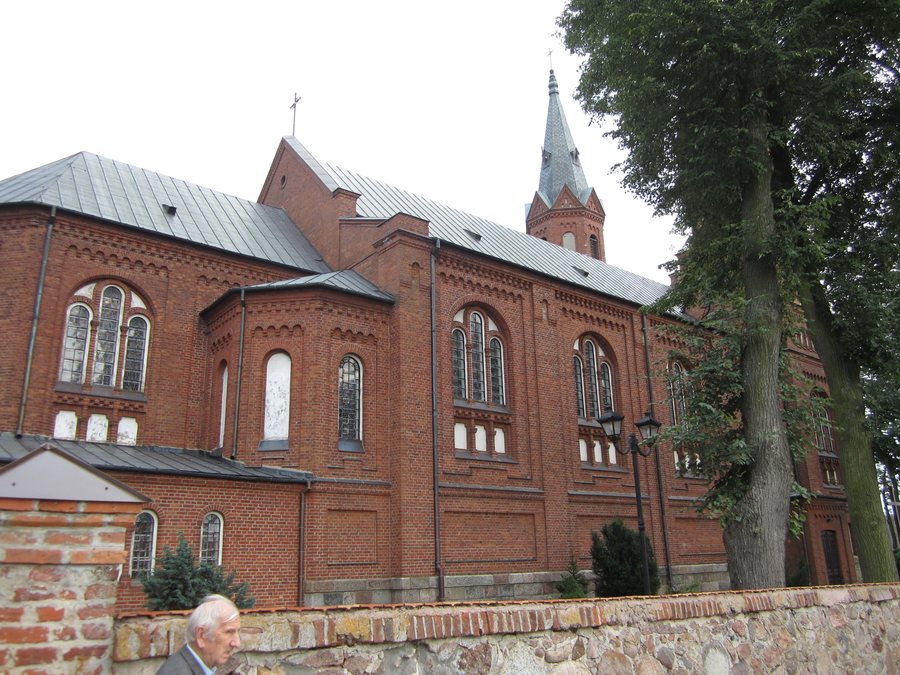 Kościół pw. św. Bartłomieja w Grębkowie 01
Photo: Zografos 07 via Wikimedia Commons, CC BY-SA 3.0 pl
Grębków at a glance
- In 1424, Bishop Laskary Gosławicki had a first church built in Grampsko, now Grębków.
- Another wooden church was built in Grębków in 1747; it stood until 1902.
- The Church of St. Bartholomew the Apostle is a brick, three-nave, Neo-Gothic building.
- The Liwiec Valley Hiking Trail begins in Grębków.
- Near Sucha, the Kostrzyn flows as a tributary of the Liwiec. The area around Sucha includes a complex of ponds and woodland near a larch avenue.
What stories do the churches tell?
The historical dates represent two distinct periods. In 1424, Bishop Laskary Gosławicki had a first church built in Grampsko, now Grębków. Another wooden church was built in Grębków in 1747 and stood until 1902. This makes it possible to distinguish chronologically between an early church building and a later wooden church. For a trip focused on cultural history, this offers a specific theme: the town’s church history, considered through two different building periods.
What distinguishes the Church of St. Bartholomew?
The Church of St. Bartholomew the Apostle is a distinct architectural landmark. It is a brick, three-nave, Neo-Gothic building. “Three-nave” describes the division of the church interior into three naves; “Neo-Gothic” identifies its architectural style. The description therefore combines a feature of the interior layout with the architectural form. Those interested in church architecture can use these two terms as helpful points of reference, without needing any specialist knowledge.
Where does the Liwiec Valley Hiking Trail begin?
The Liwiec Valley Hiking Trail begins in Grębków. For travel planning focused on hiking, this gives the trail a specific connection to the town: its starting point is here. The trail can therefore be considered a separate point of interest alongside the church history. If you are choosing a destination based on a hiking theme, you can take this starting point into account. The landscape features near Sucha provide another, distinct point of reference in the surrounding area.
What is the landscape like around Sucha?
Near Sucha, the Kostrzyn flows as a tributary of the Liwiec. The area around Sucha also includes an extensive complex of ponds and woodland near a notable larch avenue. This adds several landscape features in the surrounding area to Grębków’s church history: a flowing river, ponds, woodland, and the avenue. Those interested in building history can focus on the town’s churches; those more interested in waterways and landscapes can consider Sucha as a regional point of reference. This distinction helps you organize your interests when planning a trip.
Discover more destinations: Baczki, Ugoszcz, Korytnica, Łochów and Węgrów.
FAQ
Where does the Liwiec Valley Hiking Trail begin?
The Liwiec Valley Hiking Trail begins in Grębków.
Which periods of church construction are associated with Grębków?
In 1424, Bishop Laskary Gosławicki had a first church built in Grampsko, now Grębków. Another wooden church was built in 1747 and stood until 1902.
What is the Church of St. Bartholomew the Apostle like?
It is a brick, three-nave, Neo-Gothic building.
Go to the overview of the wider area: Węgrowski.

