
Grodków
Accommodation in Grodków
Grodków brings together evidence of medieval urban history and striking buildings from later centuries. If you would like to focus your stay on culture, you will find a range of themes here: church architecture, remnants of fortifications, a town hall with a historic detail, and even a brick windmill.
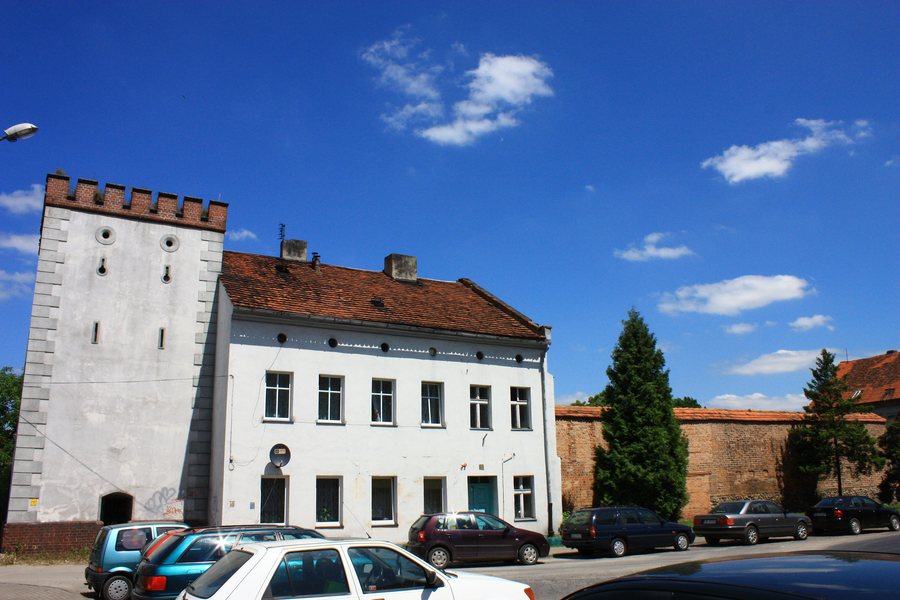 File:Grodków zespół murów obronnych 02.JPG
Photo: Dawid Galus via Wikimedia Commons, CC BY-SA 3.0 pl
File:Grodków zespół murów obronnych 02.JPG
Photo: Dawid Galus via Wikimedia Commons, CC BY-SA 3.0 pl
Grodków facts at a glance
- The parish church of St Michael the Archangel was built in 1268 or somewhat later.
- The medieval city fortifications were built from fieldstones under Bolko I, beginning around the turn of the 14th century.
- The surviving remains include sections of the city wall and the Ziębicka and Lewińska gate towers.
- The town hall stands in the middle of the market square; its entrance hall contains a coat-of-arms plaque from 1551.
What traces of medieval Grodków have survived?
The city fortifications offer a tangible way to explore Grodków’s medieval history. Construction began around the turn of the 14th century, and the fortifications were built from fieldstones under Bolko I. Sections of the former city wall have survived. The Ziębicka and Lewińska gate towers are also among the surviving fortifications. This makes it possible to distinguish between different components of the defences: wall remains and named gate towers. This selection is especially interesting for planning your trip if you would like to focus on historic urban structures and their surviving elements.
Another medieval landmark is the parish church of St Michael the Archangel. It was built in 1268 or somewhat later. Together with the fortifications, the church shows that Grodków’s history is not limited to a single building. If you are interested in different forms of historic heritage, you can explore church architecture and city fortifications as separate themes during your stay.
What distinguishes the town hall, churches and windmill?
The town hall stands in the middle of the market square. Its entrance hall preserves a plaque bearing the coat of arms of Bishop Promnitz, dating from 1551. The building thus combines its central position in the market square with a specific, dated historical detail. The plaque and the town hall offer different points of interest: one is a surviving furnishing, while the other is a building in a clearly specified location.
The Protestant church has a different architectural character: it is a brick, three-aisled Neo-Romanesque basilica built in 1845, with a 39-metre-high tower. In contrast to the parish church of St Michael, whose construction dates to 1268 or somewhat later, this church is notable for its later construction date and explicitly described architectural style. A brick Dutch-style windmill from around the turn of the 19th century is also among Grodków’s historic buildings. It survives without its sails. These differences can help you tailor your visit to your interests: medieval history, church architecture or engineering structures.
What other themes could complement a stay?
The Izba Pamięci Ziemi Grodkowskiej was tasked with researching and sharing the city’s history. It also supports local artists and regionalists, as well as their work and knowledge. This broadens the cultural perspective beyond buildings to include people and regional knowledge. If you are interested in these topics, you can include local history and artistic work as additional perspectives in your trip planning.
A specific place to relax after a cycling trip is also described: small parks near the city walls are suitable for taking a break afterwards. If you would like to combine culture and exercise, you can consider these parks as places to rest after a bike ride. The Brzeg–Nysa railway line, which began operating in 1847, is another aspect of the area’s transport history.
To compare other destinations, you can also explore Brzeg, Sulisław, Borkowice, Kopice and Pisarzowice.
FAQ
When was the parish church of St Michael built?
It was built in 1268 or somewhat later.
Which parts of the medieval fortifications have survived?
Sections of the city wall and the Ziębicka and Lewińska gate towers have survived.
What is in the town hall entrance hall?
A plaque bearing the coat of arms of Bishop Promnitz, dating from 1551, has been preserved there.
For the broader travel overview: Brzeg.

