
Kopice
Accommodation in Kopice
Kopice brings together historic church art and a complex palace history with an archaeological monument. Official cycling route No. 4 also passes through the village—a practical starting point for planning your trip.
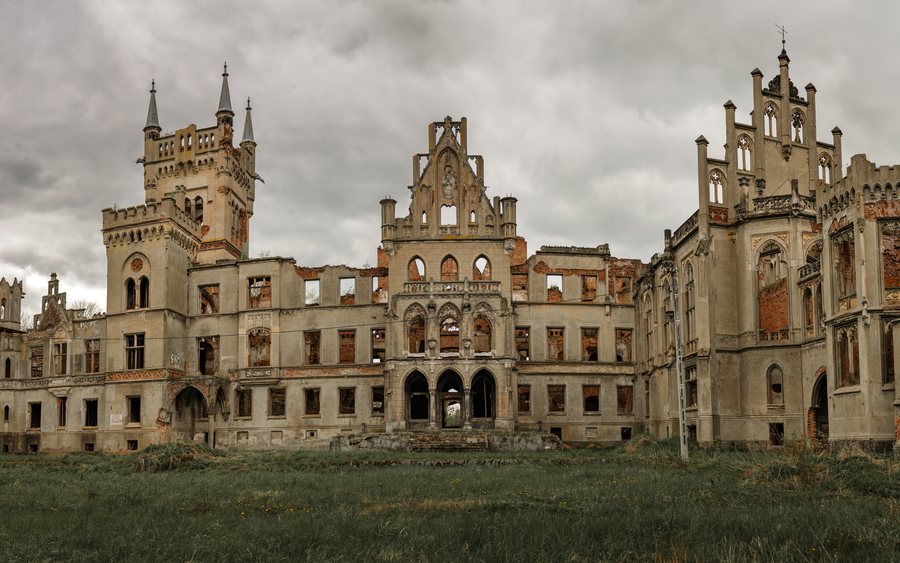 File:Pałac Schaffgotschów w Kopicach - ruiny pałacu-Kopice-2037-0014-RIKiWK-MCD.jpg
Photo: Adam Rostecki / Regionalny Instytut Kultury w Katowicach via Source, CC BY 4.0
File:Pałac Schaffgotschów w Kopicach - ruiny pałacu-Kopice-2037-0014-RIKiWK-MCD.jpg
Photo: Adam Rostecki / Regionalny Instytut Kultury w Katowicach via Source, CC BY 4.0
Key facts about Kopice
The village’s defining historic sites include the Parish Church of the Exaltation of the Holy Cross, the palace ruins and the Schaffgotsch family mausoleum. The church preserves a pulpit from the first half of the 18th century and an altarpiece from 1822. The late medieval motte-and-bailey site is an archaeological monument. A section of Route No. 4, from Grodków towards the area around the Nysa Kłodzka, runs through Kopice.
What can culture enthusiasts discover in the church?
The Parish Church of the Exaltation of the Holy Cross was built between 1802 and 1822 in the neoclassical style. Inside, a Regency pulpit from the first half of the 18th century has been preserved. It is therefore older than the church building. Another work of art is the altarpiece depicting the Crucifixion, dating from 1822. Together, the construction dates, pulpit and painting provide different points of reference for exploring the church: the pulpit comes from an earlier period, while the altarpiece points to the year in which construction of the church was completed.
Visitors who choose Kopice for its history can consider these three aspects separately: the neoclassical building, the older pulpit and the dated altarpiece. The church is therefore more than just a name on a list of historic sites; its preserved features tell the story of different periods.
How did the palace in Kopice change over time?
The palace was originally built between 1783 and 1786 as a neoclassical residence. A major renovation began in 1863, first under the direction of Carl Lüdecke and later of Carl Heidenreich. A fire completely destroyed the palace in the late 1950s; it subsequently fell into ruin. This sequence clearly distinguishes the original residence, its later renovation and its current status as a ruin.
The romantic park is also part of the palace’s history. Its design included a pond, an artificial island, a Temple of Diana, and Greek and Chinese pavilions. The park also featured artificial ruins of a “medieval” castle. This artificial feature in the park should be distinguished from Kopice’s late medieval motte-and-bailey site: one was part of the park’s design, while the other is an archaeological monument.
What other historic traces define the village?
The Schaffgotsch family mausoleum was built in the second half of the 19th century in the neoclassical style and in the form of a Greek temple. It served as the burial place of Joanna Schaffgotsch in 1910 and Hans Ulrich Schaffgotsch in 1915. Its design and these two dates offer a distinct perspective on the family’s history, separate from the history of the church and palace.
The late medieval conical motte-and-bailey site is another distinct point of interest. Its clearly visible landform shapes the landscape. As a significant archaeological monument, it provides insight into late medieval residential and defensive structures and is one of only a few sites of this kind in Silesia. Visitors with an interest in history can explore different questions here: the design of a defensive and residential site, the formal architecture of a mausoleum, or the architectural and artistic history of a church.
What does Route No. 4 offer for planning your trip?
Official cycling route No. 4 runs from Grodków to the area around the Nysa Kłodzka and passes through Kopice. The section through the village passes the Schaffgotsch family mausoleum and the historic Parish Church of the Exaltation of the Holy Cross. This connects the cycling route with two of the historic buildings described here, without assuming any additional connecting route.
If you are looking for a hotel in Kopice, you can assess the village based on these interests: historic architecture and art, the archaeological motte-and-bailey site, and the cycling route. If you would like to compare destinations, you can also find information about Brieg, Grodków, Pisarzowice, Sulisław and Borkowice.
FAQ
What has been preserved in the Church of the Exaltation of the Holy Cross?
The church preserves a Regency pulpit from the first half of the 18th century and an altarpiece depicting the Crucifixion from 1822. The church building itself was built between 1802 and 1822.
What happened to the palace in Kopice?
The neoclassical palace, originally built between 1783 and 1786, underwent a major renovation beginning in 1863. A fire completely destroyed it in the late 1950s; it subsequently fell into ruin.
What is the motte-and-bailey site in Kopice?
It is a late medieval conical motte-and-bailey site and an archaeological monument. Its distinctive landform provides insight into late medieval residential and defensive structures.
Which historic sites does cycling Route No. 4 pass in Kopice?
The section through Kopice passes the Schaffgotsch family mausoleum and the historic Parish Church of the Exaltation of the Holy Cross.
For the broader travel overview: Brzeg.

