
Głubczyce
Accommodation in Głubczyce
Głubczyce brings together several chapters of the town’s history with a city park on the banks of the Psina. This gives you a clear focus for planning your trip: historic buildings, preserved sections of the city walls and places that recall the town’s Jewish history. At the same time, the park shapes the southern part of the town with its own landscape perspective.
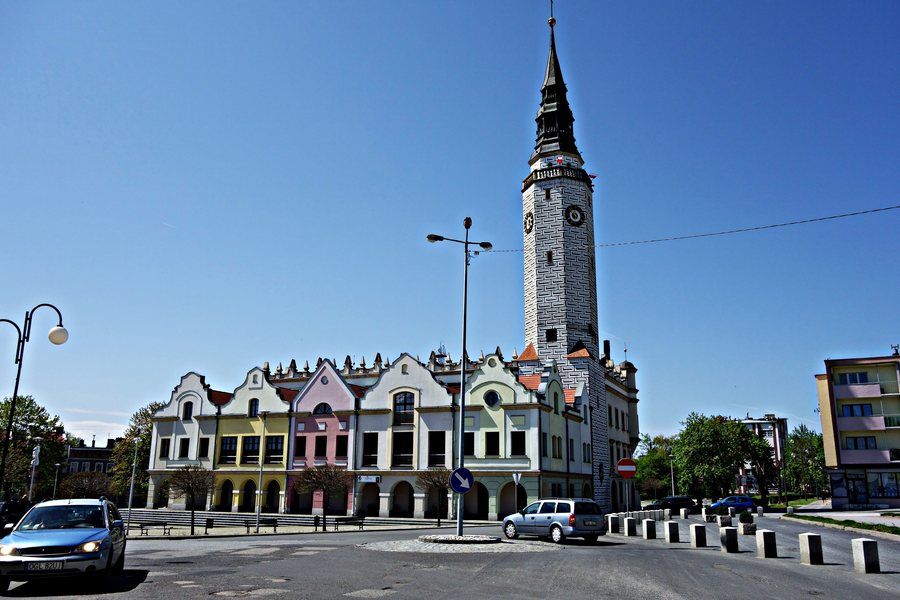
Głubczyce at a glance
The Renaissance Town Hall was built in 1570 on the site of a former merchant’s house dating from the 14th century. The city walls were first mentioned in 1282: nine of their 19 towers have survived to this day, in varying states of preservation. In the parish church pw. Narodzenia Najświętszej Maryi Panny, three early Gothic portals with plant decoration dating from the third quarter of the 13th century have survived, along with stonework in the interior. The city park lies in the southern part of Głubczyce, on the left bank of the Psina.
Which historic buildings shape Głubczyce?
The Town Hall and city walls represent different periods in the town’s history. The Town Hall reflects the Renaissance and its connection to an older merchant’s house: the building was constructed in 1570 on the site of the earlier house, which dated from the 14th century. The first mention of the city walls dates back further, to 1282. The nine surviving towers are in varying states of preservation. Visitors interested in historic urban sites will therefore find both a distinctive Town Hall and the remains of fortifications with a long documented history in Głubczyce.
The religious buildings add other styles and details to this picture. The early Gothic portals of the parish church feature plant decoration and date from the third quarter of the 13th century. There is also stonework inside the church. The Franciscan monastery complex was built between 1751 and 1758 as a new Baroque complex on the site of the previous one. It was designed by Jan Innocenty Töpper and furnished in the Rococo style. Early Gothic portals, Baroque and Rococo reflect different artistic influences within the town’s history.
Which places tell stories of memory and town life?
The Jewish cemetery on Wrocławska Street is the only surviving site associated with the modern history of Głubczyce’s Jews. It has existed since 1892; the last burial took place in January 1941. These dates give the cemetery a special place in the town’s history. For a culturally focused trip, this makes it possible to consider engagement with the Jewish past as a distinct theme alongside architecture.
Another facet of town life is reflected in the fountain in the city park, which features stone animals dating from 1911–1912. The fountain was donated to the town by brewery owner Eduard Beyer. The date connects the artwork to a specific period in the town’s history; the fountain is a distinctive feature of the park and should not be confused with the older buildings.
How does the city park add to a cultural trip?
The city park stretches from east to west in the southern part of Głubczyce, on the left bank of the Psina. Its location and orientation give it a different focus from the Town Hall, city walls, church and monastery: here, the riverside landscape takes centre stage, while the historic buildings tell stories of architecture and earlier periods. The fountain with its stone animals adds an artistic and historical feature to the park. Those who want to explore different aspects of Głubczyce can thus consider cultural history and landscape as two sides of the destination.
If you would like to compare other destinations, you can also find pages for Pilszcz, Kietrz and Debrzyca.
FAQ
When was the Renaissance Town Hall built?
The Town Hall was built in 1570 on the site of a former merchant’s house dating from the 14th century.
How many towers of the city walls have survived?
Nine of the 19 towers have survived to this day, in varying states of preservation. The city walls were first mentioned in 1282.
What historic details can be found in the parish church?
Three early Gothic portals with plant decoration dating from the third quarter of the 13th century have survived, along with stonework in the interior.
When did the last burial take place at the Jewish cemetery?
The last burial took place in January 1941. The cemetery on Wrocławska Street has existed since 1892.
For the main travel overview: Głubczyce.

