
Pilszcz: Discover the cycling route and history
Accommodation in Pilszcz
Pilszcz can be understood through a cycling route and several historical and architectural heritage sites. The cycling route runs through the town; other details range from the memory of the relief of Vienna to Bronze Age finds and objects from the 19th century. For orientation, it is worth keeping these topics separate: they concern different routes, historical periods and types of cultural heritage.
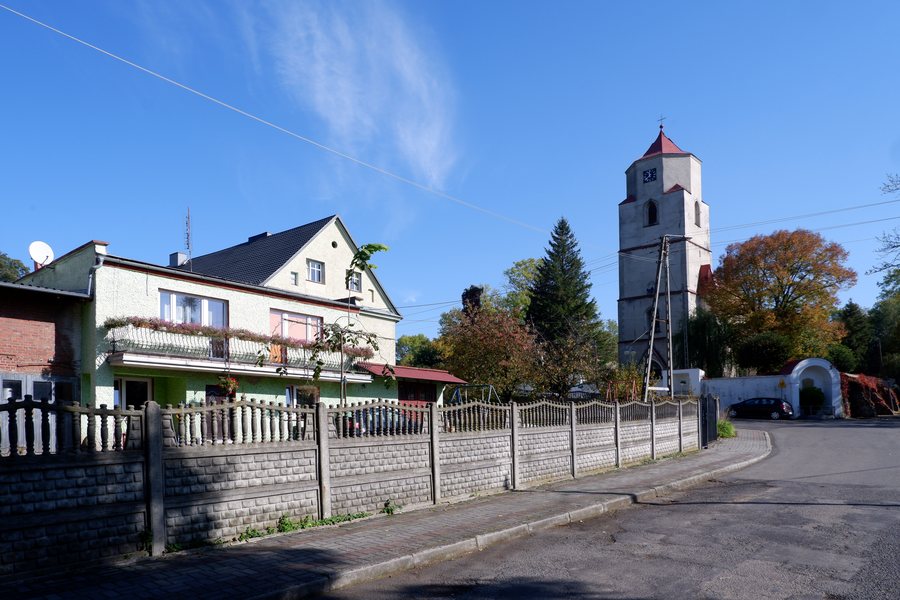 File:Pilszcz, aleja Schumana 2 i kościół.jpg
Photo: Kamil Czaiński via Wikimedia Commons, CC BY-SA 4.0
Pilszcz at a glance
- The “Opava – Pilszcz – Kietrz” cycling route passes through Pilszcz and several other places before reaching Kietrz.
- Pilszcz lies on the historic march route taken by the army of King Jan III Sobieski, which set out to help relieve Vienna in 1683.
- A painting in the NMP Church commemorates the relief of Vienna in 1683.
- The Sanctuary of Our Lady of Pilszcz is considered Gothic-Renaissance in style and dates from 1593.
- A timber-and-clay granary and a potato steamer date from the 19th century. The so-called Pilszcz Treasure was discovered near the village in 1884.
Which cycling route passes through Pilszcz?
The “Opava – Pilszcz – Kietrz” cycling route runs from the border with the Czech Republic through Pilszcz, Ludmierzyce, Lubotyń and Dzierżysław, as well as the “Góra Gipsowa” nature reserve, to the town of Kietrz. The route’s name mentions Opava, Pilszcz and Kietrz; the described sequence also includes the other places and the nature reserve. This helps place Pilszcz within a route with several named stops.
The route has been established. If you are planning to ride it, check current route conditions locally. The sequence of places helps you follow the described route, but does not replace current information about the route.
What are Pilszcz’s connections to the history of Vienna?
The historical connection dates back to 1683: Pilszcz lies on the march route taken by the army of King Jan III Sobieski, which set out to help relieve Vienna. A painting in the NMP Church also commemorates the relief of Vienna in 1683. The same historical event thus appears in two different contexts: as the army’s march route and as the subject of a painting.
This historic march route should be distinguished from the cycling route. One reference concerns the army’s march in 1683, while the other describes the cycling route through several places and the nature reserve. Each provides its own orientation; they do not form a single route.
What architectural and historical objects can be found in Pilszcz?
The Sanctuary of Our Lady of Pilszcz is considered Gothic-Renaissance in style and dates from 1593. It is also described as a destination for numerous pilgrimages. These are two different details for establishing its historical context: 1593 refers to the sanctuary’s origins, while the pilgrimages describe its religious significance.
A granary dating from the 19th century was built using timber-and-clay construction. A potato steamer also dates from the 19th century. The two objects are different: the granary is a building and is notable for its construction method, while the potato steamer is a piece of equipment. What they have in common is that both date from the same century.
The so-called Pilszcz Treasure was discovered near the village in 1884. It dates from the Bronze Age and consisted of neck rings and bracelets. The year of discovery and the period it dates from should be distinguished: 1884 refers to when it was found, while the Bronze Age is the treasure’s origin. The findspot is located near the village.
If you are planning to visit a specific religious building or named site, check its accessibility in advance. For more destinations, you can also view the pages for Debrzyca, Głubczyce and Kietrz.
FAQ
Which places are on the cycling route through Pilszcz?
The route runs through Pilszcz, Ludmierzyce, Lubotyń and Dzierżysław, through the “Góra Gipsowa” nature reserve and onward to Kietrz.
What does the painting in the NMP Church commemorate?
It commemorates the relief of Vienna in 1683. Pilszcz’s historic march route is also connected with this event.
Was the Pilszcz Treasure discovered in the village?
No. The treasure was found near the village in 1884; it dates from the Bronze Age and consisted of neck rings and bracelets.
For the broader travel overview: Głubczyce.

