
Grudynia Wielka: Orchards and Cultural Heritage
Accommodation in Grudynia Wielka
Orchards define Grudynia Wielka; at the same time, the parish church, palace and archaeological finds tell of different periods in the town’s history. The buildings offer a tangible way to engage with the town’s past, while the landscape and a historically documented running event provide further points of interest for planning your trip.
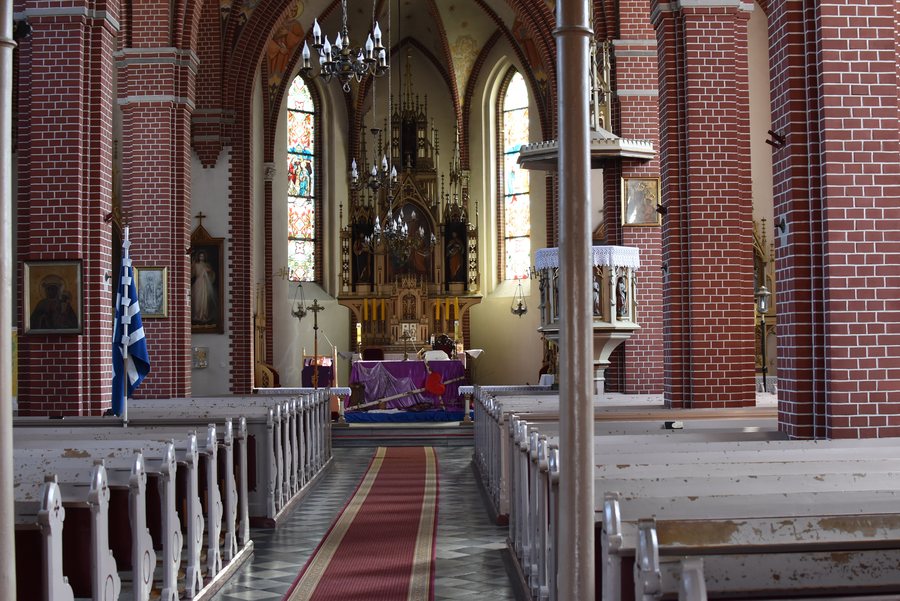 File:Grudynia Wielka kościół parafialny pw. Nawiedzenia NMP 1.jpg
Photo: Jacek Daczyński via Wikimedia Commons, CC BY-SA 4.0
Grudynia Wielka at a glance
- The town is surrounded by orchards.
- The Neo-Gothic parish church was built in 1895–1896 by parish priest Julius Mühlsteff; it is the third parish church on this site.
- The palace was built in 1858–1859 on a slope in the town centre.
- Archaeological finds from Grudynia Wielka date from the Upper Palaeolithic to the late Middle Ages.
- The Bieg Sadownika was listed as 11 km long on 22 May 2022.
What defines the character of the town?
The orchards give Grudynia Wielka its landscape setting. In addition, the town’s documented buildings and archaeological finds make it interesting to travellers with an interest in culture and history. The palace stands on a slope in the centre of the town.
The parish church is also part of the town’s history, though its description focuses mainly on its construction and architecture. The landscape, church architecture and palace history thus offer different ways to explore Grudynia Wielka, rather than placing a single attraction at the centre.
What stories do the parish church and palace tell through their architecture?
The present-day Church of the Visitation of the Blessed Virgin Mary is already the third parish church on this site. Parish priest Julius Mühlsteff had it built in 1895–1896; construction was completed in 1896. The Neo-Gothic building is made of brick and has three naves. Eight pillars separate the side aisles from the central nave. “Three-naved” here describes the division of the church interior into a central nave and two side aisles; the number of pillars adds a specific architectural detail to this picture.
The Neo-Gothic palace was built just over three decades earlier, in 1858–1859, by the von Reibnitz family. Its documented features include a square tower with three storeys. The construction dates of the palace and church mark two distinct points in the town’s history: the palace dates to the mid-19th century, and the church to its final years.
The palace park is also part of the protected cultural heritage. Its entry in the register of monuments bears the number 112/84 and is dated 31 August 1984. Both the palace’s architecture and the park’s documented status are therefore significant to understanding the complex.
How far back does the history reach?
The archaeological finds from Grudynia Wielka cover a long period, from the Upper Palaeolithic to the late Middle Ages. Notable finds include a pierced Roman aureus of the emperor Julius Verus Maximus, dated to around 236–238 AD. It is a specific example from this long history of archaeological finds.
Agriculture offers another historical perspective. The management of a state agricultural enterprise complex was based in Grudynia Wielka; the complex included the estates of Grudynia Wielka, Grudynia Mała, Jakubowice and Milice. In 1972, four enterprises were merged into a state horticultural enterprise with 1,000 ha of orchard land. This figure refers to the orchard land belonging to the combined enterprise.
What is known about the Bieg Sadownika?
The history of the Bieg Sadownika offers another point of reference in time. Organisation of the race resumed in 2018 after a lengthy interruption. An event listing gives its distance as 11 km on 22 May 2022. These are historical details for those two dates, not a statement that the event is held today. If you would like to include the race in your trip plans, check in advance whether and when it takes place.
This helps you choose a destination to suit your travel interests; you can then check the specific offers for your travel dates.
Discover more destinations: Kędzierzyn-Koźle, Reinschdorf, Zakrzów, Przewóz, Naczysławki, Pawłowiczki.
FAQ
What does the parish church’s three-naved layout mean?
The church has a central nave and two side aisles. Eight pillars separate the side aisles from the central nave.
What period do the archaeological finds cover?
The finds from Grudynia Wielka date from the Upper Palaeolithic to the late Middle Ages. One specifically mentioned find is a pierced aureus dating to around 236–238 AD.
What information is available about the Bieg Sadownika?
Organisation of the race resumed in 2018 after a lengthy interruption. Its distance is listed as 11 km for 22 May 2022. If the race matters to your trip, check the current dates in advance.
Go to the overarching travel guide: Kędzierzyńsko-Kozielski.

