
Pawłowiczki
Accommodation in Pawłowiczki
Pawłowiczki combines a local history connected with the Moravian Brethren, a historic park, an 18th-century parish church and a starting point for a cycling route. These different stops give you points of reference for balancing culture, townscape and nature when planning your trip.
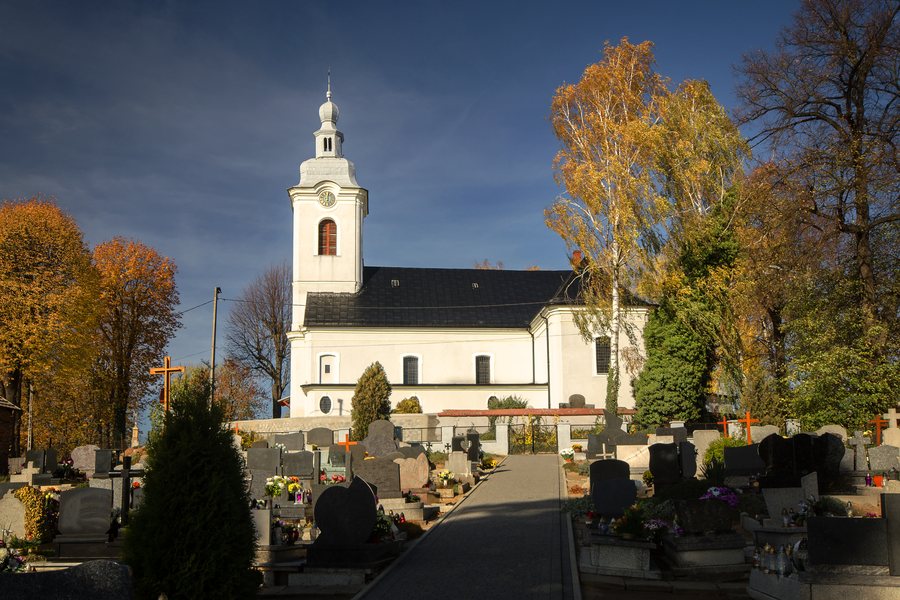 File:SM Pawłowiczki Kościół św Apostołów Andrzeja i Jakuba (1) ID 610597.jpg
Photo: Sławomir Milejski via Source, CC BY 3.0
File:SM Pawłowiczki Kościół św Apostołów Andrzeja i Jakuba (1) ID 610597.jpg
Photo: Sławomir Milejski via Source, CC BY 3.0
Pawłowiczki at a glance
- The town’s history is linked to the settlement of the Moravian Brethren beginning in early 1766.
- The historic park was laid out in 1830; numerous interesting species of rare vegetation grow there.
- The parish church of St Andrew and St James was built in 1782–1783 and stands on a small hill in the northeastern part of the town.
- A cycling route starts at the school building on ul. Lipowa.
What history has shaped Pawłowiczki?
The development of Pawłowiczki is linked to the history of the Moravian Brethren. Their settlement began in early 1766. Another significant period followed in 1780: the last development phase of what is now the village was a colony established on the estates of Warmuntowice. It was a Protestant artisans’ settlement arranged around a square.
The description of the settlement as a community of artisans, and its layout around a square, also give this historic part of the town a distinct character. Those interested in the development of settlements will find more here than a single date: the history encompasses both the arrival of settlers and a colony with its own spatial layout.
What buildings and landmarks are there?
In the centre of Pawłowiczki stands the Adam Mickiewicz monument, near the municipal office. Its location places the monument in the central part of the town. The former courthouse is another notable historic building.
The parish church of St Andrew and St James is another historical highlight. It was built in 1782–1783 and extended at the beginning of the 20th century using Baroque forms. This means two distinct periods can be identified in the building: its construction in the late 18th century and its extension at the beginning of the 20th century. The church stands on a small hill in the northeastern part of Pawłowiczki. Tombstones from the 19th century are set into the inside wall of its enclosure. The location, building history and tombstones offer different points of interest for travellers interested in historic architecture and memorials.
What makes the historic park distinctive?
The historic park in Pawłowiczki was laid out in 1830. Its described features include numerous interesting species of rare vegetation. It therefore adds a nature-related aspect to the historic buildings: while the church and former courthouse illustrate the town’s architectural history above all, the park is notable for its vegetation. When planning your visit, you can decide whether you would like to explore Pawłowiczki primarily through its history and architecture or also through the park’s plant life.
Where does the cycling route start?
A cycling route starts in Pawłowiczki at the school building on ul. Lipowa. You can include this specific location in your travel plans. No further information on the route’s length or course is available here, so this information does not allow you to compare the route by duration or difficulty. If cycling is one of your interests, you can take the stated starting point into account and plan the rest of your trip separately.
For comparison with other destinations, you can also find town pages for Przewóz, Reinschdorf, Zakrzów, Kędzierzyn-Koźle, Naczysławki and Grudynia Wielka.
FAQ
Since when has Pawłowiczki been connected with the Moravian Brethren?
Their settlement has been linked to the town’s history since early 1766.
When was the historic park laid out?
The historic park in Pawłowiczki was laid out in 1830.
Where does the cycling route in Pawłowiczki start?
It starts at the school building on ul. Lipowa.
For the overview of the wider area: Kędzierzyńsko-Kozielski.

_ID_610597.jpg)