
Zellin: Village History and Chapel
Accommodation in Zellin
Zellin’s local history brings together an early settlement form and dated records of ownership. The chapel adds 19th-century architecture and a Baroque sculpture of Saint Gregory to this picture.
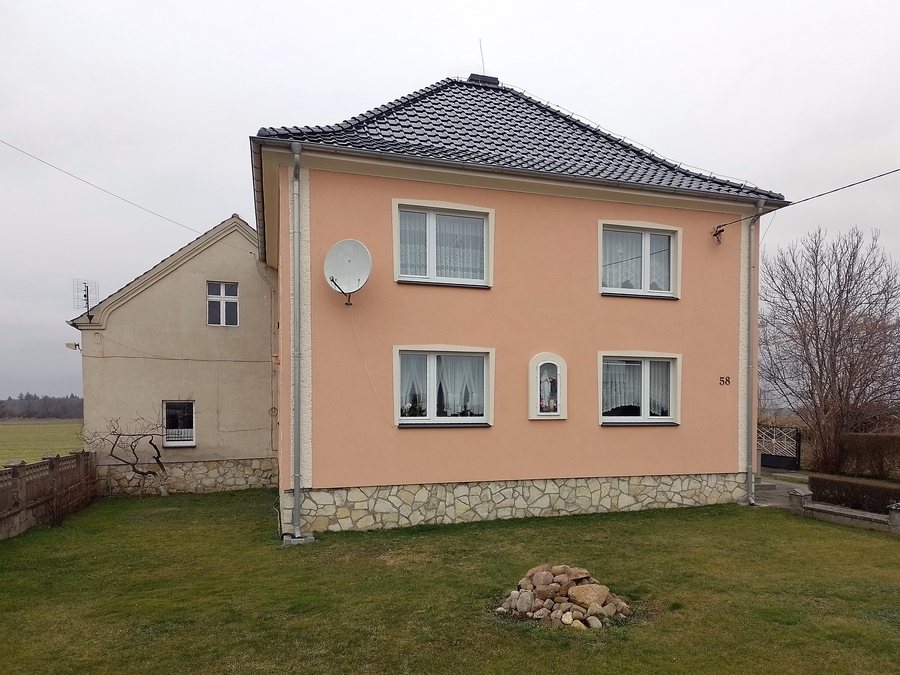 File:Zielina - Zellin, dom z kapliczką.jpg
Photo: Kamil Czaiński via Wikimedia Commons, CC BY-SA 4.0
Key facts about Zellin
Zielina was referred to as Zellin in the first written documents, dating from 1743, and initially developed as a hamlet of Kujawy. In the 1780s, Count Schaffgotsch owned the village. In the 1930s and 1940s, estates in Zielina, Moszna and Racławiczki belonged to Claus von Thiele-Winckler. Zellin has a rectangular, plastered brick chapel from the 19th century, with a cross vault, a gabled roof and a slender turret on the front façade. The chapel houses a Baroque sculpture of Saint Gregory.
What do the historical records tell us about Zellin?
The historical records answer different questions. The statement that Zielina initially developed as a hamlet of Kujawy concerns its early settlement form. This is distinct from the written record of its name: in the first written documents, dating from 1743, Zielina appears as Zellin. A historical name is a point of reference in its own right and is not automatically the date when the place was founded.
In the 1780s, Count Schaffgotsch owned the village of Zielina. A different record of ownership applies to the 1930s and 1940s: estates in Zielina, Moszna and Racławiczki belonged to Claus von Thiele-Winckler. This keeps the time periods and scope of the records distinct: one concerns the village of Zielina, while the other concerns estates in three named places. Together, the dates offer different insights into local history, without referring to the same period or subject.
How can the chapel be described?
The chapel is a rectangular, plastered brick building from the 19th century, with a cross vault. A slender turret stands on the front façade, and the roof is gabled. Several aspects of the building come together here: its shape and materials, the design of the façade, and the forms of its roof and vault.
A gabled roof consists of two sloping roof surfaces that meet at the top along a ridge. A cross vault is a type of vault in which sections intersect. These terms help distinguish the architectural features, rather than describing the chapel solely by its date. The chapel also houses a Baroque sculpture of Saint Gregory. The period references apply to different things: the building dates from the 19th century, while the sculpture is described as Baroque.
Which cultural themes can you compare when planning your trip?
If you compare destinations based on cultural interests, Zellin offers two distinct perspectives: local history and religious architecture. The name, settlement form and records of ownership provide historical points of reference, while the chapel’s design and sculpture take centre stage. As you prepare, consider whether you would rather explore the development of a place or the features of a single building. This lets you weigh the themes according to your interests without treating the different historical records as if they referred to the same thing.
Discover more destinations: Krapkowice, Oleszka, Zdzieszowice, Rogów Opolski, Kujau, Moschen, Gogolin, Zabierzów.
FAQ
What was Zielina called in 1743?
In the first written documents, dating from 1743, Zielina was referred to as Zellin.
What architectural features does the chapel in Zellin have?
It is rectangular, plastered and made of brick; its features include a cross vault, a gabled roof and a slender turret on the front façade.
What sculpture is housed in the chapel?
The chapel houses a Baroque sculpture of Saint Gregory.
Go to the main travel overview: Krapkowice.

