
Discover Bialowieza
Accommodation in Bialowieza
Bialowieza brings together traces of an imperial residence and insights into the nature and history of the Białowieża Forest. To help you plan your trip, consider the different experiences on offer: a historic palace park, an Orthodox church with scheduled visiting arrangements, and a museum that brings forest topics to life.
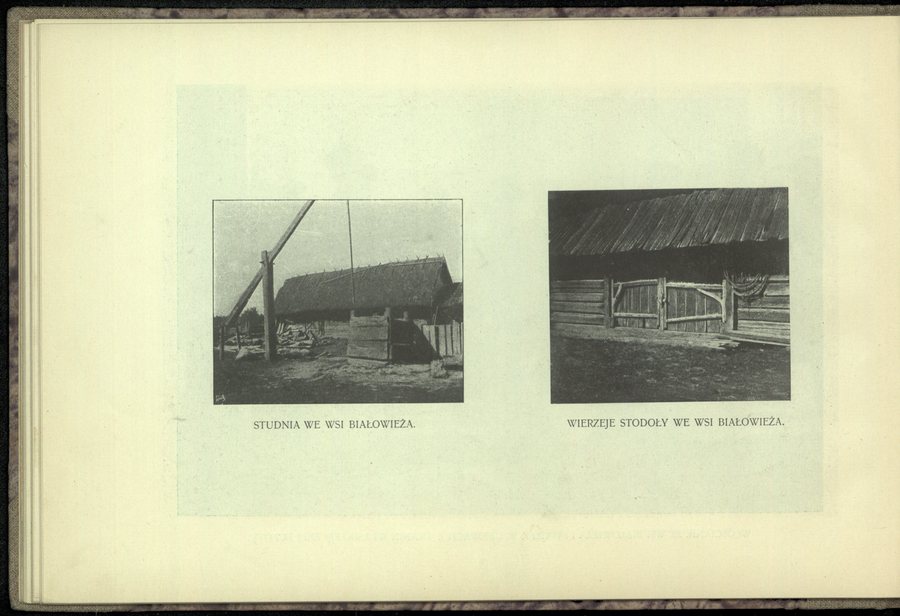 File:Bialowieza w albumie 1903 (72991765).jpg
Photo: Zygmunt Gloger via Wikimedia Commons, Public domain
File:Bialowieza w albumie 1903 (72991765).jpg
Photo: Zygmunt Gloger via Wikimedia Commons, Public domain
Bialowieza at a glance
- The palace park was laid out around the hunting residence of the Russian tsars, built from 1889 to 1894.
- The Orthodox Church of St. Nicholas the Wonderworker has an iconostasis made of colorful Chinese porcelain.
- The Natural History and Forestry Museum presents forest communities, the nature and history of the primeval forest, and the centuries-long human presence in the area.
- Białowieża Towarowa railway station was built to supply the imperial residence and received an award in the 2004 “Zabytek Zadbany” competition.
Which historic sites shape Bialowieza?
The palace park offers a historical highlight whose origins are reflected in its layout: it was created around the hunting residence of the Russian tsars, built between 1889 and 1894. The park was laid out at the turn of the 20th century and is a protected historic site. If you are interested in the relationship between a historic residence and a landscaped park, this is a distinctive feature to consider when planning your trip.
The Orthodox Church of St. Nicholas the Wonderworker also combines history with a distinctive feature of its interior. Its iconostasis is made of colorful Chinese porcelain. The new church was consecrated on January 22, 1895, according to the old calendar. At the time of its consecration, it was considered the most beautiful church in the entire Grodno Governorate. Construction and furnishing work was completed in 1897, before Tsar Nicholas II’s visit to Białowieża. These dates mark different stages in the building’s history: the consecration and the completion of the work should not be conflated into a single date.
Białowieża Towarowa railway station is another historic point of interest. It served the imperial residence and is one of the few very well-preserved buildings of its kind in the Podlaskie Voivodeship. Its artistic qualities reflect the richly decorated Russian railway architecture of the turn of the 20th century. Following an exemplary renovation, the station received an award in 2004 in the General Monuments Conservator’s “Zabytek Zadbany” competition. The park, church, and railway station each offer a distinct historical perspective; when planning your trip, you can choose the one that interests you most.
What does the Natural History and Forestry Museum show?
The Natural History and Forestry Museum spans two floors and covers both the nature and history of the Białowieża Forest and the centuries-long human presence in the area. Part of the exhibition focuses on characteristic forest communities: grąd (oak-hornbeam), swamp, riparian, and pine forests, as well as boreal spruce bog forests. The range of forest types makes nature a clear focus, while the historical perspective complements it with the long history of human activity in the area.
The historical section covers, among other topics, beekeeping and haymaking, the processing of wood into turpentine, and the narrow-gauge forest railway. This presents different activities and forms of land use side by side, rather than limiting the museum visit to a single subject. Visitors interested both in the nature of the primeval forest and in the history of human work can explore both perspectives under one roof.
The exhibition also uses spatial and sound effects: a modeled floor, subdued lighting, day-and-night effects, and forest sounds are intended to create the impression of being in the forest. This makes the presentation more than a simple list of forest types. When deciding whether to visit, consider whether you prefer exploring nature through these sensory impressions or focusing mainly on specific historical topics.
What should you know about visiting the church?
The Orthodox parish of St. Nicholas is located at ul. Sportowa 9. Parish office hours are 9 a.m. to 12 p.m. and 2 p.m. to 4 p.m. The church can be visited outside the scheduled hours by prior telephone arrangement. Plan your visit with this arrangement in mind; the office hours and the option to make an appointment in advance are the key details to note.
If you would like to compare destinations beyond Bialowieza, you can also consider Wiluki, Krynica, Lewkowo Stare, Gruzka, Trześcianka, Postołowo, Siemianówka, and Kleszczele when planning your trip.
FAQ
When can the Orthodox church be visited?
Visits are possible outside the scheduled hours by prior telephone arrangement. The parish office is open from 9 a.m. to 12 p.m. and from 2 p.m. to 4 p.m.
Which forest communities does the Natural History and Forestry Museum show?
On display are grąd (oak-hornbeam), swamp, riparian, and pine forests, as well as boreal spruce bog forests.
What was Białowieża Towarowa railway station built for?
It was built to supply the imperial residence. It received an award in the 2004 “Zabytek Zadbany” competition.
For the main travel overview: Hajnowski.

.jpg)