
Kisielnica
Accommodation in Kisielnica
Kisielnica can be understood through several distinct historical features: a wayside chapel and a granary from the late 19th century, a military cemetery, and the remains of a manor park. Together, they show different aspects of the town’s architectural and historical heritage.
Kisielnica at a glance
- The wayside chapel was built in the late 19th century; it is made of fieldstones laid with cement mortar.
- The granary was built toward the end of the 19th century. It is a plastered brick building with an elongated rectangular footprint and two storeys.
- The Russian military cemetery is a burial site for those killed in the First World War.
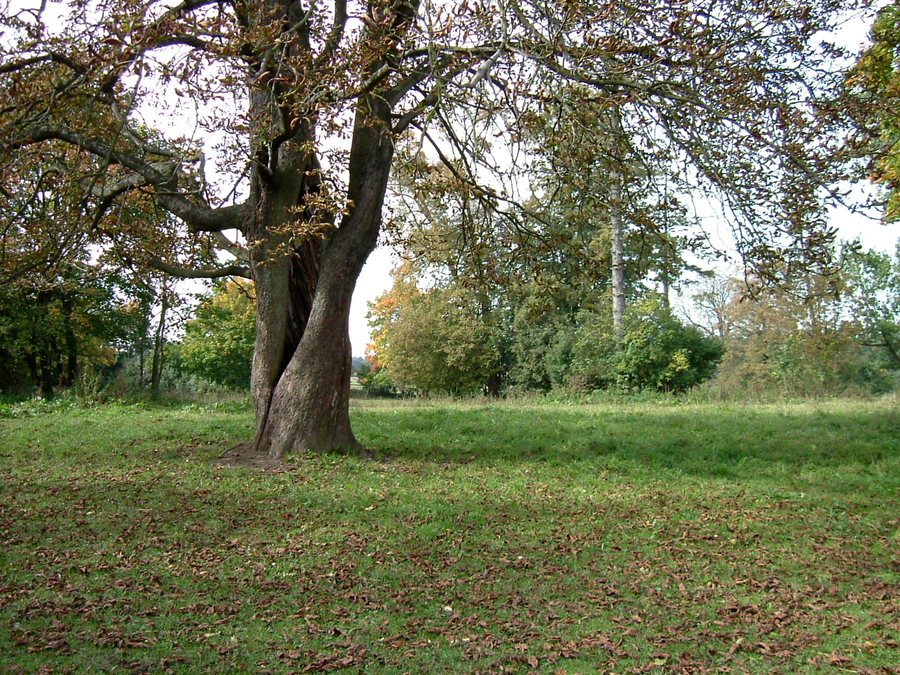
- Neglected remnants of the manor park’s tree cover have survived; its original layout is no longer discernible.
Which historic building types define Kisielnica?
The wayside chapel and the granary both date from the late 19th century, but they differ considerably in form. The chapel is built of fieldstones bonded with cement mortar. In its upper section is a niche with a rounded arch and a figure of the Virgin Mary. The masonry and niche give this small building its distinctive architectural features.
The granary, by contrast, is an elongated, two-storey building made of plastered brick. Its foundation is made of fieldstones and bricks. The two buildings therefore offer a comparison between different building types: the chapel is defined by its fieldstone masonry and the niche in its upper section, while the granary is distinguished by its rectangular structure, storeys, and the change in materials between its foundation and walls.
How do the chapel and granary differ?
For a comparison, it is worth paying attention to the form and details of each building, not just their shared period. The wayside chapel is defined by its fieldstone masonry and the round-arched niche containing a figure of the Virgin Mary. The granary features plastered brickwork, a foundation of fieldstones and bricks, and an elongated, two-storey footprint. In Kisielnica, a small religious building and a granary thus stand side by side as two distinct historic buildings.
The timing matters when it comes to the granary’s roof: a description dated 2014 notes a gabled roof that was covered with Eternit at the time.
What do the military cemetery and manor park tell us?
The Russian military cemetery in Kisielnica is a burial site for those killed in the First World War. A description dated 2014 mentions a wooden Orthodox cross marking the site. Alongside the buildings, the cemetery forms a distinct part of the town’s historic character: it commemorates a burial site and has a different significance from the chapel and granary.
The manor park is also among Kisielnica’s historic features, although the surviving evidence of its present-day condition is marked by loss. Only neglected remnants of the tree cover remain; the grounds’ original layout is no longer discernible. This sets the park apart from the buildings described above: what remains is not a surviving architectural form, but fragmented tree cover. Bringing the various features together gives a layered picture of architecture, a burial site, and the remaining traces of a park.
Discover more destinations: Łomża, Olszyny, Nowogród, Wizna, Drozdowo, Nowosiedliny, Koziki and Piątnica Poduchowna.
FAQ
When were the wayside chapel and granary built?
The wayside chapel was built in the late 19th century. The granary was built toward the end of the same century.
What are the architectural features of the wayside chapel?
It is made of fieldstones bonded with cement mortar. Its upper section contains a niche with a rounded arch and a figure of the Virgin Mary.
What is known about the manor park in Kisielnica?
Only neglected remnants of the tree cover remain. The grounds’ original layout is no longer discernible.
For the broader travel overview: Łomżyński.

