
Sejny: Discover Culture and History
Accommodation in Sejny
Sejny brings together historic sacred buildings and cultural venues with a long-distance hiking route. When looking for a hotel, you can plan your trip around whether you want to focus on the city’s history, exhibitions, or hiking.
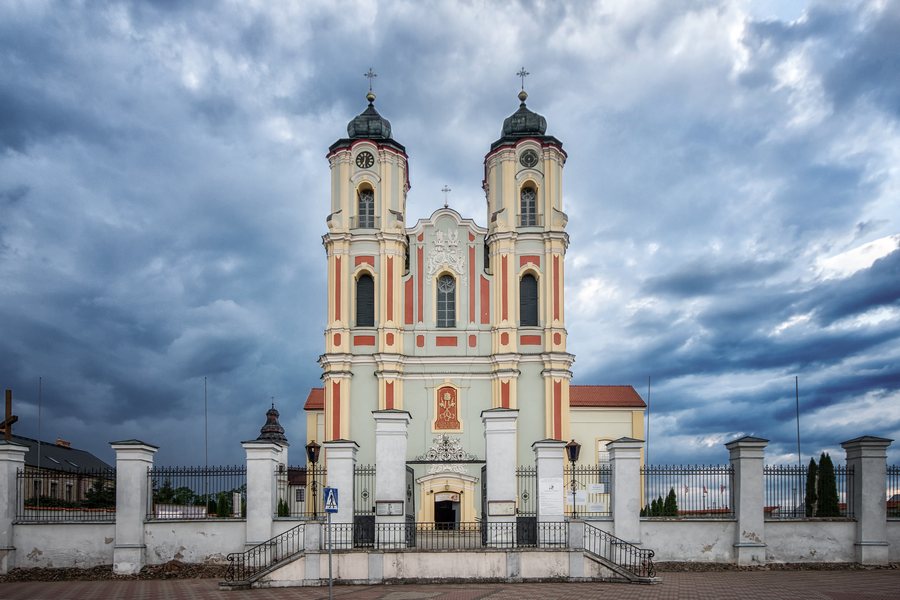 File:SM Sejny Bazylika Nawiedzenia NMP 2020 (3).jpg
Photo: Sławomir Milejski via Wikimedia Commons, CC BY-SA 4.0
Key Facts About Sejny
- The Basilica Minor of the Visitation of the Blessed Virgin Mary was built in the early 17th century in the Renaissance style.
- The basilica houses a Gothic shrine statue of the Madonna and Child dating from the early 15th century.
- The former Dominican monastery houses exhibition halls, the “Zapiecek” Gallery, the Diocesan Museum, and an ethnographic room.
- The red hiking trail No. 1 is 210 kilometers long and runs from Jastrzębna via Sejny to Rakówek near Gołdap.
What historical features shape Sejny?
Sejny was founded in 1563 by King Sigismund Augustus. The town layout also offers a glimpse into the city’s history: its historic character, with buildings arranged around several market squares, has been preserved to this day. The statue and chapel of Saint Agatha are also among the historic sights.
Another defining place is the former Dominican monastery complex, dating from the 17th century. Work on the monastery was completed in 1706; the complex is a key element of Sejny’s urban and architectural layout. The history of the monastery can therefore also be viewed as part of the city’s history.
What does the basilica reveal?
The Basilica of the Visitation of the Blessed Virgin Mary was built in the early 17th century in the Renaissance style and was elevated to the status of a basilica minor by the Holy See in 1973. Inside is a Gothic shrine statue of the Madonna and Child, dating from the early 15th century. This brings different historical periods together in one building.
The organ also has a story of its own: its Rococo case dates from 1762, while its mechanism dates from 1907. The two dates therefore refer to different parts of the instrument. The case is the organ’s decorated front; the later mechanism adds another layer in time to this older exterior element.
What cultural venues are in the Dominican monastery?
The historic Dominican monastery houses exhibition halls, the “Zapiecek” Gallery, the Diocesan Museum, and an ethnographic room. The latter makes traces of Sejny’s cultural diversity visible. The different rooms and facilities give the monastery complex a cultural focus distinct from the basilica’s architectural history.
Concerts take place in the monastery courtyard. Exhibitions and academic symposia are also held in the complex. If you are planning a visit, check the current access arrangements for the rooms and the program in advance. This allows you to align your expectations with the specific offerings without assuming a particular date.
How can hiking fit into your trip?
The red hiking trail No. 1 is a long-distance route running from Jastrzębna through Sejny to Rakówek near Gołdap, covering 210 kilometers in total. Sejny is therefore one section of a much longer route; the trail is not limited to a walk around the city.
These interests can help you compare hotels in Sejny, without implying specific features of individual accommodations.
Discover more destinations: Ogrodniki, Krasnopol, Puńsk, Hołny Wolmera, Smolany Dąb, Tartaczysko, Oszkinie and Dusznica.
FAQ
How old is the Basilica Minor in Sejny?
It was built in the early 17th century in the Renaissance style and elevated to the status of a basilica minor in 1973.
What is historically notable about the basilica’s organ?
Its Rococo case dates from 1762, and its mechanism from 1907.
What facilities are in the former Dominican monastery?
It houses exhibition halls, the “Zapiecek” Gallery, the Diocesan Museum, and an ethnographic room.
What is the route of the red hiking trail No. 1?
The 210-kilometer route runs from Jastrzębna via Sejny to Rakówek near Gołdap.
Go to the main travel overview: Sejny.

