
Discover Sejny: History and Culture
Accommodation in Sejny
Sejny can be understood through its urban history and historic buildings. When choosing where to stay, this offers a concrete perspective on the destination’s cultural themes: its founding in the 16th century, the former Dominican monastery complex, the basilica, and the historic urban layout.
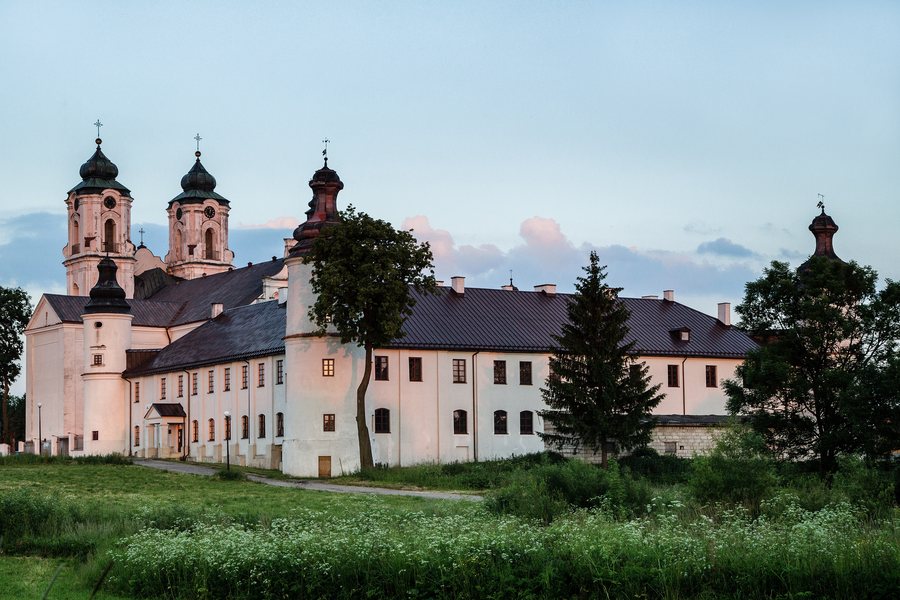 Sejny, Basilica of the Visitation of the Blessed Virgin Mary and Dominican monastery
Photo: Andrzej Topczewski via Source, CC BY-SA 4.0
Sejny, Basilica of the Visitation of the Blessed Virgin Mary and Dominican monastery
Photo: Andrzej Topczewski via Source, CC BY-SA 4.0
Sejny at a glance
- King Sigismund Augustus founded Sejny in 1563.
- The former Dominican monastery complex dates from the 17th century; work was completed in 1706.
- The Basilica of the Visitation of the Blessed Virgin Mary is a 17th-century church and was elevated to the status of a minor basilica by the Holy See in 1973.
- The historic urban layout retains its character, with buildings arranged around several market squares.
How do history and the urban layout shape Sejny?
The founding date of 1563 and the reference to King Sigismund Augustus provide a clear starting point for Sejny’s history. The monastery complex, built later, takes us into the 17th century: it is a key element of the city’s urban and architectural layout. Work on the former Dominican monastery was completed in 1706. This makes it possible to consider the founding and the construction history as distinct periods within the city’s history.
The preserved historic urban layout also helps orient visitors. Its buildings arranged around several market squares are part of the cityscape handed down over time. A conservation protection zone was designated on the basis of two decisions: the decision of November 24, 1956, and that of February 23, 1979. It encompasses the preserved historic street plan and the most valuable historic buildings located within it.
What cultural sites and events are there?
The Basilica of the Visitation of the Blessed Virgin Mary connects 17th-century architectural history with its elevation to the status of a minor basilica in 1973. The statue and chapel of Saint Agatha are also among Sejny’s historic attractions.
The former Dominican monastery also houses the Diocesan Museum. The complex is also a venue for exhibitions, concerts, and academic symposia. If you are planning a museum visit, check current access arrangements; for events, it is advisable to confirm the dates in advance.
What information can help you plan your stay?
These sites and historical details allow you to choose a theme: you can focus your trip planning particularly on the city’s history, religious architecture, or events. When comparing hotels in Sejny, this can help you identify the interests that will shape your stay.
Discover more destinations: Rosochaty Róg, Tartaczysko, Radziucie, Dusznica, Puńsk, Żubrówka Nowa, Ogrodniki, Buda Ruska, Krasnopol, Frącki, Dworczysko, Głuszyn, Giby, Mikołajewo, Smolany Dąb, Cimochowizna, Stabieńszczyzna, Oszkinie, Sejny and Hołny Wolmera.
FAQ
When was Sejny founded?
King Sigismund Augustus founded Sejny in 1563.
What is housed in the former Dominican monastery?
It houses the Diocesan Museum. Exhibitions, concerts, and academic symposia are also held at the monastery. If you are planning a visit, check current access arrangements or event dates.
Which decisions are associated with the conservation protection zone?
It was designated on the basis of decisions dated November 24, 1956, and February 23, 1979. Its boundaries encompass the preserved historic street plan and the most valuable historic buildings located within it.
For the broader travel overview: Podlachia.

