
Grabowo Koscierskie: St. Anne’s Church and Its History
Accommodation in Grabowo Koscierskie
Grabowo Koscierskie can be explored through a clearly defined cultural and historical theme: St. Anne’s Church. Its history dates back to a chapel founded in 1631; its architecture and surviving furnishings span several centuries. For travelers who also consider historic architecture when choosing a destination, it offers a specific focus for planning.
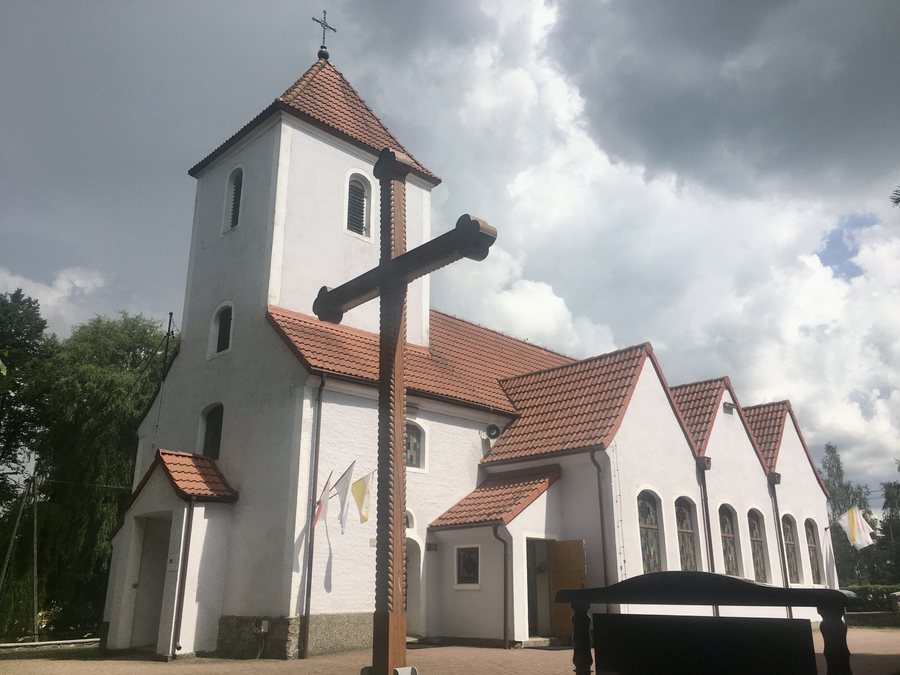 File:Kościół św. Anny w Grabowie Kościerskim (3).jpg
Photo: PiotrMig via Wikimedia Commons, CC BY 4.0
Grabowo Koscierskie at a glance
The Carthusians built the Chapel of St. Anne in 1631; in 1701, with the permission of Bishop S. Szembek, it became a parish church. The brick building is oriented east and has a choir with a three-sided end and a tower above the main entrance. Side aisles were added in 1952. Its surviving furnishings include late Renaissance and Baroque pieces.
What does the building history tell us?
The dates mark different phases: 1631 refers to the Carthusians’ construction of the chapel, 1701 to its conversion into a parish church, and 1952 to a structural extension. The present church building originated as the chapel founded in 1631. This makes it possible to divide the history of the place into its founding, its ecclesiastical role, and later changes, rather than treating all the dates as a single construction date.
The addition of side aisles is recorded as a distinct stage in the building’s history. It does not change the date of the original chapel, but adds a 20th-century alteration to the timeline. For trip planning that includes historic sites, this chronology helps clarify the difference between the building’s origins and its later expansion.
How can the architecture and furnishings be distinguished?
The church is built of brick and faces east. Its choir ends in a three-sided form, while the tower stands above the main entrance. The choir’s termination describes the shape of the building’s end; its orientation and the location of the tower are separate features. Together, these details provide a specific architectural description without requiring all parts to be dated to the same construction phase.
The furnishings also bring together different periods. The furnishings from the time of the foundation included three late Renaissance altars, probably works by Carthusian monks. The main altar contains an image of the Holy Family from the workshop of Herman Han. A 18th-century Crucifixion sculpture also survives in the church. The altars, the altarpiece, and the sculpture thus offer distinct points of reference for dating the surviving furnishings; the attribution of the altars is explicitly uncertain.
What other historical traces are there?
In addition to the church, two cemeteries provide dated evidence of the place’s history: the Roman Catholic cemetery dates from 1884, and the Evangelical cemetery from 1891. The Evangelical cemetery is also listed as a historic monument. These two dates add later, independent historical landmarks to the long building history of St. Anne’s Church.
What should you know about getting there?
In the route information for bus line 860, Grabowo Koscierskie appears in parentheses between Przywidz and Nowa Karczma. The listed service runs from Gdańsk to Kościerzyna via Kolbudy and Przywidz. Check the timetable before traveling for your chosen date. A municipal notice dated July 6, 2026, listed Grabowo Koscierskie among the places served by summer public transport connections. This referred to seasonal services, not a year-round connection.
If you’d like to add more destinations to your trip, discover Nowy Barkoczyn, Lipusz, Dębogóry, Lipuska Huta, Olpuch, Bartoszylas, Wiele and Kościerzyna.
FAQ
When was St. Anne’s Church built?
The Carthusians built the chapel in 1631. With the permission of Bishop S. Szembek, it became a parish church in 1701; the side aisles were added in 1952.
Which historic works of art have survived?
The furnishings include late Renaissance and Baroque pieces, including three late Renaissance altars, probably works by Carthusian monks. The main altar contains an image of the Holy Family from the workshop of Herman Han; a 18th-century Crucifixion sculpture has also survived.
What should you keep in mind when traveling by bus?
The route information for line 860 lists Grabowo Koscierskie in parentheses between Przywidz and Nowa Karczma. A municipal notice dated July 6, 2026, included the place in seasonal summer services. Check the timetable for your travel date.
For the broader travel overview: Berent.

