
Discover Lipusz: Church, Mill and Arboretum
Accommodation in Lipusz
If you are considering Lipusz as a travel destination, you will find attractions here to suit different interests: a museum in a former church, a memorial, a park with an educational trail, and the Wda River with its watermill. These places bring together cultural history and nature, without any one theme defining the character of the area.
Lipusz at a glance
The Muzeum Gospodarstwa Wiejskiego is located in the former Evangelical church at the intersection of Wybickiego and Majkowskiego streets. Lipusz is also home to the Roman Catholic parish church of St. Michael the Archangel. A monument commemorates a prisoner-of-war camp from the Second World War that stood in the surrounding fields. The park by the Lipusz Forest District office has an educational trail about nectar-rich trees, shrubs and perennials; the grounds of the Forest District office are also home to the arboretum, established in 2011.
What cultural sites can you discover in Lipusz?
The museum in the former Evangelical church brings together a present-day museum and the building's former use. Its location at the intersection of Wybickiego and Majkowskiego streets also provides a clear landmark in the area. If you are interested in Lipusz's religious architecture, you can also visit the Roman Catholic parish church of St. Michael the Archangel as another cultural point of interest.
A monument to the prisoners of the prisoner-of-war camp, which stood in the surrounding fields during the Second World War, commemorates a different aspect of the past. Along the route, the monument is 30 metres beyond the railway viaduct. The museum, parish church and monument represent different aspects of local history, so you can explore them according to your own cultural interests without reducing them to a single theme.
What do the park and arboretum offer?
The publicly accessible park by the Lipusz Forest District office is a place for recreation and learning. Its educational trail focuses on nectar-rich trees, shrubs and perennials. Pergolas and benches are among its amenities, along with paths with different surfaces and a covered rest area. As well as learning about plants, you can plan your visit around these specific features of the park.
The diverse nectar-rich plants create an interesting array of colours that changes with the seasons and over the years. The arboretum is on the grounds of the Forest District office and features a collection of trees and shrubs. Established in 2011, it is considered the first and only garden of its kind in Kościerski County. If you want to distinguish between the park and the arboretum, the educational trail focuses on nectar-rich plants, while the arboretum's collection comprises trees and shrubs.
How are the Wda, the mill and Młyński Pond connected?
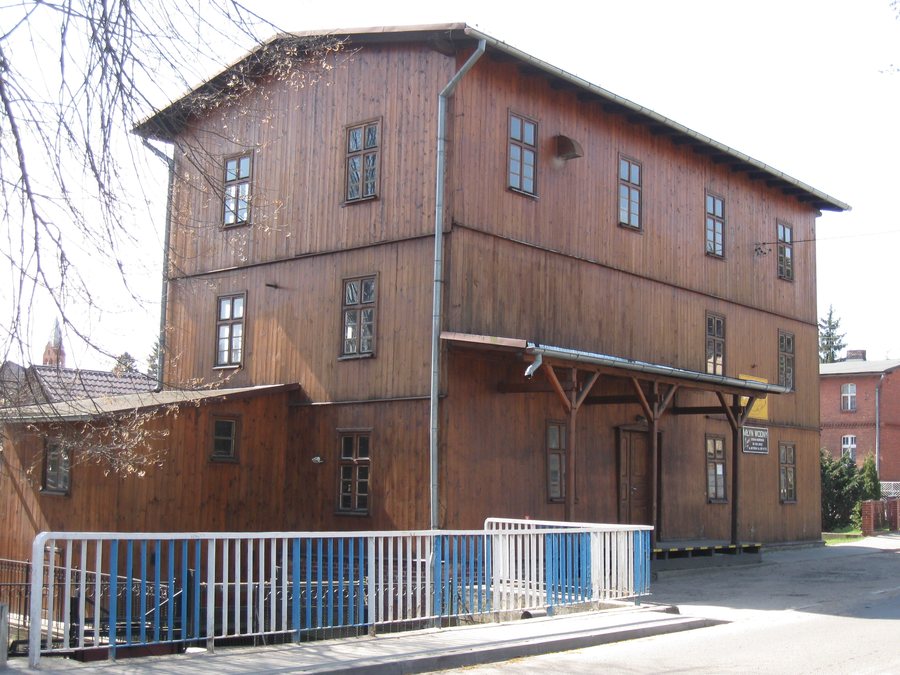
Alongside the watermill, the Wda, which is wide here, forms Młyński Pond. This makes the river, pond and mill part of a single landscape. Lipusz watermill can also be seen from the kayaking route on the Wda. This gives you a specific landmark if you are interested in the river: the mill is not only situated by the water, but is also visible from the kayaking route.
Nearby, Diabelski Kamień (Devil's Stone) is located on the educational trail of the Lipusz Forest District, close to the Płociczno forester's lodge. It adds another natural attraction outside the described town centre. When planning your visit, you can decide whether to focus on Lipusz's cultural sites, the park and arboretum, or the landscape along the Wda.
If you would like to discover more destinations: Sobącz, Lubań, Grabowo Koscierskie, Nowa Karczma, Stary Bukowiec, Śluza, Szenajda and Kościerzyna.
FAQ
What is inside the Muzeum Gospodarstwa Wiejskiego?
The museum is located in the former Evangelical church at the intersection of Wybickiego and Majkowskiego streets.
What can you find in the park by the Lipusz Forest District office?
The publicly accessible recreational and educational park has a trail about nectar-rich plants. Its amenities include pergolas, benches, paths with different surfaces and a covered rest area.
Does the appearance of the plants in the park change?
Yes. The interesting array of colours created by the nectar-rich plants changes with the seasons and over the years.
For the broader travel overview: Berent.

