
Kępice – River Routes, Forest and Industrial History
Accommodation in Kępice
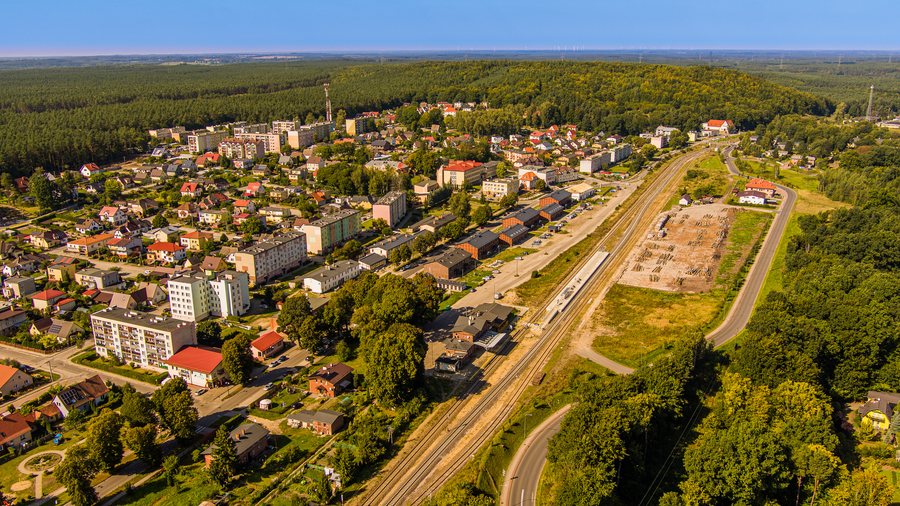
Kępice combines experiences on the Wieprza River with a hiking trail that runs entirely through forest areas and an industrial history dating back to the 19th century. When planning your stay, you can decide whether you would rather explore by water, on foot or by bike—or are interested in the town’s history.
Key facts about Kępice
The educational trail “Ścieżka edukacyjna w Kępicach” runs along the banks of the Wieprza, has information boards and is designated as a cycling route. The “Dolina Wieprzy i Studnicy” hiking trail runs entirely through forest areas. Canoeists can use the Przystań Kępice canoe station, which has fixed jetties and a walkway for launching and mooring kayaks. New canoe rest stops have been created in Kępice along a 9 km section of the Wieprza route.
Which routes can you explore by the water and in the forest?
The educational trail follows the Wieprza riverbank and has information boards. You can use these to help find your way, and also take into account its designation as a cycling route when choosing a route. The trail and its cycling designation are part of “Ścieżka edukacyjna w Kępicach”; they should not be confused with the “Dolina Wieprzy i Studnicy” hiking trail.
Those interested in a forest route will find a different type of trail in “Dolina Wieprzy i Studnicy”: it runs entirely through forest areas. Hikers and cyclists on this trail may encounter numerous religious monuments and natural features. These characteristics offer different points of reference for your plans: on the one hand, a riverside route with information boards; on the other, a trail running entirely through the forest, with religious and natural features.
What does the canoe station on the Wieprza offer?
The Przystań Kępice canoe station has fixed jetties. A walkway is provided for launching and mooring kayaks. This makes the station a useful landmark for anyone looking to explore Kępice from the perspective of a canoe trip.
In addition, new canoe rest stops have been created in Kępice along a 9 km section of the Wieprza route. The distance refers to this section of the route. When planning your trip, you can therefore distinguish between two aspects of canoeing: the fixed canoe station with its walkway, and the rest stops along the specified route section.
What industrial history can you see in Kępice?
Kępice has a tannery that was formerly a paper and cellulose factory owned by German Chancellor Otto von Bismarck. The history of industrial use along the Wieprza is also marked by a hydroelectric plant: it was built in 1890 for a paper factory and a sawmill. In 1918, the facility was converted into a hydroelectric power station that supplied electricity to the paper mill.
These two details show different aspects of the town’s history: the tannery’s former use and the development of the facility on the Wieprza. The dates apply to the events described—the hydroelectric plant’s construction in 1890 and its conversion in 1918. If you are interested not only in nature and water routes but also in the development of industrial sites, these places offer another way to discover Kępice.
FAQ
Where does the educational trail “Ścieżka edukacyjna w Kępicach” run?
It runs along the banks of the Wieprza, has information boards and is designated as a cycling route.
What makes the “Dolina Wieprzy i Studnicy” hiking trail distinctive?
The trail runs entirely through forest areas. Hikers and cyclists may encounter numerous religious monuments and natural features there.
What length is given for a section of the Wieprza route?
New canoe rest stops have been created in Kępice along a 9 km section.
For the broader travel overview: Słupsk.

