
Discover Cieszyn
Accommodation in Cieszyn
Cieszyn can be explored through three clearly distinct historical landmarks: the park on Castle Hill, the Market Square and Cieszyńska Wenecja along the Młynówka Canal. They reveal different facets of the city’s history—from architectural monuments and townhouses to water and crafts.
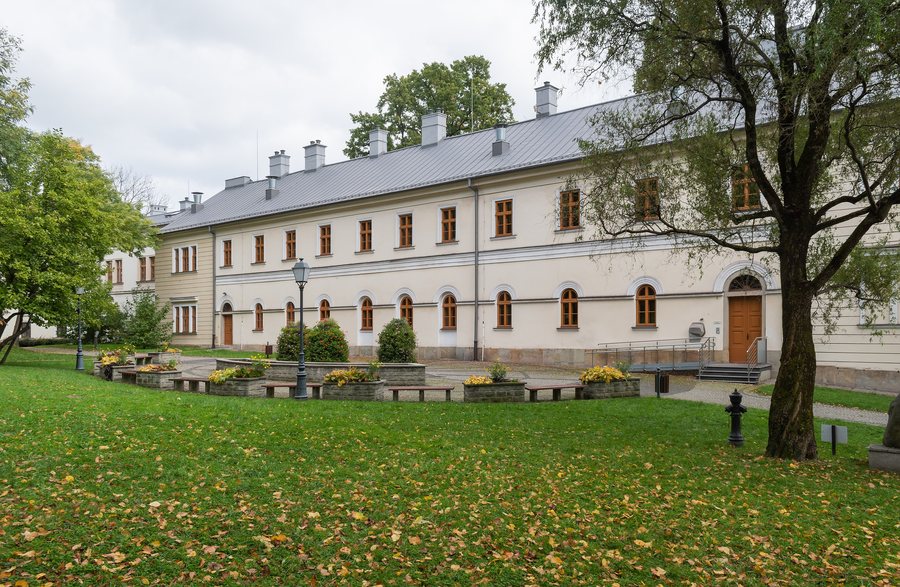
Cieszyn at a glance
- Castle Hill is home to a park with the Piast Tower and the Rotunda of St. Nicholas.
- The Market Square has been at its current location since the late 15th century. It is lined with the town hall and Renaissance arcaded houses dating from the 16th century.
- Cieszyńska Wenecja is a low-rise district along the Młynówka Canal. Since the Middle Ages, the canal has powered mill wheels and supplied water to workshops.
Which historical sites should you distinguish between?
The park on Castle Hill brings the Piast Tower and the Rotunda of St. Nicholas together in one place. This makes it a distinct architectural landmark in Cieszyn. Each of the two structures has particular historical significance, which also stands out in the wider destination of Cieszyn.
At the Market Square, it is worth looking at two different periods: the square has been at its current location since the late 15th century, while the Renaissance arcaded houses date from the 16th century. The town hall and houses that once belonged to the wealthiest townspeople are also located there. This makes it possible to distinguish the square’s long history of use from the history of its buildings.
Cieszyńska Wenecja reveals another side of the urban landscape. This low-rise district stretches along the Młynówka Canal. Since the Middle Ages, its water has powered mill wheels and supplied water to workshops. Here, the buildings and the historical use of water are both central.
The Szlak Kociej Szajki leads to Castle Hill, the Market Square and Cieszyńska Wenecja. It connects three distinct historical themes: architecture, the history of the square and the district along the canal. This route can help you organise your priorities when planning your trip.
Which cultural themes are covered by the wider destination of Cieszyn?
In the wider destination of Cieszyn, the Muzeum Śląska Cieszyńskiego was founded in 1802 by the priest Leopold Jan Szersznik. It is considered one of Central Europe’s oldest public museums and the oldest public museum in Poland. Its history offers a distinct way to explore regional culture alongside Cieszyn’s architecture and urban landmarks.
Architecture and design are also part of the wider destination of Cieszyn. Zamek Cieszyn is a centre for entrepreneurship and design, located in a classical hunting lodge built by the Habsburgs. The Muzeum Drukarstwa recalls the printing traditions of Cieszyn Silesia and preserves unique collections as well as machines that are still operational.
Książnica Cieszyńska is based in the so-called Bludowski House. The building was created in the 18th century by converting a former ducal mint dating from the 13th century. Another focus on crafts in the wider destination of Cieszyn is the Arcyksiążęcy Browar Zamkowy Cieszyn: it has operated continuously since 1846 and makes beer using traditional methods.
How can you factor the city’s themes into your hotel choice?
Choosing a personal focus is more useful than following a general ranking. If you are interested in historic architecture, Castle Hill Park and the Market Square offer different points of interest. If you are interested in the history of crafts and water use, add Cieszyńska Wenecja to your plans. Decide which themes will shape your trip, then use those priorities to choose your accommodation.
Discover more destinations: Koniaków, Skoczów, Istebna, Strumień, Bąków, Szczyrk, Ochaby Wielkie, Cisownica.
FAQ
How are the Rotunda and Piast Tower presented in the wider destination of Cieszyn?
The Rotunda of St. Nicholas is considered one of Poland’s oldest architectural monuments. The Gothic Piast Tower on Castle Hill is 24 metres high.
What topics are covered by the permanent exhibition at the Muzeum Śląska Cieszyńskiego?
In the wider destination of Cieszyn, it focuses mainly on the history and culture of the nobility, townspeople and rural population of Cieszyn Silesia.
How large is the collection at Książnica Cieszyńska?
In the wider destination of Cieszyn, its collection comprises more than 130,000 printed volumes, including about 18,500 old prints and 17,000 manuscripts.
For the wider travel overview: Cieszyn.

