
Dzięgielów – Walking Trail, Nature and Castle
Accommodation in Dzięgielów
A marked walking trail, the Grabicz Natura 2000 woodland, protected water springs and a Renaissance castle offer different perspectives on Dzięgielów.
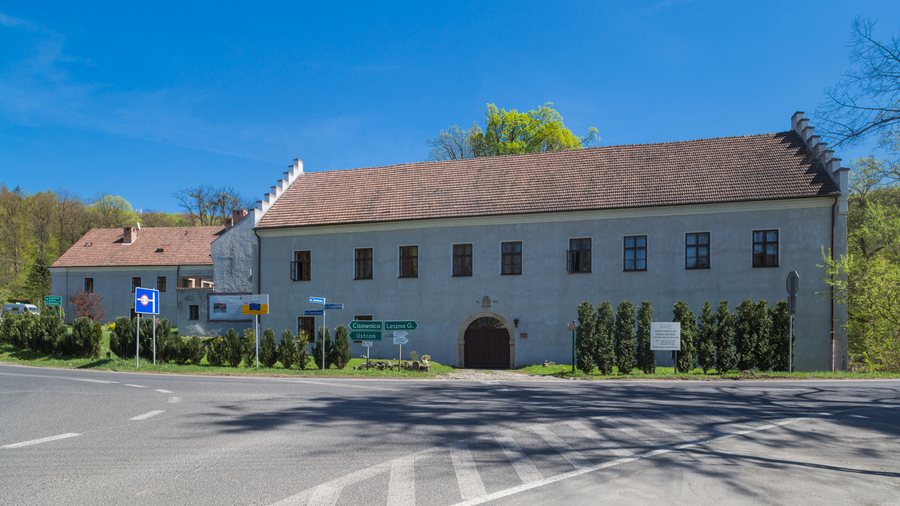 File:2018 Powiat cieszyński, Dzięgielów, Zamek-dwór obronny 03.jpg
Photo: Marcin Konsek via Wikimedia Commons, CC BY-SA 4.0
File:2018 Powiat cieszyński, Dzięgielów, Zamek-dwór obronny 03.jpg
Photo: Marcin Konsek via Wikimedia Commons, CC BY-SA 4.0
Dzięgielów at a glance
The yellow-marked Goleszów–Dzięgielów walking trail is 5 km long, includes around 100 metres of elevation gain and takes approximately 1.5 hours. Its route description was updated in 2026 following changes to the route; the trail reaches the eastern edge of Dzięgielów. Grabicz is a woodland within the Natura 2000 network. The castle is a Renaissance stone-and-brick building with three wings, a courtyard and a tower.
How can you factor the walking trail into your schedule?
For planning purposes, the route length, elevation gain and duration answer different questions. The 5 km describe the route length, the approximately 100 metres refer to the elevation gain, and the roughly 1.5 hours indicate the stated time required. Together, these figures help you fit the walk into your day without treating any one figure as a substitute for the others. The yellow markings and the name Goleszów–Dzięgielów identify the trail; it leads to the eastern edge of the village. The route description takes account of changes made to the route in 2026.
What natural features make Dzięgielów distinctive?
Grabicz is a woodland in Dzięgielów and forms part of the Natura 2000 network. Another natural feature is the “Cieszyńskie źródła tufowe” area, which protects water springs where calcareous tufa is deposited and which are unique nationwide. These offer different points of interest: a protected woodland and geological features around the springs. If you are considering Dzięgielów for its natural features, you can use these two names as specific points of reference without conflating them into a single protected area.
What is known about the castle?
The castle in Dzięgielów is a Renaissance stone-and-brick building, as well as a three-winged masonry structure with a courtyard and a tower. These details describe both its architectural style and the form of the building. “Three-winged” refers to its arrangement of three wings; the courtyard and tower add two further distinguishing architectural features. For those interested in architectural history, Dzięgielów offers a clearly defined architectural point of interest alongside its nature and walking trail. The style, materials and design provide different ways to understand the castle.
Which focus best suits your travel plans?
The three themes offer different highlights: you can plan around the walking trail’s distance and duration, Grabicz and the tufa springs represent nature and geology, and the castle offers Renaissance architecture. If you are looking for a hotel in Dzięgielów, you can match these highlights to your travel interests and make a more informed choice of location. This information can help you identify what Dzięgielów has to offer; it does not replace deciding what kind of trip you want to take.
Discover more destinations: Ochaby Wielkie, Brenna, Zaborze, Cieszyn, Kostkowice, Pruchna, Szczyrk, Międzyświeć.
FAQ
How long is the Goleszów–Dzięgielów walking trail?
The yellow-marked trail is 5 km long. The stated duration is around 1.5 hours, with approximately 100 metres of elevation gain.
What does the “Cieszyńskie źródła tufowe” area protect?
The area protects water springs where calcareous tufa is deposited and which are unique nationwide.
What are the features of the castle in Dzięgielów?
It is a Renaissance stone-and-brick building, three-winged and built of masonry, with a courtyard and a tower.
To the main travel overview: Cieszyn.

