
Kłobuck – Nature, Trails and Culture
Accommodation in Kłobuck
Kłobuck combines nature experiences with historic buildings and several routes for walking or cycling. When planning your trip, it is particularly worth looking at the different routes: some lead to nature reserves and the Zakrzew Reservoir, while others connect places within the municipality.
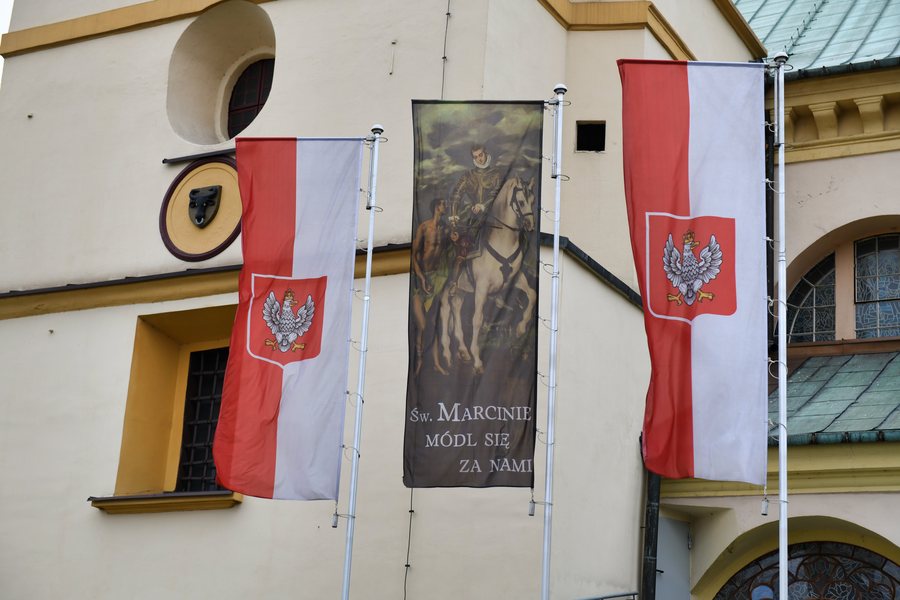 Święty Marcin-Kłobuck-2022-0002-RIKiWK-MCD
Photo: Robert Garstka / Regionalny Instytut Kultury w Katowicach via Source, CC BY 4.0
Święty Marcin-Kłobuck-2022-0002-RIKiWK-MCD
Photo: Robert Garstka / Regionalny Instytut Kultury w Katowicach via Source, CC BY 4.0
Kłobuck at a glance
The landscape of the Kłobuck municipality is shaped by the Biała and Czarna Oksza rivers, as well as by moraine hills and limestone uplands. The municipality has a total of eight legally protected areas, including five nature reserves and two ecological sites. Two routes connected with nature and forests, measuring 4.5 and 12.7 kilometres, are described for cyclists. In the town, St. Martin’s Church and the historic urban layout are cultural points of interest.
What natural attractions and landscapes define the municipality?
Dębowa Góra Nature Reserve covers 5.45 hectares and is located on a hill that reaches up to 330 metres above sea level. The reserve also has an observation tower. Sessile oaks and spruces grow there; protected plant and animal species include mezereon, periwinkle, lily of the valley, sand lizard, slow worm and adder. This makes Dębowa Góra a notable example of the municipality’s natural diversity.
Zakrzew Reservoir is another destination with its own character: this artificial body of water on the Biała Oksza covers ten hectares and is used for recreation in summer. Together with the rivers and varied terrain, it gives the municipality a range of landscapes, from forested protected areas to bodies of water. When looking for a hotel in Kłobuck, you can consider whether you would rather focus your trip on these natural attractions or on historic sites.
Which routes are suitable for planning your trip?
The cycling route network includes a 4.5-kilometre route from Dębowa Góra to Zakrzew Reservoir. The longer, 12.7-kilometre route starts at a protected mezereon site in the Pierzchno forest district, passes through Zamczysko Reserve and also ends at the reservoir. The two routes differ in length and in the stops listed, allowing you to compare them when choosing your own route.
The Kłobuck–Przystajń cycling route also starts in Kłobuck and is described as an easy, signposted cycling route. For walkers, the 67.5-kilometre blue Nature Reserves Trail passes through Zamczysko and Dębowa Góra reserves; the latter lies within the town limits. The Green Kłobuck Trail starts at St. Martin’s Church and runs from Kłobuck through Mokrą and Zawady on the Liswarta to Wąsosz. Another named route, the Szlak Opatówki, starts at Zakrzew Reservoir and ends at the municipal office in Zawady.
What do the culture and local history have to offer?
St. Martin’s Church was founded in 1144 by Piotr Dunin Włostowic of Skrzynno. Today, it features Gothic architecture with Baroque elements. Five pointed Gothic portals have been preserved in the Church of St. Martin and St. Margaret in Kłobuck. The historic urban layout dates from the 12th–13th and 14th centuries. In Kłobuck-Zagórze, a palace built between 1795 and 1800 in the Neo-Gothic style adds to the area’s architectural heritage. Its L-shaped floor plan and centrally positioned polygonal tower are defining architectural features.
The Miejski Ośrodek Kultury has been operating continuously since 1972. The OSiR Kłobuck sports and leisure centre includes a swimming pool, sports hall, football stadium and table tennis facilities. Customs preserved in the municipality include drowning the Marzanna effigy, decorating the Gaik on Gaik Sunday, and visits by carol singers during the Christmas season. The municipal harvest festival features parades and competitions with harvest wreaths made from agricultural produce. One local culinary speciality is mixed Kłobuck bread: in 2010, it was added to the list of traditional products in the bakery and confectionery category of the Silesian Voivodeship.
For more local pages, see Pierzchno, Danków, Kopiec, Miedźno, Zawady and Szarki. Other destinations in the catalogue include Żywiec and Żory.
FAQ
How long are the two cycling routes described?
The route from Dębowa Góra to Zakrzew Reservoir is 4.5 kilometres long. The route from the protected mezereon site in the Pierzchno forest district, via Zamczysko, to the reservoir is 12.7 kilometres long.
What does Dębowa Góra Nature Reserve include?
The reserve covers 5.45 hectares, lies on a hill reaching up to 330 metres and has an observation tower. Protected plant and animal species, among others, are found there.
What are the historical features of St. Martin’s Church?
The church was built in 1144 and today features Gothic architecture with Baroque elements. Five pointed Gothic portals have been preserved in the Church of St. Martin and St. Margaret.
Which local customs have been preserved in the Kłobuck municipality?
They include drowning the Marzanna effigy, decorating the Gaik on Gaik Sunday, and visits by carol singers during the Christmas season.
For the broader travel overview: Silesia.

