
Bełk: Wooden Church, Historic Traces and Trails
Accommodation in Bełk
Bełk can be explored through its historic wooden church, cultural traces, and various trails. Several highlights can help you plan your trip: protected landscape in the western and southern parts of the sołectwo, an educational trail starting in the village center, and cycling routes connecting to other places.
Bełk at a glance
- The western and southern parts of the Bełk sołectwo are part of the “Cysterskie Kompozycje Krajobrazowe Rud Wielkich” Landscape Park.
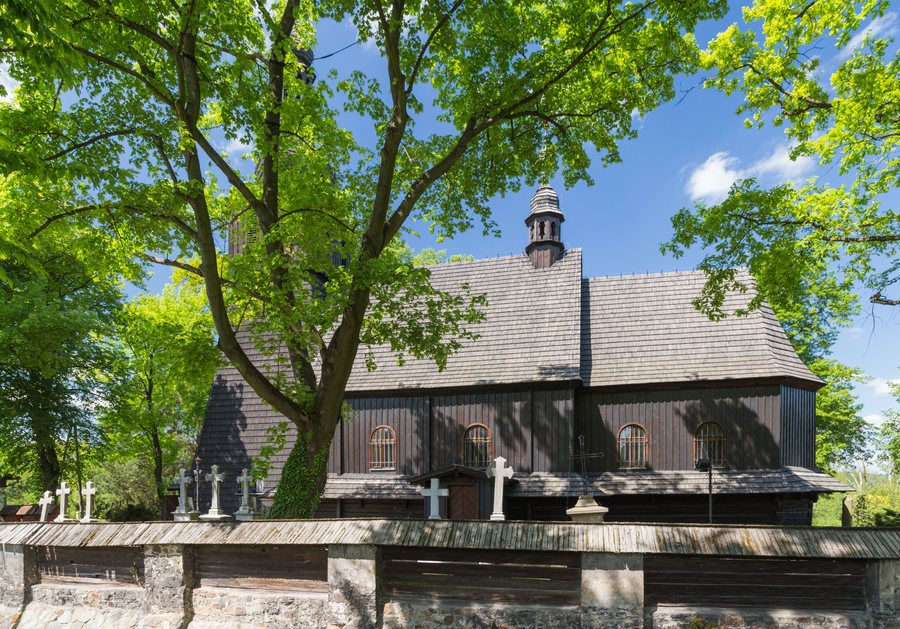
- The parish church of St. Mary Magdalene is a wooden church dating from 1753, built in a vernacular style; it is listed in the register of monuments and the monument inventory.
- The signposted “Śladami Belka” educational trail begins in the village center, is approximately 2.5 km long, and leads to Górka Lukasów, which dates from 1866.
- Cycling routes No. 2 and No. 291 run through the sołectwo. A yellow-marked hiking trail and the Rybnicka Loop also pass through Bełk.
Which parts belong to the Landscape Park?
The western and southern parts of the Bełk sołectwo belong to the “Cysterskie Kompozycje Krajobrazowe Rud Wielkich” Landscape Park. The landscape designation therefore applies to these areas, not to the entire sołectwo as a whole. If you are exploring the area’s natural and cultural landscape, it is worth keeping this geographical distinction in mind.
What historic traces shape Bełk?
The parish church of St. Mary Magdalene is an 18th-century wooden church built in 1753 in a vernacular style. It is listed both in the register of monuments and in the monument inventory. Its furnishings include an early Baroque main altar dating from 1610 and an organ more than 200 years old.
The cultural traces are not limited to the church building. A group of old trees grows in the historic cemetery, including a pedunculate oak protected as a natural monument. Bełk is also home to the stone sculpture “Boża Męka,” dating from 1878. Architecture, the cemetery landscape, and sculpture thus offer different perspectives on the village’s history.
What hiking trails are there?
The signposted “Śladami Belka” educational trail begins in the village center and is approximately 2.5 km long. One of its stops is Górka Lukasów, a hill dating from 1866. The route therefore combines a stated, manageable distance with a specific historic point of interest.
The yellow-marked “Szlak Historii Górnictwa Górnośląskiego” hiking trail also passes through Bełk. Its name refers to the history of mining in Upper Silesia. The “Śladami Belka” educational trail and this hiking trail thus have different thematic focuses.
Which cycling routes run through Bełk?
Two cycling routes run through the Bełk sołectwo: Route No. 2 and Route No. 291. The blue Route No. 291 leads from Ornontowice via Dębieńsko Wielkie and Bełk to Palowice and Woszczyce. It passes close to the wooden church built in 1753, which can be seen nearby from the route.
Another cycling connection is the Rybnicka Loop of the Wooden Architecture Trail, called “Pętla Rybnicka,” which passes through the Bełk sołectwo. This means that cycling options include both numbered routes and a loop on the Wooden Architecture Trail. The signposted routes differ in their names and courses.
How can you distinguish the trails when planning your trip?
For a local route, the educational trail offers a starting point in the village center, an approximate length, and a historic stop at Górka Lukasów. If you are planning a cycling route, you can use the sequence of places on Route No. 291 as a guide. The yellow hiking trail has a different thematic focus, while Route No. 2 and the Rybnicka Loop provide additional cycling options in the sołectwo.
Discover more destinations: Czerwionka-Leszczyny, Sumina, Żytna, Jejkowice, Zwonowice, Palowice, Rybnik, Gaszowice.
FAQ
Where does the “Śladami Belka” educational trail begin?
It begins in the village center of Bełk, is approximately 2.5 km long, and includes Górka Lukasów, a hill dating from 1866.
Which cycling route passes close to the wooden church?
The blue cycling Route No. 291 passes close to the wooden church built in 1753, which can be seen nearby.
What historic furnishings does the wooden church have?
It has an early Baroque main altar dating from 1610 and an organ more than 200 years old.
For the broader travel overview: Rybnik.

