
Okrajnik: Chapels, Marian Figure and Historic Buildings
Accommodation in Okrajnik
Okrajnik’s historic landmarks include two chapels, a stone Marian figure and a former inn complex with a carriage house and stable. For travelers interested in culture, it is helpful to distinguish between two depictions of Our Lady of the Rosary: a figure on a chapel altar and a polychrome stone figure at a separate address. Together, these details provide a specific cultural point of reference for planning your trip.
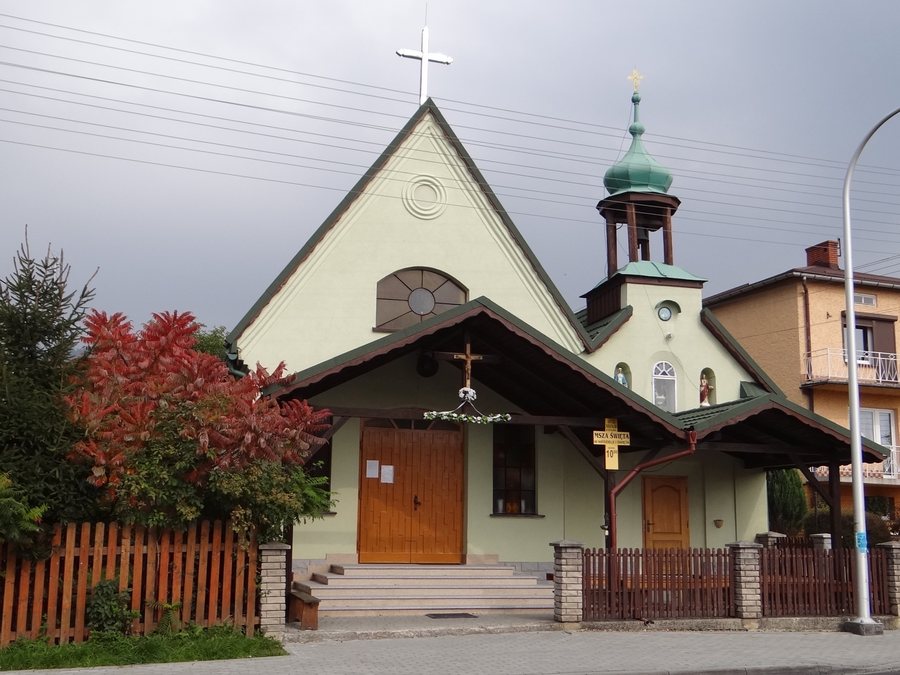
Okrajnik at a glance
- The chapel with a figure of Our Lady of the Rosary on its altar was built in 1828 and enlarged in 1976.
- Sunday services are held in this chapel; times may change.
- The wooden Chapel of Saint Anthony dates from the 18th century.
- The polychrome stone figure of Our Lady of the Rosary at 24 Żywiecka Street is dated 1885.
- The former inn with a carriage house and stable at 66 Żywiecka Street dates from the 18th century.
What chapels and Marian figures are there?
There are two construction phases to distinguish for the chapel with the Madonna of the Rosary on its altar: it was built in 1828 and enlarged in 1976. The Marian figure is part of the description of this chapel. A separate historic landmark is the polychrome stone figure at 24 Żywiecka Street, which dates from 1885. “Polychrome” means that the figure is decorated in multiple colors. The subject and date are similar, but the materials and contexts are different.
Another religious site is the wooden Chapel of Saint Anthony. Its 18th-century dating differs from the specific years associated with the other Marian landmarks. Its dedication is another distinct point of reference: Saint Anthony is the focus here, while both Marian figures are dedicated to Our Lady of the Rosary.
How do the historic buildings fit into the timeline?
The landmarks span from the 18th century to the enlargement of the Chapel of the Rosary in 1976. Two of the historic buildings—the Chapel of Saint Anthony and the former inn complex—date from the 18th century. The years 1828 and 1976, by contrast, mark two specific construction phases for the chapel with the altar figure. The stone Marian figure adds another date to this timeline: 1885. This makes it possible to distinguish between different centuries and changes without confusing the individual sites.
The former inn complex can also be distinguished by its former function and its component buildings: the historic site includes a carriage house and a stable. A carriage house is a building used to store carriages; the stable is a separate part of the complex. The address, 66 Żywiecka Street, helps distinguish this entry from the Marian figure at number 24.
What should you keep in mind when planning?
If you are interested in the chapel with the Madonna of the Rosary, keep in mind that Sunday services are held there. Since times may change, check the current schedule if you would like to plan your visit around a service. The services are a specific piece of planning information; the two Marian figures, the Chapel of Saint Anthony and the former inn complex offer different historical themes to explore, depending on your interests.
Discover more destinations: Korbielow, Bierna, Koszarawa, Zwardoń, Mutne, Żabnica, Miedzybrodzie Zywieckie, Ślemień.
FAQ
When was the chapel with the Madonna of the Rosary built?
The chapel was built in 1828 and enlarged in 1976.
When are services held in this chapel?
Services are held on Sundays. Times may change; check the current schedule.
How old is the Chapel of Saint Anthony?
The wooden Chapel of Saint Anthony dates from the 18th century.
Where is the stone Marian figure located?
The polychrome figure of Our Lady of the Rosary is located at 24 Żywiecka Street in Okrajnik and dates from 1885.
For the overview of the wider area: Żywiec.

