
Jarosław
Accommodation in Jarosław
Jarosław combines its location on the San with distinctive cultural sites and a layered urban history. Those looking for a cultural travel destination can explore underground city spaces, church art, historic buildings and events here.
Jarosław at a glance
Jarosław lies on the high edge of the San’s left terrace. The city is also located on the boundary between the Rzeszów Foothills—also called the Jarosław Foothills in this section—and the Lower San Valley. This location describes Jarosław as a transition between two named landscape areas.
The surrounding area also reflects the river and loess landscape in its place names: Sanowiska are the oxbow lakes that have survived, formed by repeated shifts in the San’s course. Wądoły are the deep ravines typical of loess areas. Both names refer to landscape features in the city’s immediate surroundings.
The San flows through the wider Jarosław County. There, the 70-hectare reservoir in Radymno also offers opportunities for swimming, water sports and fishing. These waterside destinations add a regional perspective to Jarosław’s cultural themes; the reservoir is located in Radymno.
Which cultural sites define Jarosław?
A distinctive feature of the city is the Podziemne Przejście Turystyczne beneath the townhouses at Rynek 4, 5 and 6. It is 186 metres long and reaches up to 6 metres below the surface of the market square. Its precise location and dimensions give the underground passage a clear connection to the Rynek, without conflating it with the city’s other attractions.
The Kamienica Orsettich has housed the Muzeum w Jarosławiu since 1945. This makes the museum a longstanding cultural point of reference in the city’s history. For travellers interested in buildings and collections, it offers a distinct experience alongside the underground passage and religious buildings.
The Kolegiata pw. Bożego Ciała, originally św. Janów, is considered the oldest post-Jesuit church in Poland. Its high altar contains the image Matki Boskiej Śnieżnej Królowej Rodzin. It survived the church fire of 1862 and is especially venerated. The church thus brings together an architectural history recognised at national level and a specific religious artwork with a history passed down over time.
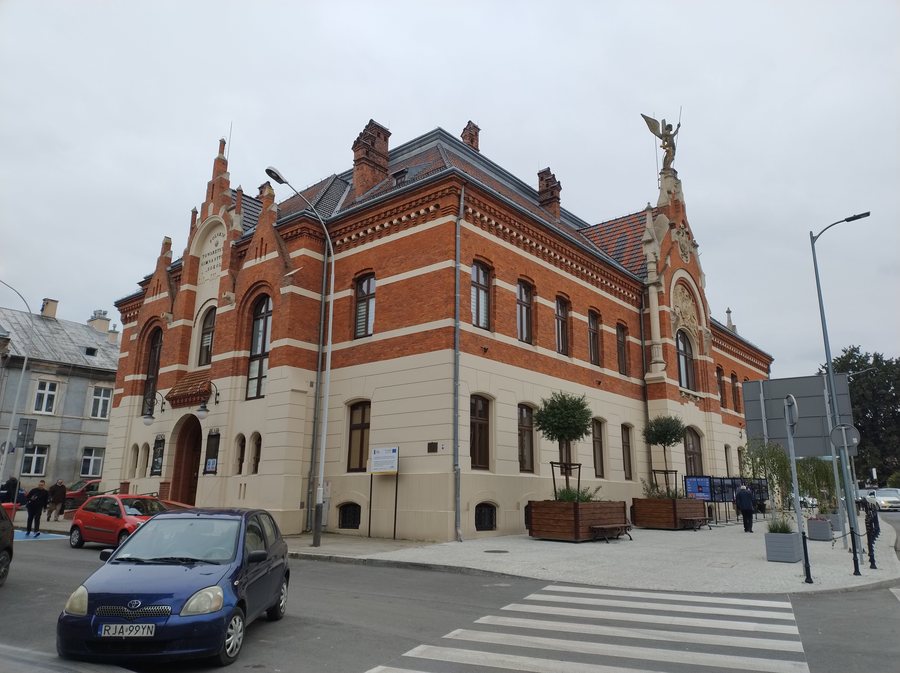
The Ratusz also offers several historical points of interest: its first mention dates from the last quarter of the 15th century. The tower clock is more recent; it dates from 1896 and was made in Vienna at Richard Liebing’s workshop. The two dates concern different aspects of the Ratusz and should not be confused.
Which events and historic places are part of the picture?
The Festiwal Muzyki Fortepianowej im. Marii Turzańskiej is Jarosław’s most important annual classical music festival and has been held since 2012. The Jarmark Jarosławski takes place towards the end of August in the Old Town. Travellers planning a trip around a cultural event will find two distinct options: an annual classical music festival and a market in the Old Town.
The Mykwa, a ritual bathhouse, is also part of the city’s history. Construction of the new Mykwa at Spytka 11 began in 1906. During the typhus epidemic of 1920, at the district administrator’s request, the Jewish Community made the Mykwa available to all residents. The two dates mark different moments: the start of construction on the new facility and its use in a particular historical situation.
More local pages: Zamojsce, Radawa, Chłopice, Pruchnik, Munina, Tuczempy, Jarosław, Boratyn, Radymno and Morawsko.
FAQ
Where is Jarosław?
Jarosław lies on the high edge of the San’s left terrace, on the boundary between the Rzeszów Foothills and the Lower San Valley.
How long is the Podziemne Przejście Turystyczne?
The passage beneath the townhouses at Rynek 4, 5 and 6 is 186 metres long and reaches up to 6 metres below the surface of the market square.
Which cultural sites are especially characteristic of Jarosław?
These include the Muzeum w Jarosławiu in the Kamienica Orsettich, the Kolegiata pw. Bożego Ciała and the Ratusz.
When does the Jarmark Jarosławski take place?
The Jarmark Jarosławski takes place towards the end of August in the Old Town.
For the wider travel overview: Subcarpathian Voivodeship.

_-_Sok%C3%B3%C5%82_01.jpg)