
Discover Chłopice: Church Art and Manor House History
Accommodation in Chłopice
Chłopice brings together church art and the history of the estate and manor house. When planning a trip, the church’s building history, its illusionistic wall paintings, and the limited opportunity to visit the interior are especially important.
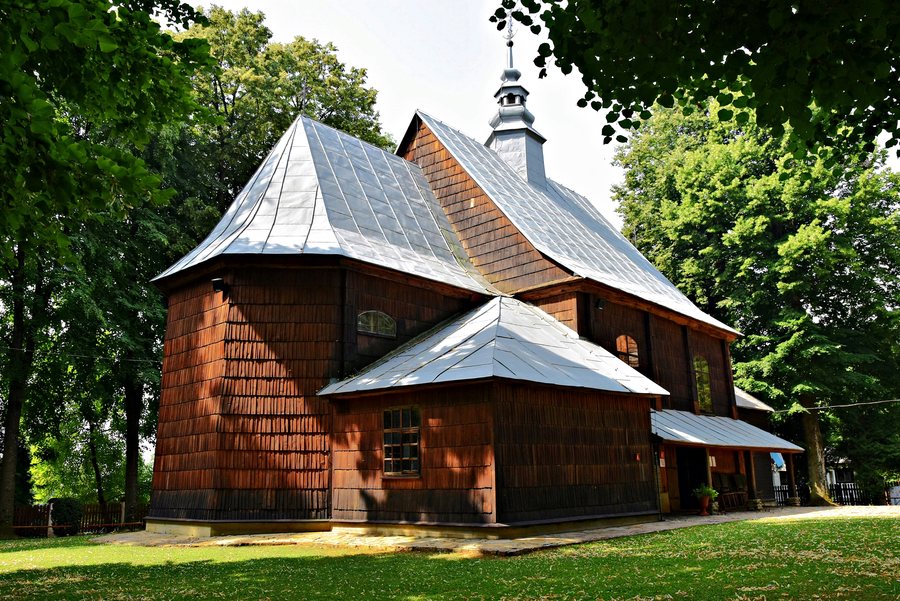 File:Chłopice, Cerkiew Zaśnięcia Najświętszej Maryi Panny w Chłopicach 0.jpg
Photo: Jacek Daczyński via Source, CC BY-SA 4.0
Chłopice at a glance
- The Church of the Dormition of the Most Holy Mother of God was built in 1761 on the site of a wooden chapel dating from 1688.
- The Church of the Assumption of Mary features illusionistic wall paintings and furnishings from the second half of the 18th century.
- The religious building complex is part of the Wooden Architecture Trail of the Subcarpathian Voivodeship.
- The estate complex includes stables dating from 1904; a manor house from the 1930s is also located in Chłopice.
- The masonry manor house is now used as a primary school. Access to the church interior is limited.
What does the church’s building history tell us?
The Church of the Dormition of the Most Holy Mother of God was built in 1761 on the site of a wooden chapel dating from 1688. Thus, an earlier wooden structure and the later church belong to two successive stages in the building’s history. The chronology offers a clear point of reference without conflating the two building phases.
The Church of the Assumption of Mary in Chłopice features illusionistic wall paintings and furnishings from the second half of the 18th century. Illusionistic painting creates the optical effect of spatial depth or architectural features. This term helps place the distinctive style of the wall decoration in context. Alongside the construction date, the interior offers another point of interest for travelers interested in religious art and design.
What should you know before visiting the church?
Access to the church interior is limited. A visit is possible after contacting the parish by telephone in advance; check with the parish before making firm plans. The religious building complex is also part of the Wooden Architecture Trail of the Subcarpathian Voivodeship. Being on the trail and the specific possibility of visiting the interior are separate points to consider when planning.
The wider region also has the Manor and Castle Architecture Trail of Jarosław County. It is unmarked and has no information boards; for now, visitors are expected to find its individual sites on their own using a map. If you include this trail in your travel plans, be prepared to navigate with a map rather than relying on signs or information boards.
What manor house history shapes the town?
The estate complex in Chłopice includes stables dating from 1904. A manor house from the 1930s is also located in the town; the masonry manor house is now used as a primary school. The dates and the information about the building’s current use refer to different aspects of its history: 1904 is the date of the stables, the 1930s refer to a manor house, and the school use describes the masonry manor house.
If its current use as a primary school matters for your travel plans, check in advance whether this is still the case. For historical context, it is useful to distinguish the stables as part of the estate complex from the information about the individual manor houses.
How can Chłopice be considered as a cultural destination?
There are two complementary areas of interest when choosing a destination: religious architecture and interior art, and the history of the estate and manor house. If your main aim is to see the wall paintings, first check the limited access to the church interior. If you are also interested in architecture trails, note the different conditions: contacting the parish by telephone in advance is important for visiting the church, while the Manor and Castle Architecture Trail of Jarosław County requires navigating with a map.
Discover more destinations: Boratyn, Jarosław, Tuczempy, Zamojsce, Pruchnik, Munina, Radawa, Radymno.
FAQ
When was the church in Chłopice built?
The church was built in 1761 on the site of a wooden chapel dating from 1688.
Can visitors see the church interior?
Access is limited. A visit is possible after contacting the parish by telephone in advance; check with the parish.
What should visitors know about the Manor and Castle Architecture Trail?
The trail in Jarosław County is unmarked and has no information boards. For now, visitors are expected to find its individual sites on their own using a map.
For the broader travel overview: Jarosław.

