
Jarosław Between Art and Architecture
Accommodation in Jarosław
Jarosław combines interactive arts education with distinctive architecture and ecclesiastical history. The featured places offer different focuses—from multimedia and historic artworks to galleries and concert venues—and help you plan a culture-focused trip around your own interests.
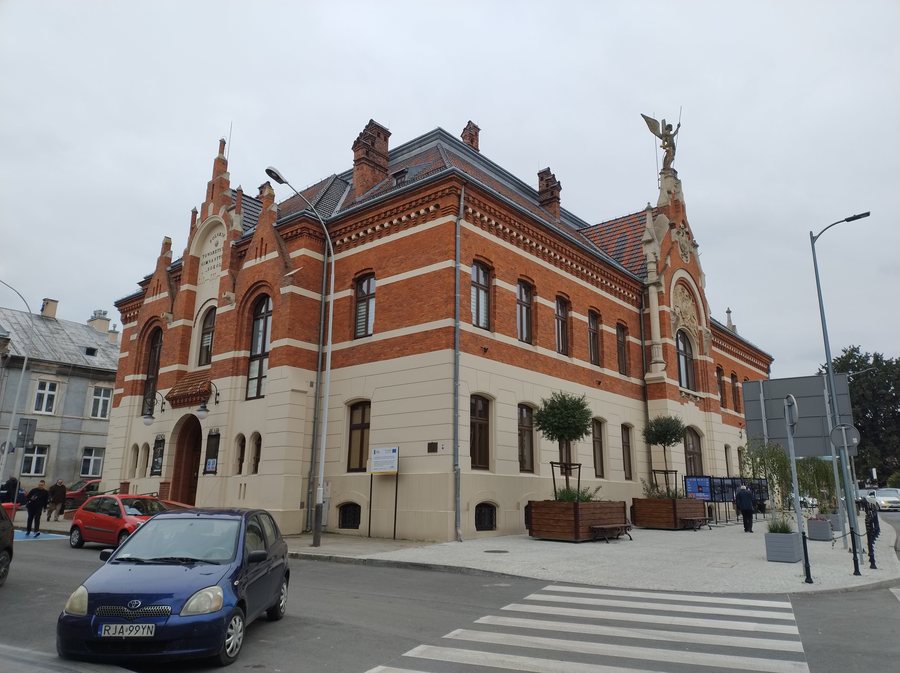 File:Jarosław (pl. Mickiewicza 5) - Sokół 01.jpg
Photo: Patryk Duszkiewicz via Wikimedia Commons, CC BY 3.0
Quick Facts About Jarosław
- The Centrum Edukacji Kulturalnej introduces visitors to music, painting, sculpture, and architecture through interactive devices and multimedia applications.
- The monumental Drzwi Tysiąclecia depict scenes from the history of Poland and Jarosław.
- The Kamienica Attavantich houses several galleries and the stucco-decorated Sala Lustrzana.
Which cultural offerings shape Jarosław?
The Centrum Edukacji Kulturalnej uses interactive devices and multimedia applications to introduce visitors to music, painting, sculpture, and architecture. Alongside the historic buildings, this also puts different art forms and how they are presented in the spotlight. It is a distinct focus within the city’s cultural offerings.
The center is located in the cellars of the town hall and in the Brama Krakowska. The entrance to the cellars is on the city fountain side; the entrance to the Brama Krakowska is at the intersection of Grodzka and Węgierska streets. Check the current visitor entrance before your visit.
The Gmach „Sokoła“ also brings together architectural history and culture. It was built in the early 20th century to a design by architect Teodor Talowski. The building houses the Jarosławski Ośrodek Kultury i Sztuki, a municipal cultural institution serving the city and the Powiat. It presents visual arts, theater, and music and nurtures interests and talents, particularly among children and young people. If you are interested in a specific offering, check the current program in advance.
What architectural and ecclesiastical history can you discover?
The Kolegiata pw. Bożego Ciała was originally dedicated to Saint John and is considered Poland’s oldest former Jesuit church. Among its striking artworks are the monumental Drzwi Tysiąclecia. They were designed by Jarosław sculptor Stanisław Lenar; the door panels depict scenes from the history of Poland and Jarosław. This building thus brings national and local historical themes together in a specific architectural detail.
Another place to explore is a brick church. It was built between 1615 and 1624 and dedicated to Saints Nicholas and Stanislaus, the Bishop. Its construction period and dedication offer a different perspective from that of the Kolegiata, where the original dedication and former Jesuit history take center stage.
The Orthodox church in Jarosław houses the Hodegetria icon of the Mother of God, Brama Miłosierdzia. This adds a specific work of art to the range of architectural and religious themes. The icon is associated with the Orthodox church in Jarosław.
What exhibition and event spaces are there?
The Kamienica Attavantich houses the Główna, Debiutów, and w Holu galleries. On the top floor is the stately Sala Lustrzana with stucco decorations; it serves as a venue for cultural events and concerts. The galleries and mirrored hall give the building a different character from the churches and historic façades: here, the focus is on named exhibition spaces and a hall used for events. If you are planning to attend a concert, check the current event dates.
Discover more destinations: Tuczempy, Pruchnik, Chłopice, Zamojsce, Boratyn, Munina, Radawa and Radymno.
FAQ
Which art forms does the Centrum Edukacji Kulturalnej introduce visitors to?
The center introduces visitors to music, painting, sculpture, and architecture. It uses interactive devices and multimedia applications to do so.
What do the Drzwi Tysiąclecia depict?
The door panels of the Kolegiata pw. Bożego Ciała, designed by sculptor Stanisław Lenar, depict scenes from the history of Poland and Jarosław.
Where is the Sala Lustrzana located?
It is on the top floor of the Kamienica Attavantich. The stucco-decorated hall serves as a venue for cultural events and concerts.
Go to the main travel overview: Jarosław.

