
Kolbuszowa: Nature, Cycling Routes and Culture
Accommodation in Kolbuszowa
Kolbuszowa offers a range of options to consider when planning your trip: a rail connection, a nature reserve, signposted cycling routes and cultural sites with their own distinct themes.
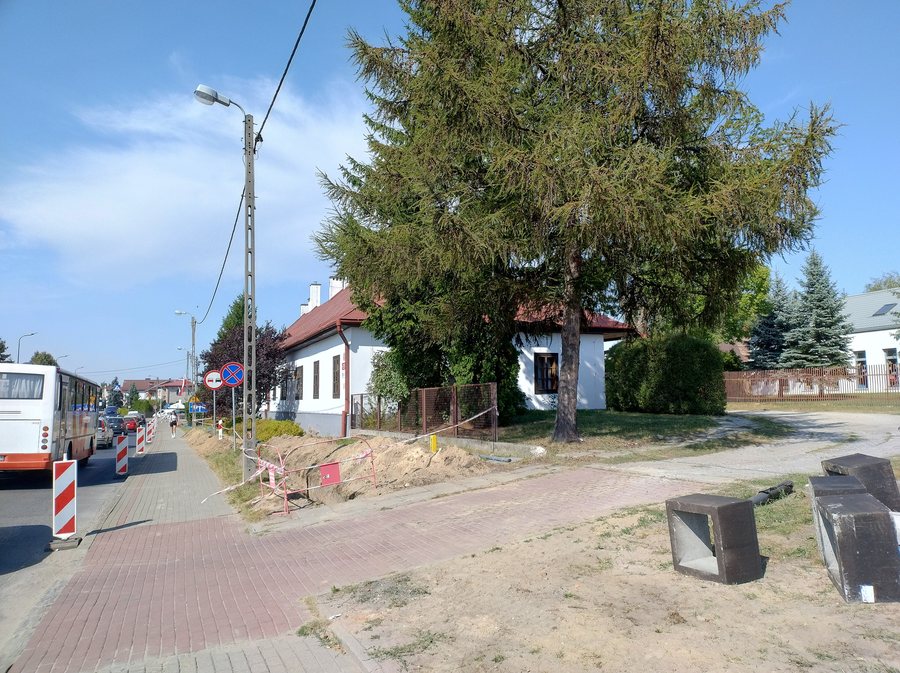 Kolbuszowa (ul. Kościuszki 6) - oficyna od strony ulicy
Photo: Patryk2710 via Wikimedia Commons, CC BY-SA 4.0
Kolbuszowa at a glance
- Kolbuszowa lies on the Kolbuszowa Plateau, by the small River Nil and among the forests of the former Sandomierz Forest.
- Railway line No. 71 connects Tarnobrzeg with Rzeszów and runs through the municipality and town of Kolbuszowa.
- The Zabłocie Nature Reserve covers 536.95 hectares and protects habitats of rare bird species as well as natural plant communities.
How does the rail connection help you get your bearings?
Railway line No. 71, which is of national importance, is a concrete point of reference when planning your trip: it runs through the municipality and town of Kolbuszowa and connects Tarnobrzeg with Rzeszów. You can therefore consider Kolbuszowa in relation to this connection when comparing different places to stay. The route itself provides a useful geographical reference point.
The landscape also helps you get your bearings locally. Kolbuszowa lies on the Kolbuszowa Plateau, by the small River Nil and among the forests of the former Sandomierz Forest. The Zabłocie Nature Reserve reflects this natural setting: it protects habitats of rare bird species and natural plant communities of the former Sandomierz Forest. Covering 536.95 hectares, it is a large protected area that extends into other municipalities as well.
Which cycling routes can you compare?
There are four signposted cycling routes in the municipality of Kolbuszowa, with varying levels of difficulty. You can choose a route based on its difficulty rather than assuming that all routes are equally challenging. The blue cycling route is listed as 32.2 kilometres long, with a journey time of three to four hours. These figures give you a concrete guide to how much time to allow for the ride.
Check the signposting locally, as route details can change. The information about the blue route and the varying difficulty levels of the four routes can help you consider your choice of route alongside the time you have available.
Which cultural sites reveal different sides of Kolbuszowa?
The open-air museum of folk culture covers almost 30 hectares and features more than 80 wooden architectural structures. The categories represented include houses, farm buildings, craft and industrial buildings, and public buildings. The collection therefore goes beyond residential architecture: its different types of buildings offer several ways to explore the museum, from housing and the economy to crafts and public life.
Individual buildings and memorial sites also have their own distinctive features. The Church of All Saints has side altars dating from the first half of the 18th century and a bell from the 17th century. Its crypts contain the burial vaults of the Lubomirski and Sanguszko families; these crypts are not open to visitors. The Jewish cemetery covers 1.6 hectares and preserves around 50 stone tombstones bearing inscriptions in Polish, German and Hebrew.
In Werynia, the Tyszkiewicz Palace was built between 1900 and 1905. It stands in a 25-hectare estate park with numerous ponds. The Centre for Ecological Education in Świerczów has a diorama featuring animals and plants, as well as an equipped classroom for meetings and lessons with foresters. The programme may vary.
Discover more destinations: Lipnica, Jasielski, Mielec, Jarosław, Leski, Dębica, Przemyski, Ropczyce-Sędziszów.
FAQ
How long is the blue cycling route?
The blue cycling route in the municipality of Kolbuszowa is 32.2 kilometres long; the stated journey time is three to four hours. Check the signposting locally.
What can you see at the open-air museum of folk culture?
Across almost 30 hectares, you can see more than 80 wooden architectural structures, including houses, farm buildings, craft and industrial buildings, and public buildings.
Can visitors access the burial vaults in the Church of All Saints?
No. The burial vaults of the Lubomirski and Sanguszko families in the church’s cellars are not open to visitors.
Go to the broader travel overview: Subcarpathia.

