
Hoczew – Local History and the Hoczewka
Accommodation in Hoczew
Hoczew combines an early written history with religious art and the small Hoczewka. Before choosing accommodation, you can get a sense of Hoczew by considering whether you are more interested in local history, religious art, or the small Hoczewka.
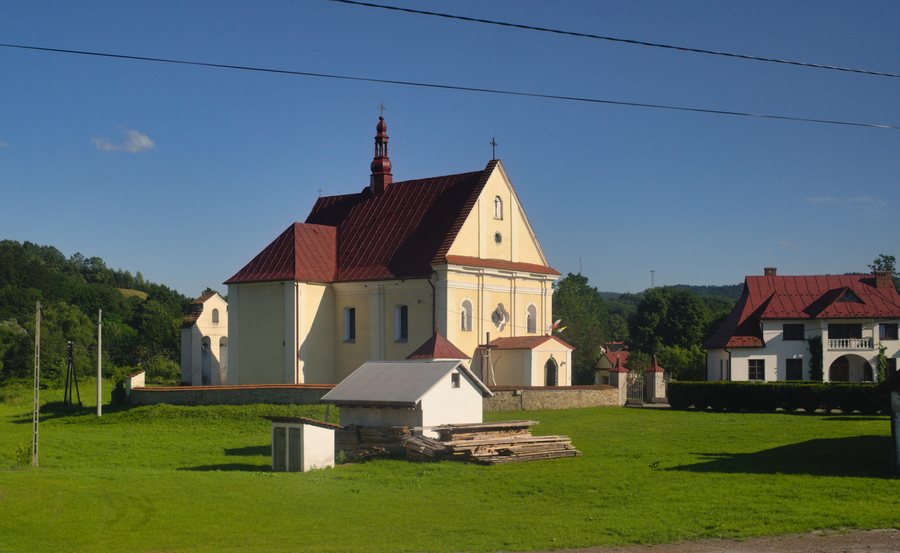
Hoczew at a Glance
- Hoczew is one of the oldest places in the Bieszczady and has been documented in writing since 1400, when it was called Oczew.
- The Fredro family gave Hoczew its name and had a manor house built there.
- The church building was erected in 1744; the bell tower and rectory date from the time it was built.
- The Hoczewka is formed by two streams and, after a short course, flows into the San at Hoczew.
What local history has shaped Hoczew?
The written record from 1400 and the name Oczew used at the time provide a concrete historical starting point. The history of the Fredro family adds to this: the family gave the place its present name and had a manor house built there. Hoczew’s local history can therefore be explored through both an early written record and a family associated with the place.
There is also a biographical connection: Jacek Fredro, father of the playwright Aleksander Fredro, was born in Hoczew. For travelers interested in local and literary history, this offers a distinct perspective alongside the story of the place’s name. These different connections give the place more than just a date: they link a recorded name, a family history, and a specific person.
What do the church, bell tower, and altarpiece tell us?
The church building in Hoczew was erected in 1744. The brick screen bell tower by the church and the rectory also date from the time the church building was constructed. This means both structures can be dated to the same period as the church.
The altarpiece offers a glimpse into a different period. The main altar features a painting of Saint Anne with Mary and the Christ Child, dating from the late 17th century. It is therefore older than the 1744 church building and probably came from the predecessor church. Its provenance is uncertain; the painting’s date and the church’s construction period are separate facts. Visitors interested in historic art will find a specific point of interest here, distinct from the building’s history.
What characterizes the Hoczewka?
The small Hoczewka is formed where the Jabłonka and Rabiański Potok streams meet. After a short course, it flows into the San at Hoczew. The river can thus be described in terms of its origin in two streams and its course to its mouth. Alongside local history and church art, it offers a nature-focused perspective on Hoczew, with a clearly defined geographic course rather than a long river route.
How can you weigh up these themes when planning your trip?
If you are considering Hoczew as a destination, you could start by thinking about which aspect interests you most: the early local history, the connection to the Fredro family, the church and its altarpiece, or the Hoczewka. These are different perspectives on the same place. Your interests can help you decide what to focus on when planning your trip, before you look for hotels.
Discover more destinations: Żerdenka, Polańczyk, Rabe, Werlas, Przysłup, Uherce Mineralne, Kalnica, Smerek.
FAQ
What was Hoczew called in the past?
In the written record from 1400, the place was called Oczew.
What is known about the church altarpiece?
It depicts Saint Anne with Mary and the Christ Child and dates from the late 17th century. It probably came from the predecessor church.
Where does the Hoczewka flow into?
After a short course, the Hoczewka flows into the San at Hoczew. It is formed where the Jabłonka and Rabiański Potok meet.
Go to the broader travel overview: Leski.

