
Wańkowa: Activities, Forest and History
Accommodation in Wańkowa
In Wańkowa, opportunities for active outings meet a forest reserve and traces of local history.
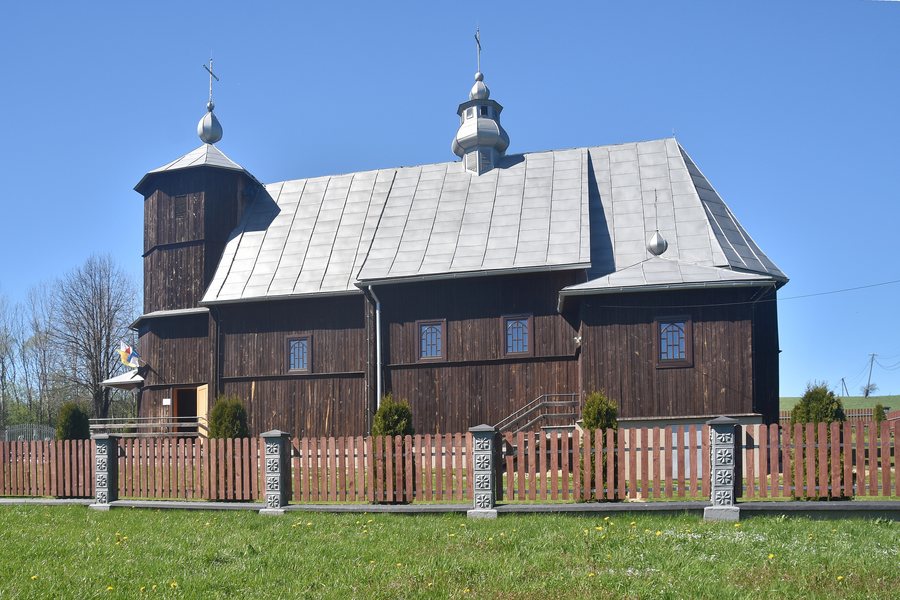 File:Wańkowa, cerkiew Narodzenia Bogurodzicy (HB9).jpg
Photo: Henryk Bielamowicz via Wikimedia Commons, CC BY-SA 4.0
File:Wańkowa, cerkiew Narodzenia Bogurodzicy (HB9).jpg
Photo: Henryk Bielamowicz via Wikimedia Commons, CC BY-SA 4.0
Wańkowa at a glance
Local activities include the BIESZCZAD.ski Wańkowa ski station, its tubing track and the two-lane Tyrolka descent. The tubing track has age and height requirements. The Buczyna w Wańkowej Forest Reserve shapes the area’s natural landscape: it lies on the southeastern edge of the Słonne Mountains and was established in 2000. Local history includes a relocated wooden church and a stone pillar with a cross.
What activities does BIESZCZAD.ski Wańkowa offer?
BIESZCZAD.ski Wańkowa is considered family-friendly. The operator describes its cableway as the longest in the Podkarpackie Voivodeship; this ranking may change. The station is therefore a reference point for travellers interested in skiing, while the tubing track is a separate activity with explicitly stated age and height requirements.
The tubing track is intended for adults and children aged seven and over who are at least 110 centimetres tall. As the rules may change, check the operator’s current requirements before visiting. The operator describes the two-lane Tyrolka descent as the longest in Poland and Central and Eastern Europe. This ranking, too, is the operator’s claim and may change. When comparing activities, consider both the tubing participation requirements and the respective stated rankings.
What makes the Buczyna w Wańkowej Forest Reserve distinctive?
The reserve lies on the southeastern edge of the Słonne Mountains and protects near-natural forest communities characteristic of this mountain edge. The place name and the landscape context describe two different aspects: Wańkowa is the reserve’s point of reference, while the mountain range places it within the broader landscape.
Established in 2000, the reserve also has a clearly identifiable history as a protected area. Its protected forest communities make it a distinct nature-related topic alongside the ski station’s activities. When weighing your travel interests, you can thus distinguish between facilities and leisure activities on the one hand, and the protection of characteristic forest habitats on the other.
What historical sites are there in Wańkowa?
The wooden Greek Catholic church in Wańkowa was relocated here from Ropienka in 1985. Its history is therefore also tied to a change of location: the building did not originally come from Wańkowa but was brought here. Its origins can be explored through a specific building and its provenance.
A stone pillar with a cross from the late 19th century stands on a burial mound along the road to Olszanica. According to local tradition, it commemorates the abolition of serfdom. The description of the monument and the traditional interpretation should be distinguished: its form, date and location identify the historical site, while the commemorated event is part of local tradition.
How can you factor Wańkowa into your accommodation search?
First consider which aspect of the area matters most for your trip: the ski station’s activities, the forest reserve or the historical sites. These interests offer different starting points for choosing your destination, without requiring the same kind of stay.
Discover more destinations: Uherce Mineralne, Olszanica, Myczków, Górzanka, Łukawica, Smerek, Buk, Polańczyk.
FAQ
What are the requirements for the tubing track?
It is intended for adults and children aged seven and over who are at least 110 centimetres tall. Check the operator’s current rules before visiting, as the requirements may change.
What does the Buczyna w Wańkowej Forest Reserve protect?
It protects near-natural forest communities characteristic of the southeastern edge of the Słonne Mountains. The reserve was established in 2000.
Which historical sites can you learn about in Wańkowa?
The wooden Greek Catholic church was relocated from Ropienka to Wańkowa in 1985. A stone pillar with a cross from the late 19th century stands on a burial mound along the road to Olszanica; according to local tradition, it commemorates the abolition of serfdom.
For the broader travel overview: Leski.

.jpg)