
Discover Stalowa Wola
Accommodation in Stalowa Wola
Modernist architecture, industrial history, and nature trails give Stalowa Wola a varied character. This guide helps you choose cultural sites and routes to suit your travel interests.
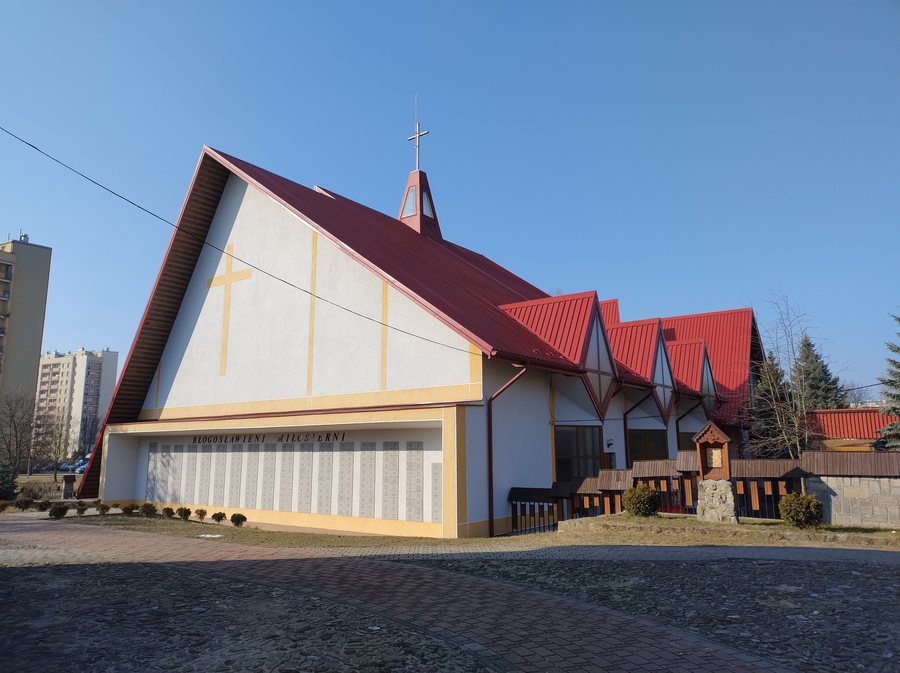 File:Stalowa Wola (kościół Źródło Miłosierdzia Bożego).jpg
Photo: Patryk Duszkiewicz via Source, CC BY-SA 4.0
Stalowa Wola facts
- Stalowa Wola is one of the best-preserved modernist cities, with elements of Art Deco architecture.
- The wooden Church of St. Florian was built in Stany in 1802 and moved to Stalowa Wola in 1943.
- The Muzeum Centralnego Okręgu Przemysłowego is dedicated to the industrial heritage and economic and industrial history of the COP.
- The “Ciemny Kąt” educational nature trail is about 5 km long and accessible to walkers and cyclists.
What history do the architecture and railway reveal?
Stalowa Wola is known for its modernist character and elements of Art Deco architecture. The wooden Church of St. Florian offers a different architectural perspective. It was built in Stany in 1802 as the parish church of St. John Gualbert. In 1943, it was moved to Stalowa Wola and dedicated to St. Florian. The parish church complex at 5 Floriańska Street comprises the wooden church and a freestanding bell tower; it is listed under number A-203, dated April 24, 2007.
Railway history is also visible in Rozwadów, a district of Stalowa Wola. Here stands the 78-tonne Ty2-16 steam locomotive, surrounded by historic railway infrastructure. A look inside is possible during some city events as part of a guided tour. This is a limited opportunity, not general access.
Which museums and routes offer insight into the region?
The Muzeum Centralnego Okręgu Przemysłowego covers the industrial heritage of the Central Industrial District (COP), as well as its economic and industrial history. The museum also has a children’s area called “Miasto dla dzieci.” The Muzeum Regionalne w Stalowej Woli offers a different perspective on the city’s history: its permanent exhibition “Stacja Rozwadów. Między Lwowem a Krakowem” presents the history of the former town of Rozwadów, now a district of Stalowa Wola.
Since 2002, the Muzeum Regionalne has been based at the 18th-century Zamek Lubomirskich. Those interested in art and historic buildings can also visit the Galeria Malarstwa Alfonsa Karpińskiego, housed in a listed former courthouse dating from 1905. Themed routes complement these cultural sites: the Central Industrial District Route links places associated with the idea behind the COP; the Szlak Architektury Drewnianej runs through Stalowa Wola.
Which paths lead through nature?
On the Błonia Nadsańskie, an educational trail with more than 30 information boards offers insights into the area’s biological diversity. Bird and bat nesting boxes, as well as an insect hotel, are also part of the trail. The Błonia also offer several kilometres of paths for pedestrians and cyclists.
The “Ciemny Kąt” educational nature trail, about 5 km long, passes through managed forests to the “Grzybek” tourist facility. Along the route, information boards describe the functions of the forest and the plants and animals found there. Both routes combine physical activity with nature, but have different focuses: the Błonia highlight the area’s biological diversity, while “Ciemny Kąt” focuses on the forest.
What other leisure activities are available?
Park Zimnej Wody has a skatepark, pump track, and roller-skating rink. The indoor swimming pool has three pools: two measuring 25 m × 12.5 m each, and a learning pool measuring 12.5 m × 6 m. There is also a 64 m-long tube slide with a run-out area and two saunas, one dry and one steam. The range of options makes it easier to choose according to your interests, but does not imply anything about opening hours or current availability.
Discover more destinations: Zaklików, Chwałowice, Irena.
FAQ
Where is the Ty2-16 steam locomotive?
The 78-tonne locomotive is located in Rozwadów, a district of Stalowa Wola. Its interior can be visited during some city events as part of a guided tour.
Which routes are suitable for walks and bike rides?
The “Ciemny Kąt” trail, about 5 km long, is accessible to walkers and cyclists. The Błonia Nadsańskie also have several kilometres of paths for pedestrians and cyclists.
What can visitors learn at the COP museum?
The Muzeum Centralnego Okręgu Przemysłowego covers the industrial heritage of the COP, as well as its economic and industrial history. The museum also has a children’s area called “Miasto dla dzieci.”
What is the building history of the wooden Church of St. Florian?
It was built in Stany in 1802 as the parish church of St. John Gualbert and moved to Stalowa Wola in 1943, where it was dedicated to St. Florian.
Go to the main travel overview: Stalowa Wola.

