
Discover Zaklików
Accommodation in Zaklików
You can get to know Zaklików through its regular historic urban layout, market square, and several distinct remnants from past centuries.
Zaklików at a glance
- The historic urban layout follows a regular grid pattern, with a rectangular market square at its center.
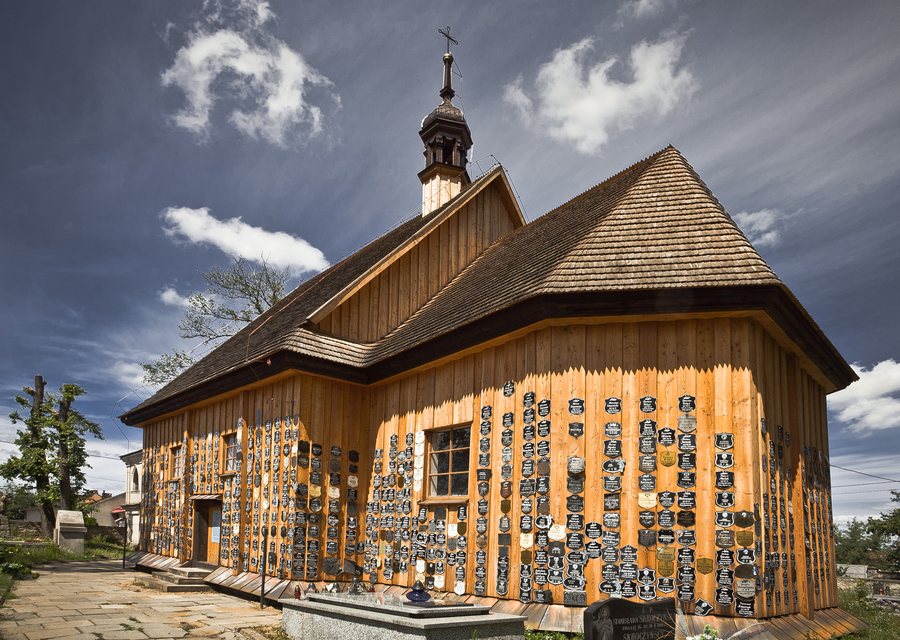
- St. Anne’s Cemetery Church was built of larch wood between 1580 and 1583; today it serves as a cemetery chapel.
- The market square features a refurbished municipal green space, a monument to Józef Piłsudski, and a fountain with a wooden canopy.
- Other traces of the past include a castle mound with visible foundations and a few wooden townhouses from the 18th and 19th centuries.
What defines the historic town center?
The regular, grid-like layout and centrally located rectangular market square give the historic urban plan a clear form. The square itself features several distinct elements: at its center is a refurbished municipal green space for relaxation. A monument to Marshal Józef Piłsudski stands in the western part. To the east, on Plac Henryka Sienkiewicza, there is a town fountain with a wooden canopy. The references to the western and eastern sides make it easy to distinguish the different features of the market square.
The churches are also part of the town’s spatial history. The Church of the Most Holy Trinity and the cemetery with its wooden St. Anne’s Church are part of the historic urban layout; the cemetery church is located in the southeastern part of the historic town. In this way, a parish church and a cemetery church represent two distinct functions in the townscape.
How can the older traces be understood?
The historic remains include different kinds of building and cemetery traces. Visible foundations of a 16th-century castle survive on a castle mound. A few wooden townhouses date from the 18th and 19th centuries. These examples differ both in their architectural form and in their historical period; they offer a different way to approach the town’s history than the regular urban layout and the buildings around the market square.
The cemeteries are part of this picture too: the parish cemetery has a section dating from the 19th century. Remains of a Jewish cemetery have also survived in Zaklików. These places and traces represent different chapters in local history. If you are interested in the town’s layout, older architecture, or cemetery history, you can consider these topics separately when planning your trip rather than combining them into a single impression of the past.
What is known about the churches and their functions?
St. Anne’s Cemetery Church was built of larch wood between 1580 and 1583 and now serves as a cemetery chapel. Memorial plaques for the deceased are traditionally placed on its walls. This tradition adds an ongoing memorial practice to the architectural details. The Church of the Most Holy Trinity dates from 1608. Its location within the historic urban layout makes it possible to place the parish church in a different historical and spatial context from the cemetery church.
If a visit is important to your travel plans, check visiting arrangements in advance.
How can the town’s features complement your accommodation search?
When choosing Zaklików as a destination, you can first consider which topics interest you most: the regular layout and market square, the churches and cemeteries, or the older houses and castle traces. These areas of interest can guide your exploration of the town without treating its distinct historical remains as interchangeable. The town features described here do not indicate anything about the facilities or location of individual accommodations.
Discover more destinations: Irena, Stalowa Wola and Chwałowice.
FAQ
Which historic buildings date from the 16th century?
St. Anne’s Cemetery Church was built of larch wood between 1580 and 1583. There are also visible foundations of a 16th-century castle on a castle mound.
Which churches are part of the historic urban layout?
These include the Church of the Most Holy Trinity, dating from 1608, and the cemetery with its wooden St. Anne’s Church in the southeastern part of the historic town.
What can you find at the market square?
A refurbished municipal green space is at its center. The monument to Józef Piłsudski stands to the west; to the east, on Plac Henryka Sienkiewicza, there is a fountain with a wooden canopy.
For the broader travel overview: Stalowa Wola.

