
Ciecierze: Wayside Shrines and Panoramic Views
Accommodation in Ciecierze
You can get to know Ciecierze through its wayside shrines and the location of historic houses on a hilltop. From there, panoramic views stretch across the surrounding area. A municipal bus route also runs through the village. These features offer different points of reference for getting your bearings in Ciecierze on your trip.
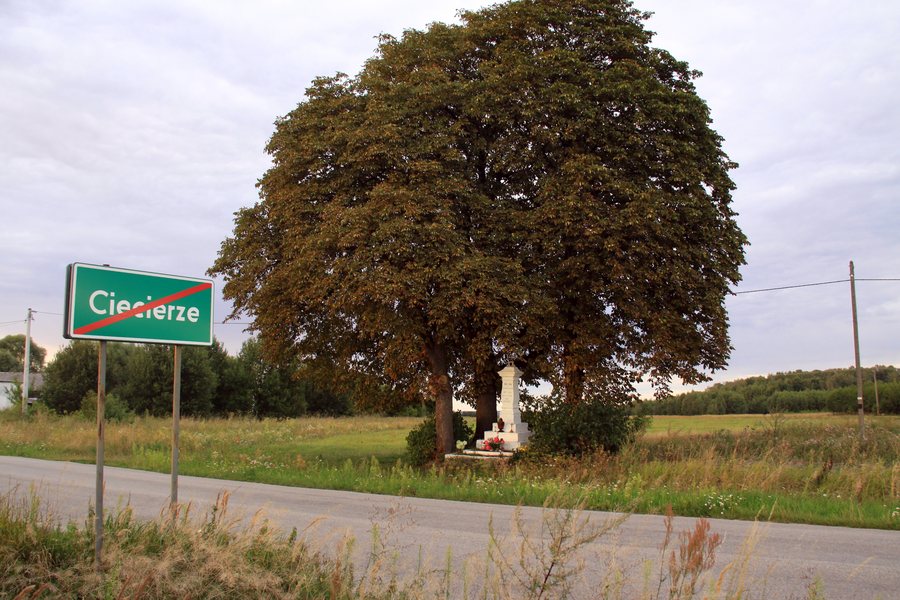 File:JKruk 20120810 CIECIERZE KRZYZ PRZYDROZNY 1926 IMG 0189.jpg
Photo: Jarosław Roland Kruk via Wikimedia Commons, CC BY-SA 3.0
Ciecierze at a glance
- There is a wayside shrine in the village with an inscription that includes the year 1923.
- Outside the built-up area, an iron-cast wayside shrine with a figure of Christ stands by the Chmielnik–Szyszczyce road.
- Historic houses were built on the summit of a hill, offering panoramic views of the surrounding area.
- A municipal bus route runs from Chmielnik through Ciecierze, Szyszczyce, Kotlice, Suskrajowice, and Borzykowa, then back to Chmielnik.
Which wayside shrines define the village?
There is a wayside shrine in the village with the inscription “Od powietrza, głodu, ognia i wojny wybaw nas panie. Ciecierze 1923”. The request means, in essence: “From plague, hunger, fire, and war, deliver us, Lord.” The year 1923 is part of the inscription.
Another wayside shrine stands outside the built-up area by the Chmielnik–Szyszczyce road. It is made of cast iron and bears a figure of Christ. The two shrines, located in different places, thus have different distinguishing features: the inscription stands out at the shrine in the village, while the material and figure are the defining features of the shrine by the road.
How does the hilltop shape the view of Ciecierze?
The historic houses of Ciecierze were built on the summit of a hill. From there, panoramic views stretch across the surrounding area. This connects the village’s history directly with its landscape: the houses’ location describes an elevated settlement site, while the panorama takes in the area beyond the immediate surroundings.
This is a different scale from that of the wayside shrines. Their character is defined by their specific locations and visible features; the hilltop, by contrast, gives an impression of the historic layout of the houses and the surrounding landscape. If you are interested in how the village setting relates to its location, these details combine to give you a multifaceted sense of Ciecierze.
What should you know about the bus route?
The municipal bus route runs from Chmielnik through Ciecierze, Szyszczyce, Kotlice, Suskrajowice, and Borzykowa, then back to Chmielnik. The route connects Ciecierze with several other named places.
If you are considering a journey, check the current timetable information in advance.
How can you take the village’s features into account when looking for a hotel?
If you are looking for a hotel in Ciecierze, first consider which connection to the village matters for your trip: its wayside shrines, its historic hilltop location, or the bus route via Chmielnik.
Discover more destinations: Płucki, Mniów, Piekoszów, Nowa Huta, Sitkówka, Masłów, Krajno Pierwsze, Cedzyna.
FAQ
Where is the cast-iron wayside shrine?
It stands outside the built-up area by the Chmielnik–Szyszczyce road and bears a figure of Christ.
What does the wayside shrine in the village say?
The inscription asks to be spared from plague, hunger, fire, and war. The year 1923 is part of the wording.
Which places does the municipal bus route connect?
It runs from Chmielnik through Ciecierze, Szyszczyce, Kotlice, Suskrajowice, and Borzykowa, then back to Chmielnik. Check the current timetable information for specific journeys.
What is known about the historic location of the houses?
The historic houses of Ciecierze were built on the summit of a hill, offering panoramic views of the surrounding area.
For the broader travel overview: Kielce.

