
Zagnańsk: Natural Monument and Church Art
Accommodation in Zagnańsk
The Dąb Bartek natural monument oak, an educational trail on environmental issues, and the parish church with its several historic layers offer different ways to explore Zagnańsk. When planning your trip, you can decide whether nature and environmental education or church art and history are more important to you.
Zagnańsk at a glance
- The Dąb Bartek oak is located on Voivodeship Road 750 in the Bartków Forest District, compartment 65, at a recreational, tourist, and educational site.
- Dąb Bartek has been legally protected as a natural monument since 1954.
- A protected tree avenue includes yew, maple, ash, lime, and larch trees; the oldest trees are estimated to be 300 years old.
- The educational trail provides information about Poland’s flora and fauna, ecosystems, and environmental protection.
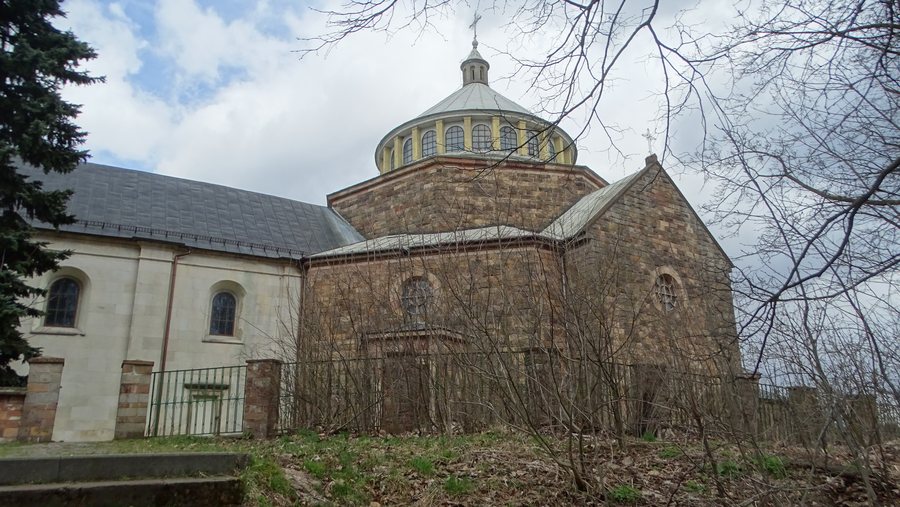
- The parish church of Saint Rosalia and Saint Martin was built between 1668 and 1676 and later extended to the west and east.
Which nature and educational themes define Zagnańsk?
Dąb Bartek, a single oak, is the centrepiece of a protected natural monument. The site by the tree combines recreation, tourism, and education. Its location is precisely specified: on Voivodeship Road 750, in the Bartków Forest District, compartment 65. The oak itself has been legally protected since 1954. This makes it possible to explore the nature theme through both the tree and the site’s educational and recreational character.
The tree avenue offers a different perspective. Several species grow side by side here: yew, maple, ash, lime, and larch. The oldest trees are estimated to be 300 years old. In contrast to the single oak, the avenue highlights the variety of tree species and the great estimated age of some individual trees.
The educational trail complements these nature themes with information about Poland’s flora and fauna, ecosystems, and environmental protection. The three themes are distinct: Dąb Bartek is a legally protected individual tree, the avenue brings together several tree species, and the educational trail focuses on nature and environmental education. This provides a clear guide for anyone deciding how to balance their interest in natural monuments and ecological topics when planning a trip.
What does the parish church tell us about history?
The construction history of the parish church of Saint Rosalia and Saint Martin comprises several clearly dated phases. It was built between 1668 and 1676. From 1898 to 1908, it was extended to the west, and from 1951 to 1953, a further extension was made to the east. The later works therefore extended the church in different directions. This sequence makes the church’s development over several centuries easy to follow, without conflating the construction phases into a single extension.
The furnishings offer another perspective on the church. Its Baroque side altars dedicated to the patron saints have been preserved; the dome features contemporary polychrome decoration depicting scenes from the lives of Saint Rosalia and Saint Martin. The church also houses a banner that was carried at patriotic and religious rallies before the January Uprising from 1861 onward. The building’s history, religious imagery, and the memory of rallies are presented here as distinct aspects.
Further memorials contribute to the overall historical picture. A bell tower dating from 1900 stands next to the church. Its commemorative plaque remembers parish residents who fell between 1914 and 1921. In the parish car park, a stone statue of Saint John of Nepomuk dating from 1774 stands on a plinth. These details differ in age and function: the statue is an older religious artwork, while the plaque commemorates parish residents who fell in later years.
Which themes suit your travel plans?
You can organise the themes into two broad areas when making your choice: nature and environmental education on the one hand, and architectural history and church heritage on the other. Those especially interested in nature will find different points of interest in the protected oak, the variety of species in the tree avenue, and the educational trail’s content. Those who want to focus more on history can consider the parish church’s construction phases alongside its altars, dome polychromy, and memorials. This thematic guide can help you decide how Zagnańsk fits your interests before you look for a hotel for your stay.
If you’d like to discover more destinations: Płucki, Masłów, Górno, Jaworznia, Snochowice, Bieliny, Ciosowa and Tokarnia.
FAQ
Since when has Dąb Bartek been protected as a natural monument?
The oak has been legally protected as a natural monument since 1954.
What topics does the educational trail in Zagnańsk cover?
It provides information about Poland’s flora and fauna, ecosystems, and environmental protection.
What historic memorials are there by the parish church?
The church houses a banner that was carried at patriotic and religious rallies before the January Uprising from 1861 onward. A bell tower with a commemorative plaque for parish residents who fell between 1914 and 1921 stands next to the church; in the parish car park, there is a stone statue of Saint John of Nepomuk dating from 1774.
For the broader travel overview: Kielce.

