
Dzierążnia
Accommodation in Dzierążnia
Dzierążnia combines a layered church history with a distinctive hilly landscape. Its buildings, an old small-leaved lime tree, and the surrounding terrain offer different ways to explore the place according to your interests.
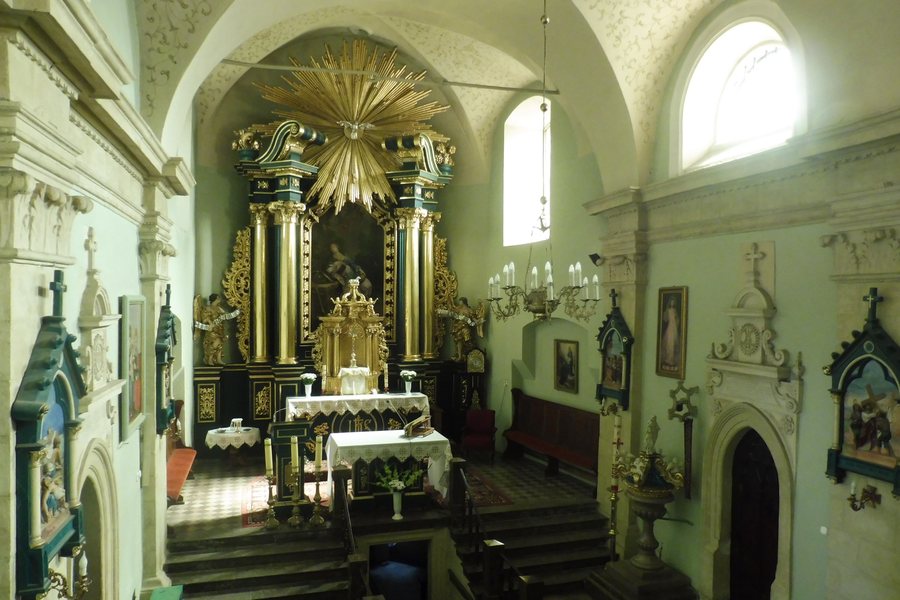
Dzierążnia at a glance
- The brick Church of Saint Mary Magdalene was built in 1440 to replace an older wooden church.
- The church complex includes two chapels: the Chapel of the Holy Sepulchre and the Innocentium Burial Chapel.
- Dzierążnia lies in a lowland area surrounded by hills to the west and north.
- A small-leaved lime tree, about 200 years old, stands beside the parish church. A resolution passed in 1996 designated it a natural monument.
What does the church’s building history reveal?
The Church of Saint Mary Magdalene is a good starting point if you are interested in Dzierążnia’s historic architecture. Its present brick building was constructed in 1440 on the site of an older wooden church. This means the site’s building history goes back considerably further than that of the chapels in the complex.
Beneath the presbytery is the Chapel of the Holy Sepulchre, dating from 1646. It lies beneath the eastern bay of the presbytery and has a barrel vault with lunettes. A second chapel, the brick Innocentium Burial Chapel, dates from the mid-17th century. Both chapels are part of the church complex, but they differ in name and in the recorded details of when they were built.
What are the architectural features?
The presbytery’s appearance is defined by several clearly described architectural features: it has three bays, a polygonal termination, and is supported by buttresses. A groin vault with stucco decoration adds to its architectural design. For an initial overview, it helps to consider the shape of the presbytery and the vaults as distinct details rather than judging the church solely by its age.
There is also a distinctive architectural feature outside the church building. A three-bay Neo-Baroque gate with an openwork crest and rich sculptural decoration leads to the building. Inside, the church has a choir gallery and an organ. The late Baroque altars from the 18th century feature silver-plated and gilded structures, as well as gilded carved decorations.
How do the hills and natural monument shape the area?
Dzierążnia lies in a lowland area surrounded by hills to the west and north. The named elevations include Biała Góra and Kamienna Góra. Deep ravines and sunken lanes extend around the village. These landscape features give the surroundings a different character from the church complex: here the terrain takes center stage, while there the focus is on the building and its furnishings.
A specific natural feature stands right beside the parish church: a small-leaved lime tree said to be about 200 years old. A resolution passed in 1996 designated it a natural monument. At this named landmark, you can encounter both historic architecture and an individually designated tree, while the hills and sunken lanes form the wider landscape setting.
What other traces of history are there?
Fragments of a prehistoric mound are located at Stoki in Dzierążnia. This offers another historical point of interest alongside the church and its chapels. The different themes range from the history of church architecture to the traces of earlier times and the surrounding landscape.
Discover more destinations: Pińczów, Chroberz, Działoszyce, Opatkowice.
FAQ
When was the Church of Saint Mary Magdalene built?
The brick church building was built in 1440 to replace an older wooden church.
Which chapels are part of the church complex?
They include the Chapel of the Holy Sepulchre, dating from 1646, and the brick Innocentium Burial Chapel, dating from the mid-17th century.
What landscape features are mentioned for Dzierążnia?
The village lies in a lowland area surrounded by hills such as Biała Góra and Kamienna Góra to the west and north. Deep ravines and sunken lanes also extend around Dzierążnia.
Go to the main travel overview: Pińczów.

