
Działoszyce: Architecture, Jewish Heritage Sites and Walking Tour
Accommodation in Działoszyce
If you are interested in sacred architecture, Jewish heritage sites, and historic town and landscape scenes, Działoszyce offers several different themes. The synagogue, Holy Trinity Church, cemetery and a documented walking tour reveal the town from different perspectives.
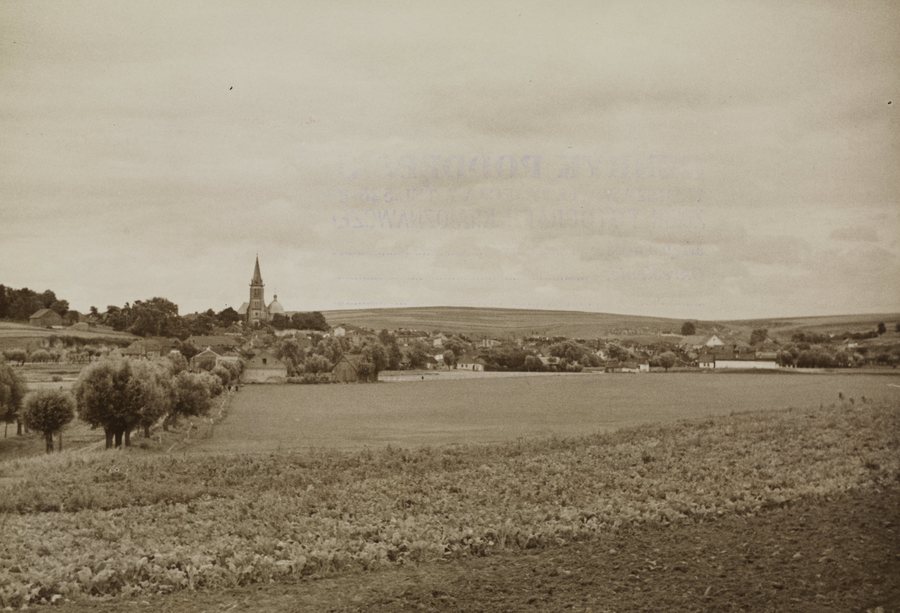 File:Dzialoszyce od poludnia ca 1936 (66229959) (cropped).jpg
Photo: Henryk Poddębski via Wikimedia Commons, Public domain
Działoszyce at a glance
- The synagogue is an example of late Classicist synagogue architecture with notable details. A heritage listing describes its condition as ruinous.
- The Gothic Church of the Holy Trinity dates from the 15th century and was altered and extended in the 17th and 19th centuries.
- No matzeva tombstones survive in the Jewish cemetery; symbolic plaques on trees commemorate those buried there.
- A walking tour described in 2006 passes through the town park and by historic houses on the market square, a fountain and a loess gorge.
What architectural history can you discover in Działoszyce?
The synagogue represents late Classicist synagogue architecture. Its notable architectural details are also part of its significance. The heritage listing describes its condition as ruinous; check its condition before visiting if this is important for your plans.
The Church of the Holy Trinity offers another way to explore the town’s history. It is Gothic and dates from the 15th century; alterations and extensions followed in the 17th and 19th centuries. Its building history thus spans several centuries. Those interested in sacred architecture can compare the synagogue’s stylistic classification with the church’s long building history.
Alongside the Church of the Holy Trinity are two chapels dedicated to Saint Anne. There is also a two-storey Chapel of Our Lady of the Rosary with a Chapel of the Holy Sepulchre. These nearby structures add further religious architecture at the same location.
What Jewish heritage sites are there?
Local traces include the ruins of a kahal house and a synagogue. The synagogue was built in 1852; this date refers to the synagogue, not the kahal house. These are two distinct architectural remnants, whose condition already gives a different impression in the townscape from that of the surviving church.
The Jewish cemetery offers a distinctive point of interest: not a single matzeva tombstone survives there. Symbolic plaques on trees commemorate those buried there. The plaques and the ruins provide different points of reference for understanding Działoszyce’s Jewish heritage sites.
What does the documented walking tour show?
The walking tour “Szlakiem Praojców,” recorded in a description dated 2006, passes through the town park and by historic houses on the market square, an old well and the Tadeusz Kościuszko Monument. Surviving sections of a loess gorge also lie along the documented route; the gorge extends to the centre of Działoszyce.
The route also goes near the “Praojców i Archeologów” monument. From there, there is a panorama of the Nidzica Valley. The route thus combines town scenes and landscape views, while the architectural and heritage sites offer a focus of their own. If you plan to follow the walking tour today, check the current route and conditions beforehand.
Discover more destinations: Pińczów, Opatkowice, Dzierążnia, Chroberz.
FAQ
What is known about the synagogue in Działoszyce?
It is an example of late Classicist synagogue architecture with notable details. A heritage listing describes its condition as ruinous; check its condition before visiting if this is important for your plans.
What building phases does the Church of the Holy Trinity have?
The Gothic church dates from the 15th century and was altered and extended in the 17th and 19th centuries. Alongside it are two chapels dedicated to Saint Anne, as well as the two-storey Chapel of the Rosary with a Chapel of the Holy Sepulchre.
What commemorates those buried in the Jewish cemetery?
No matzeva tombstones survive. Symbolic plaques on trees commemorate those buried there.
For the broader travel overview: Pińczów.

