
Discover Kowale Oleckie
Accommodation in Kowale Oleckie
Kowale Oleckie can be explored through two themes: historic sites in the village and cycling routes that start there.
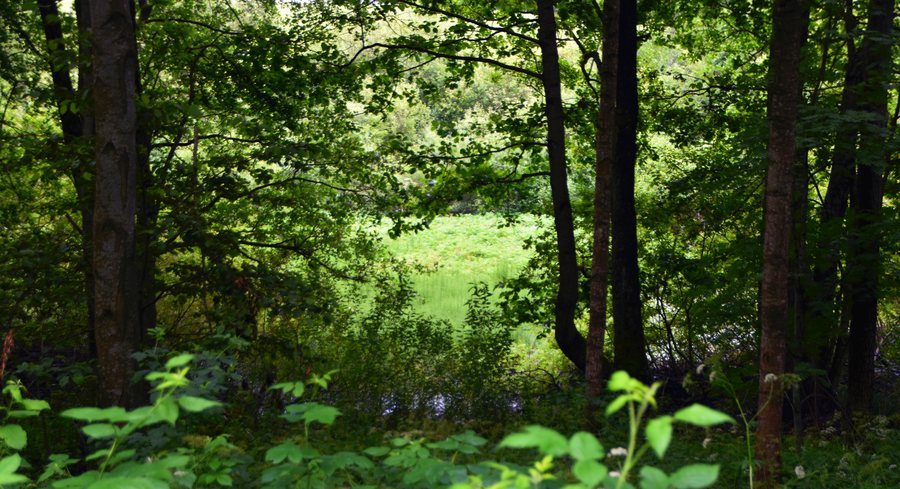
Kowale Oleckie at a glance
- The First World War military cemetery lies on two low terraces; a monument stands at its center, alongside mature trees.
- The parish church of St. John the Baptist was completed in 1989 and reconsecrated in 2001.
- Two named cycling routes begin in Kowale Oleckie: the red route is about 62 kilometers long, and the green route about 27 kilometers.
Which cycling routes suit the distance you have planned?
For a comparison by length, the two named routes offer a clear guide. The red-marked cycling route “Mostami Mazurki i brzegami jezior ku puszczańskim ostępom” begins in Kowale Oleckie and is about 62 kilometers long. The green-marked route “Po dworach i jeziorach” also starts in the village and covers about 27 kilometers. These are approximate figures; based on the distances given, the shorter route is considerably more compact, though no specific travel time or difficulty can be inferred from this.
Another cycling route begins in Kowale Oleckie; its description then continues past Borysewo. No comparable length information is provided here for this route. When planning your trip, you can therefore start by comparing the approximate distances of the two named routes. Also check the current route conditions before setting out.
Which historic sites shape a visit?
The First World War military cemetery brings together several clearly recognizable design features: it lies on two low terraces, has a central monument, and is characterized by mature trees. Visitors interested in historic memorial sites will find a specific point of interest here, distinct from the architectural history of the parish church.
The history of the Church of St. John the Baptist can be placed in context using several dates. The building was completed in 1989. During renovation work, the church burned down on October 23, 2000; it was reconsecrated on June 24, 2001. This timeline gives culturally interested travelers a factual framework for the village’s history without implying that the church interior may be accessible.
What should you know before visiting the gallery?
The “Pod Skosem” Gallery has been part of the Gminne Centrum Kultury in Kowale Oleckie since 2006. If you plan to visit, check its current operating status beforehand. The gallery can thus be one possible cultural focus of your trip, while the historic church and military cemetery offer other points of interest.
When choosing a hotel, you can first consider whether cycling or cultural history will play a greater role in your stay. The named cycling routes, approximately 27 and 62 kilometers long, can be compared by distance; the church’s history and the cemetery’s design offer a different thematic focus.
Discover more destinations: Stacze, Szwałk, Jaski, Zajdy, Biała Olecka, Nowy Młyn, Olecko, Dobki.
FAQ
How long are the two named cycling routes?
The red route “Mostami Mazurki i brzegami jezior ku puszczańskim ostępom” is about 62 kilometers long. The green route “Po dworach i jeziorach” covers approximately 27 kilometers. Both begin in Kowale Oleckie.
What is known about the history of the parish church?
The parish church of St. John the Baptist was completed in 1989. It burned down on October 23, 2000, during renovation work and was reconsecrated on June 24, 2001.
Is the “Pod Skosem” Gallery currently open?
It has been part of the Gminne Centrum Kultury in Kowale Oleckie since 2006. Check its current operating status before planning a visit.
For the broader travel overview: Olecki.

