
Pozezdrze
Accommodation in Pozezdrze
Pozezdrze can be explored through its cultural sites and various routes. The information below distinguishes between places in the village, destinations within the municipality, and different types of routes.
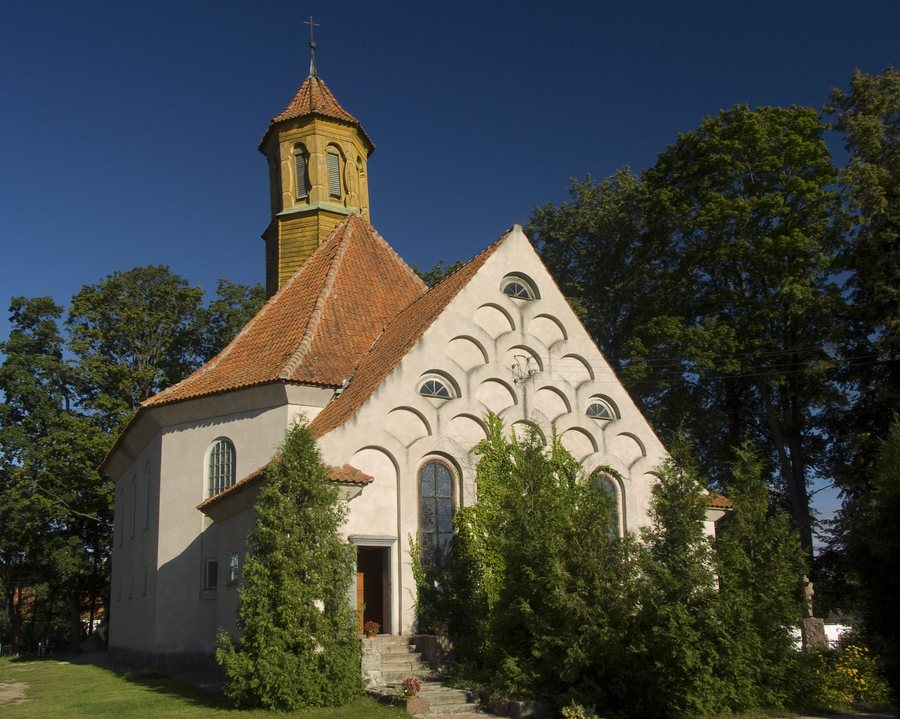
Pozezdrze at a glance
- The Church of St. Stanislaus Kostka in Pozezdrze is listed in Poland’s register of protected monuments.
- A 40 km cycling route follows a circular course through Pozezdrze.
- The war memorial commemorates the victims of the Battle of Pozezdrze in September 1914.
Which cultural sites can help you find your bearings?
The Church of St. Stanislaus Kostka is a protected monument. The war memorial to those killed in the Battle of Pozezdrze also commemorates the victims of the event in September 1914. The two sites therefore represent different interests: the church is classified as a protected place of worship, while the memorial focuses on remembering the battle and its victims.
If you are considering Pozezdrze for a culture-focused stay, this information offers two specific points of interest. You can first decide whether you are more interested in sacred heritage or in commemorating a historical event. This makes the choice of theme clear without treating the two sites as equivalent.
Which routes might suit your plans?
For cyclists, a 40 km circular route is described: it runs from Giżycko via Świdry, Pieczarki, Harsz, Pozezdrze, and Spytkowo, and back to Giżycko. The 40 km refers to the entire circular route, not just the section through Pozezdrze. The places along the route give you a concrete idea of how the village fits into this circuit. Before setting out, it is advisable to check the current signage and surface conditions.
The Masurian Fortification Trail also passes through Pozezdrze. It was established and physically marked between 2009 and 2011 by the local government of the Warmian-Masurian Voivodeship. For planning purposes, it is worth considering the Masurian Fortification Trail and the 40 km cycling circuit separately.
Another circular route runs through Giżycko–Świdry–Pieczarki–Pozezdrze–Harsz–Sztynort–Stawiska–Radzieje–Dłużec–Mażany–Jankowo–Parcz–Gierłoż–Doba–Kamionka–Piękna Góra–Giżycko. This route is described as starting and ending at the same place, so there is no need to return by another means of transport. By comparison, the 40 km route is specified by both its length and its classification as a cycling route. This information can help you assess each route description according to what matters for your own plans.
What is located within the municipality?
Not all of the destinations mentioned are located in the village of Pozezdrze. The Piłackie Wzgórza nature reserve lies within the municipality of Pozezdrze. The lock on the Sapina is also in the municipality: it is in the village of Przerwanki and was built in 1910. Both places should therefore be considered at the municipal level. If you include them in your plans, pay attention to the specific place or municipality named rather than automatically assuming that the name Pozezdrze means a location within the village itself.
Discover more destinations: Pawłowo, Wesołowo, Stręgielek, Kolonia Pozezdrze, Trygort, Sztynort, Przystan and Węgorzewo.
FAQ
Is the Church of St. Stanislaus Kostka protected?
Yes. The church in Pozezdrze is listed in Poland’s register of protected monuments.
What does the war memorial commemorate?
It commemorates the victims of the Battle of Pozezdrze in September 1914.
Which cycling circuit passes through Pozezdrze?
The 40 km circular route runs through Giżycko, Świdry, Pieczarki, Harsz, Pozezdrze, and Spytkowo, and back to Giżycko.
Which destinations are located within the municipality of Pozezdrze?
The Piłackie Wzgórza nature reserve lies within the municipality. The lock on the Sapina, built in 1910, is in the village of Przerwanki, within the municipality.
For the broader travel overview: Węgorzewski.

