
Węgorzewo for cycling and culture enthusiasts
Accommodation in Węgorzewo
Węgorzewo combines cycling routes with Masurian architecture and an annual folklore market. This gives you different ways to explore the town and plan your trip around your interests.
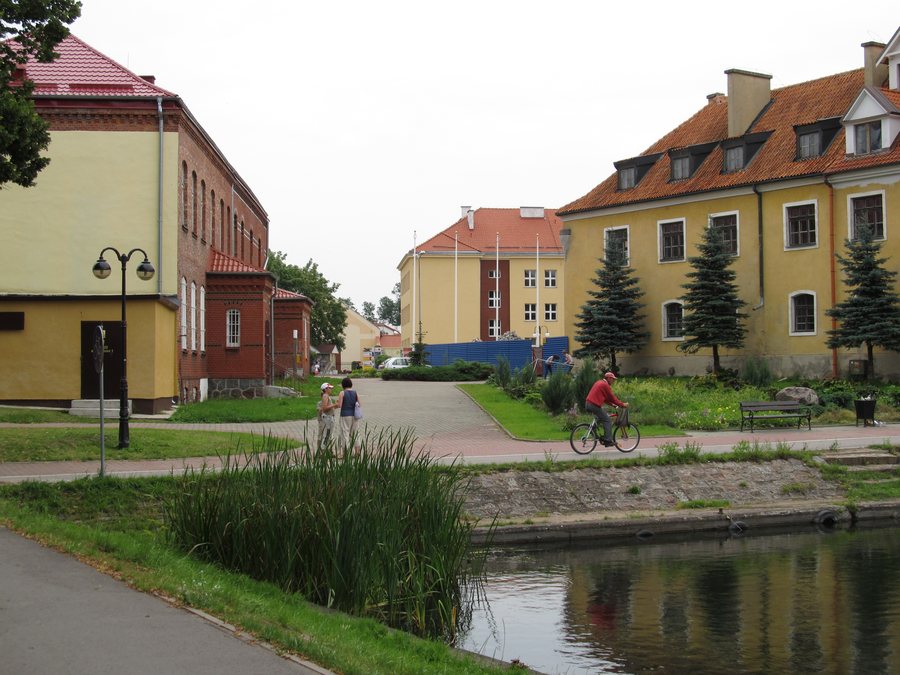
Węgorzewo at a glance
- The Green Velo cycling route connects with the municipal cycle route at the Młyński Canal.
- A family-friendly circular cycling route can be divided into short sightseeing stages.
- The grounds of the Muzeum Kultury Ludowej include a small open-air museum with traditional Masurian wooden houses.
- Every year, the museum hosts the International Folklore Market on the first weekend of August.
- The Teutonic Castle in Węgorzewo dates back to the 14th century.
Which cycling routes and tours can you plan?
In Węgorzewo, the Green Velo cycling route connects with the municipal cycle route at the Młyński Canal. The canal is a specific landmark to keep in mind if you want to include both routes in your plans.
A family-friendly circular cycling route starts at the Muzeum Kultury Ludowej and the Park Etnograficzny nad Węgorapą. The park is right beside the cycle route. The tour can be divided into short sightseeing stages. So, alongside the route connection at the canal, there is a circular tour where you can build sightseeing into your stage planning.
The two options offer different experiences: at the Młyński Canal, the focus is on the connection between Green Velo and the municipal cycle route; on the circular tour, the emphasis is on short stretches for sightseeing. So, when planning a cycling trip, you can first consider whether the route connection or combining cycling with sightseeing is more important to you.
What does the open-air museum show about Masurian architecture?
The grounds of the Muzeum Kultury Ludowej include a small open-air museum featuring examples of traditional Masurian architecture, including wooden houses from the 18th and 19th centuries. These buildings make the architectural style tangible through specific examples, rather than presenting it only as a general cultural topic.
The Teutonic Castle in Węgorzewo offers another historical perspective: it dates back to the 14th century. These dates provide two distinct points of reference. The castle represents an earlier period, while the wooden houses are examples from the 18th and 19th centuries. If you are interested in the history of architecture, you can keep these different periods in mind without treating the two topics as the same.
When is the International Folklore Market held?
The Muzeum Kultury Ludowej hosts the International Folklore Market every year on the first weekend of August. It showcases traditional folk art and handicrafts, as well as customs, music and dance. The program offers its own way to experience traditional culture and complements the open-air museum’s focus on architecture with living forms of expression.
If the market is important to your travel plans, check the dates with the museum before your trip. This lets you plan your visit around the specific event dates without treating the recurring annual period as a particular date.
What historical points of interest are there in the wider Węgorzewski destination?
The wider Węgorzewski destination is home to Cmentarz nad jez. Święcajty, a cemetery for soldiers who fell in the First World War. It contains the graves of 344 German and 234 Russian soldiers. This historical site adds a distinct commemoration of the First World War in the wider Węgorzewski destination to the themes of architecture and cultural events.
Discover more destinations: Pawłowo, Pozezdrze, Sobiechy, Ołownik, Wesołowo, Kolonia Pozezdrze, Budry, Kolonia Rybacka.
FAQ
When is the International Folklore Market held?
The Muzeum Kultury Ludowej hosts it every year on the first weekend of August. Check the dates with the museum before your trip.
What examples of Masurian architecture are there in the open-air museum?
The grounds of the Muzeum Kultury Ludowej include a small open-air museum with examples of traditional Masurian architecture, including wooden houses from the 18th and 19th centuries.
What cycling options are described for Węgorzewo?
At the Młyński Canal, Green Velo connects with the municipal cycle route. There is also a family-friendly circular cycling route that can be divided into short sightseeing stages.
Which century does the Teutonic Castle date from?
The Teutonic Castle in Węgorzewo dates back to the 14th century.
To the wider travel overview: Węgorzewski.

