
Nowogard
Accommodation in Nowogard
Nowogard can be explored through two themes: the relatively small Lake Jezioro Nowogardzkie and the history of its buildings. When planning your first trip, you can decide whether to focus more on the lake and its named nature trail or on the town’s historic traces.
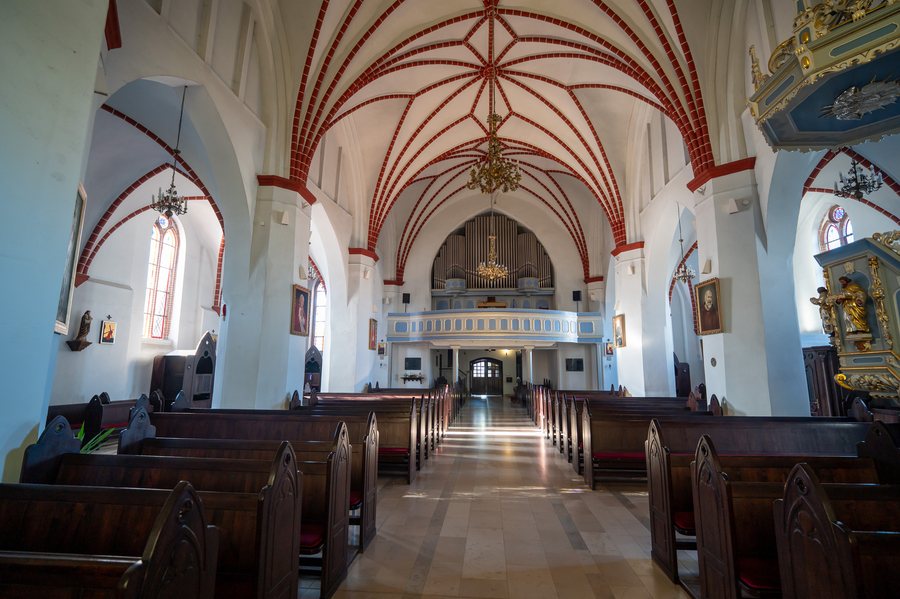 Church of the Assumption of the Blessed Virgin Mary in Nowogard
Photo: Kapitel via Wikimedia Commons, CC BY-SA 4.0
Nowogard at a glance
- Lake Jezioro Nowogardzkie covers 112 ha and is fed by the Gowienica River.
- The nature trail around the lake was designated in 2023 and named after Rajmund Zieliński.
- The castle and defensive walls date from the 13th and 14th centuries, respectively; the Church of the Assumption of Mary was first mentioned in 1325.
What characterizes the lake and nature trail?
Lake Jezioro Nowogardzkie is a relatively small lake covering 112 ha. It is fed by the Gowienica River. The area figure gives a concrete sense of its size, while the named tributary provides another geographical reference point. This means that, alongside the town’s history, there is also a clearly defined landscape theme.
In 2023, the nature trail around the lake was designated and named after Rajmund Zieliński. The year refers to this designation and naming. This makes it possible to distinguish the trail’s timeline from the town’s much older building dates.
What historic traces tell the story of Nowogard?
The castle in Nowogard was built in the 13th century by the von Everstein family. The date given for the Church of the Assumption of Mary is different: it was first mentioned in 1325. A construction date and a first mention are different kinds of historical dating and should not be treated as the same.
The defensive walls were built in the 14th century, but today only a short section remains. The best-preserved section is up to 3 m high and 1 to 1.5 m thick. The walls are made of granite rubble and brick. These measurements refer to the best-preserved section, not generally to every part of the walls.
Together, the castle, church and remains of the walls offer different ways into the town’s history: a recorded construction date associated with a named family, a first mention, and a defensive structure that has only partly survived. These differences help put each historical detail into context rather than reducing them to a single period.
How can you choose what to focus on?
To get a first impression of the destination, you can sort the themes according to your interests. The lake and nature trail provide a connection to the landscape; the castle, walls and church offer historical points of interest. If you are mainly interested in comparing the history of the buildings, different dates take center stage: the construction of the castle, the building period of the walls, and the first mention of the church. If you are more interested in nature, the lake’s area and the Gowienica River flowing into it provide concrete points of reference.
Discover more destinations: Załom, Goleniów, Długołęka, Stepniczka, Wyszomierz, Dąbrowica, Łęgno, Babigoszcz.
FAQ
How large is Lake Jezioro Nowogardzkie?
The relatively small lake covers 112 ha and is fed by the Gowienica River.
When was the nature trail named after Rajmund Zieliński?
The nature trail around the lake was designated in 2023 and named after Rajmund Zieliński.
What dates are given for the historic buildings?
The castle was built in the 13th century, and the defensive walls date from the 14th century. The Church of the Assumption of Mary was first mentioned in 1325.
For the main travel overview: Gollnow.

