
Nowogródek Pomorski – Historic Buildings and Culture
Accommodation in Nowogródek Pomorski
Nowogródek Pomorski offers a visit shaped by cultural history: an early Gothic granite church, a former manor complex and windmill ruins provide insights into different chapters of the town’s history. If you are looking for a hotel, you can consider which of these historic traces are of particular interest to you on your trip.
Quick facts about Nowogródek Pomorski
- The town was founded on a historic trade route between Gorzów and Szczecin and retains a historic spatial layout.
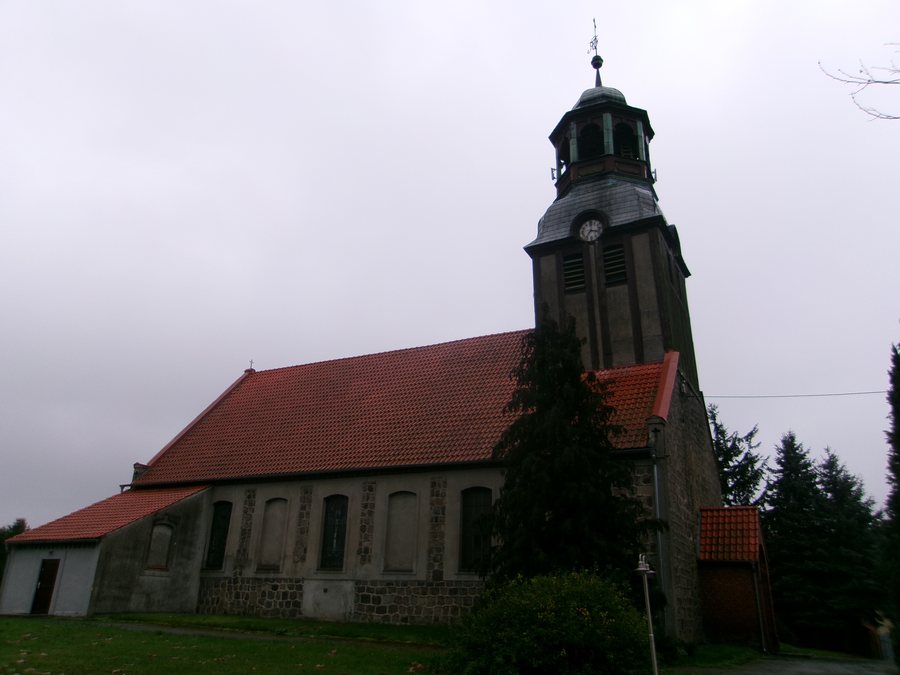
- The parish church of Matki Bożej Królowej Polski is an early Gothic granite church with Baroque windows and a tower.
- Northeast of the town lie the former Folwark Sumiak and its manor park; southeast of the town are the ruins of a Dutch-style tower windmill.
Which historic traces define the town?
The parish church of Matki Bożej Królowej Polski was built in the second half of the 13th century and rebuilt in 1752. Its design combines early Gothic granite masonry with Baroque windows; the tower is also among its noted features. The church is listed in the heritage register under number A-573. This makes it a specific point of reference for planning your trip if you are interested in the town’s architectural history.
Another historic landmark is the church cemetery on the church grounds. It also dates from the second half of the 13th century. Together with the church’s building history, it makes the long-standing historical significance of the church grounds clear.
What can you learn about the former Folwark Sumiak?
The manor-park-folwark complex of Folwark Sumiak lies northeast of Nowogródek Pomorski on Barlinecka Street, on both sides of the road to Barlinek. The ensemble includes several distinct spatial points of reference: the manor park lies northwest of the manor house and north of the road to Barlinek. It dates from the first half of the 19th century. The manor house in the former folwark, at Barlinecka Street 13–14, dates from the late 19th century.
The different dates of construction help you understand the park and manor house as distinct historic elements, rather than as a single building. The location details also clearly distinguish the whole complex from the park and the manor house. Visitors interested in the town’s historic character will therefore find both a landscaped park from the first half of the 19th century and a manor house from the late 19th century.
Where are the windmill ruins?
Southeast of the town, on the south side of the road to Karsko, are the ruins of a Dutch-style tower windmill dating from the mid-19th century. They offer a different historic feature from the church and manor complex: here, the focus is on a windmill in ruins, rather than a church building or park. Its location southeast of Nowogródek Pomorski and along the road to Karsko gives you a specific geographic reference for finding your way.
The places mentioned are in different directions from the town: the folwark complex is northeast, while the windmill ruins are southeast. Together with the historic trade route between Gorzów and Szczecin and the preserved spatial layout, they make for a visit particularly suited to travellers interested in local history, buildings and historic sites.
If you would like to compare other town pages, you can also find Dębno, Rózansko, Karsko, Barnówko, Rów, Dabrowa, Barlinek and Zydowo here.
FAQ
When was the parish church built and rebuilt?
It was built in the second half of the 13th century and rebuilt in 1752.
What are the features of the parish church?
The parish church of Matki Bożej Królowej Polski is an early Gothic granite church with Baroque windows and a tower.
Where is the manor park of Folwark Sumiak?
It lies northeast of Nowogródek Pomorski, northwest of the manor house and north of the road to Barlinek.
Where are the windmill ruins?
They lie southeast of Nowogródek Pomorski, on the south side of the road to Karsko.
For the broader travel overview: Soldin.

