
Pogodno: Discover the Park, Villas and History
Accommodation in Pogodno
Pogodno combines landscape, historic residential development and sites of remembrance into a diverse local character. When choosing a hotel for a trip here, you can focus on specific themes: the redesigned Łyczywka Park, the villas and gardens of the residential districts, Skwer Romana Kużaka or the history of the Kościół Świętego Krzyża.
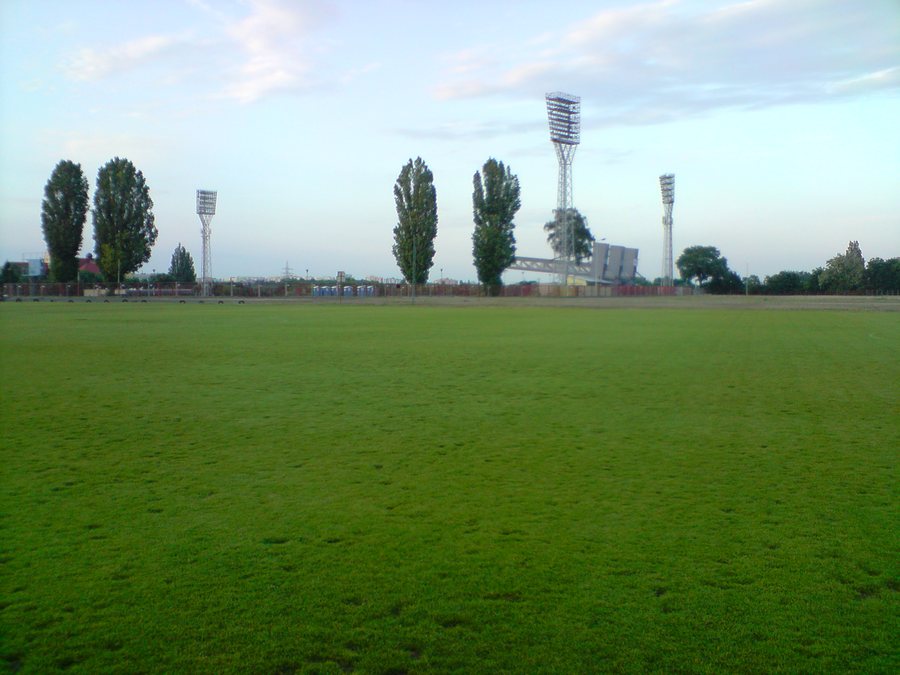 File:Pogodno, Szczecin, Poland - panoramio.jpg
Photo: kaucepan@wp.pl via Wikimedia Commons, CC BY 3.0
File:Pogodno, Szczecin, Poland - panoramio.jpg
Photo: kaucepan@wp.pl via Wikimedia Commons, CC BY 3.0
These include Łyczywka Park, the Nowe Łękno district (Neu Westend), private villas in gardens, facilities dating from the early residential development, as well as places that commemorate people, events and religious history. This combination makes Pogodno particularly interesting if you want to view a place not only through a single experience, but through different historical and landscape-related themes.
Łyczywka Park in Pogodno was completely redesigned. In the 1930s, numerous private villas in gardens were built in Pogodno. The early residential development also included gardens, children's playgrounds, schools, as well as facilities for supplies and services. The Nowe Łękno district (Neu Westend), which is now part of Pogodno, emerged from 1911 onwards through the activities of the Westend construction company, which developed new building plots along Mickiewicza Street as far as Traugutta Street.
What landscape forms part of the local character?
Łyczywka Park in Pogodno was completely redesigned. As a result, alongside its built environment, the area also has an explicitly transformed park landscape that highlights Pogodno's natural side. This information is particularly relevant for your planning if, during your stay, you do not want to consider only architectural or cultural-historical aspects. If you would also like to explore other destinations, you can access Malechowo, Nowe Gonne and Gwda Wielka for this purpose.
What do the villas and residential development tell us about Pogodno?
Numerous private villas were built in Pogodno in the 1930s, standing in gardens. The early residential development also included gardens, children's playgrounds, schools and facilities for supplies and services. Taken together, these features create a picture of residential districts in which private buildings, open spaces and facilities of importance to the community were planned alongside one another.
For you, this provides an accessible way into the area's history: Pogodno can be viewed not only through individual buildings, but also through the connection between residential life, garden spaces and the facilities of an early district. The reference to children's playgrounds and schools explicitly belongs to the early residential development and should not be understood as a statement about current amenities. Anyone interested in urban development can use these themes to understand how varied the area's historical layers are.
What is the significance of Skwer Romana Kużaka?
Skwer Romana Kużaka commemorates Roman Kużak, a young teacher and one of the victims of December 1970. The square thus introduces a personal memory into the local character. For visitors who want to engage with the history of a destination, it is not merely a name that is central here, but a concrete connection between a place and a person's life story.
What traces of sacred history are there?
The Kościół Świętego Krzyża preserves church pews from the first half of the 19th century as well as post-war furnishings. These include an image of the Divine Mercy and a figure of Our Lady of Fatima. For your travel planning, this site offers a specific cultural-historical focus: several furnishings point to different periods and make the church something you can consider alongside the history of the residential districts and park.
The combination of older church pews and post-war furnishings in particular shows that Pogodno's history is not limited to a single era. Together with Skwer Romana Kużaka and the development of the residential districts, this creates a broader view of the area, without requiring any additional attractions or unsubstantiated assumptions about visiting conditions.
How do you choose accommodation in Pogodno?
When choosing a hotel for a trip to Pogodno, you can first decide which features of the area are most important to you. Łyczywka Park invites a focus on the landscape, while villas and gardens provide an introduction to residential and architectural history; Skwer Romana Kużaka and the Kościół Świętego Krzyża represent different forms of remembrance and cultural history.
If you would like to expand your selection to include other destinations, you can also access the pages on Malechowo, Nowe Gonne and Gwda Wielka. For comparing different destinations, you can also consult the pages on Dziki and Stettin.
FAQ
When was the Nowe Łękno district established?
The Nowe Łękno district (Neu Westend), which is now part of Pogodno, emerged from 1911 onwards through the activities of the Westend construction company. The company developed new building plots along Mickiewicza Street as far as Traugutta Street.
What was opened at Skwer Romana Kużaka in 2025?
The sports area at Skwer Romana Kużaka was opened in 2025. It includes a football pitch, a basketball court and a multi-purpose court.
How large was the Protestant chapel at the site of the Kościół Świętego Krzyża?
The history of the site where the Kościół Świętego Krzyża now stands goes back to a Protestant chapel dating from 1834. This chapel could accommodate only about 500 people.
To the main travel overview: Stettin.

