
Szczecin
Accommodation in Szczecin
Discover Szczecin through its city centre, cultural venues and green spaces. The city tourist trail leads to 45 important places in the city centre over a distance of 7 kilometres. There are also museums, views of the Oder and routes that reach as far as the Puszcza Wkrzańska.
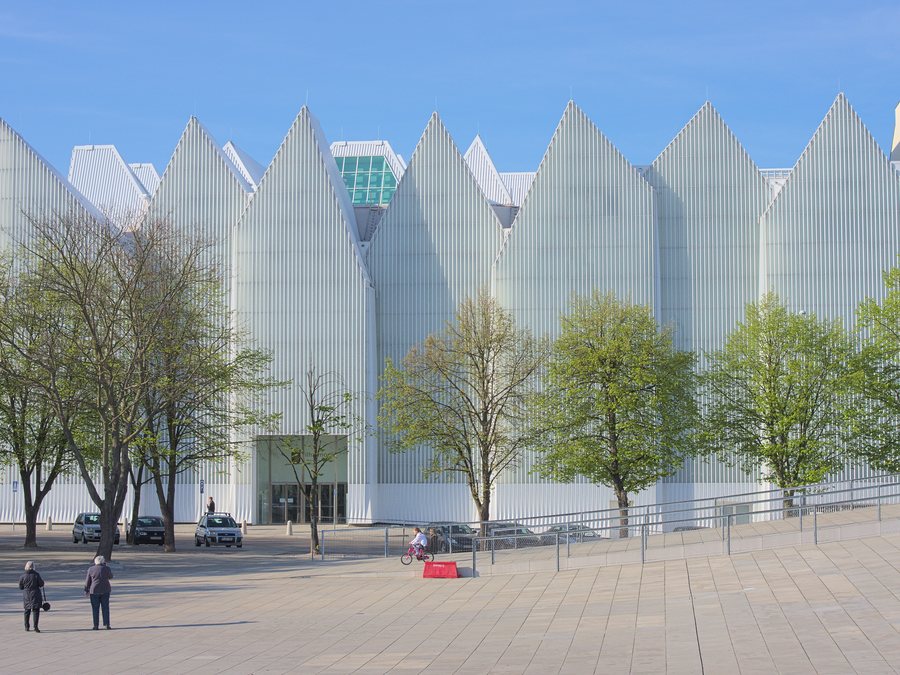 File:Szczecin Philharmonic Hall 3304 (cropped).jpg
Photo: DrKssn via Wikimedia Commons, CC BY-SA 3.0
File:Szczecin Philharmonic Hall 3304 (cropped).jpg
Photo: DrKssn via Wikimedia Commons, CC BY-SA 3.0
Szczecin at a glance
- The city tourist trail is 7 kilometres long, leads to 45 important places in the city centre, and starts and ends at the main railway station.
- Wały Chrobrego is 500 metres long and lies 19 metres above the level of the Oder riverbank.
- The varied interests of visitors include culture, science and technology, urban green spaces, and hiking and cycling routes.
Which trails and routes can you discover in Szczecin?
The city tourist trail provides a guide to 45 important places in the city centre. As it starts and ends at the main railway station, you can include it in your travel plans as a continuous city walk. The stated length is 7 kilometres; this is a useful guide when estimating how much time to allow for the circular route. The distance does not indicate walking time, the course of individual sections or possible shortcuts.
The Złoty Szlak offers a different way to get around. This combined hiking and cycling route starts at Zamek Książąt Pomorskich and passes through urban parks and forests, reaching the heart of the Puszcza Wkrzańska. If you are mainly looking for a route through the city and its central attractions, you could consider the tourist trail; the Złoty Szlak focuses on a connection between urban green spaces and forest. You can choose between the two routes according to your interests.
Which cultural venues and exhibitions shape the city?
The National Museum in Szczecin preserves and displays one of the largest collections of non-European cultural artefacts in Poland. Its building at Wały Chrobrego 3 is the architectural centrepiece of the Wały Chrobrego complex on the Oder, formerly known as Hakenterrasse. Here you can explore both the museum’s collection and the architecture of the Wały Chrobrego complex.
Centrum Dialogu Przełomy is home to an underground pavilion beneath Plac Solidarności. Its interactive permanent exhibition explores the history of 1939 to 1989 and includes films, photographs, and recorded accounts from eyewitnesses and participants. The entire visitor exhibition is wheelchair-accessible and can be used without architectural barriers. The Renaissance castle of the Pomeranian Dukes stands on a hill near the Oder and is one of the most important historical monuments in West Pomerania. The complex operates its own exhibition galleries, the Kino Zamek cinema, the Piwnica przy Krypcie theatre, and the Centrum Informacji Kulturalnej i Turystycznej.
The Philharmonic named after Mieczysław Karłowicz also offers its own way to experience culture: a guided tour includes the foyer, chamber music hall, Poziom 4 galleries and Galeria przy Cerkwi, symphony hall, and museum shop. When planning your visit, you can therefore choose between an exhibition on history, museum collections, the castle’s offerings, and a tour of the Philharmonic’s spaces.
Where can you find views and green spaces?
Wały Chrobrego offers sweeping views of the Oder and the port. The 500-metre-long complex lies 19 metres above the level of the riverbank. These measurements describe two different aspects of the site: its length and its elevation above the riverbank. The Princes’ Terrace on the roof of the north wing of Zamek Książąt Pomorskich offers an impressive view across Szczecin.
If you are more interested in relaxation and outdoor activities, consider Jasne Błonia named after Pope John Paul II. You can walk and cycle there. Jasne Błonia is also home to 213 London plane trees—the largest concentration of this tree species in Poland. Kasprowicza Park is the largest park in Szczecin. These green spaces offer different ways to combine a city visit with walking or cycling.
Which experiences match your interests?
The Morskie Centrum Nauki named after Professor Jerzy Stelmach is located on Łasztownia. Its permanent exhibition features numerous interactive science and technology exhibits, with a focus on the sea and sailing. This makes the centre an option for travellers interested in maritime subjects and technology. By contrast, the exhibitions at the National Museum and Centrum Dialogu Przełomy focus on other themes.
More destinations in the travel guide: Nowe Gonne, Dziki, Gwda Wielka, Malechowo and Pogodno.
FAQ
How long is the city tourist trail?
The city tourist trail in Szczecin is 7 kilometres long. It leads to 45 important places in the city centre and starts and ends at the main railway station.
What subjects does the permanent exhibition at Centrum Dialogu Przełomy cover?
The interactive permanent exhibition explores the history of 1939 to 1989. It includes films, photographs, and recorded accounts from eyewitnesses and participants.
Is the visitor exhibition at Centrum Dialogu Przełomy wheelchair-accessible?
Yes. The entire visitor exhibition is wheelchair-accessible and can be used without architectural barriers.
To the main travel overview: Szczecin.
More about the destination
Information to help plan your trip:

.jpg)