
Geoagiu de Sus: Mills, Churches and the Valea Mănăstirii Valley
Accommodation in Geoagiu de Sus
Between Valea Râmețului and Valea Mănăstirii
Geoagiu de Sus is a linear settlement along Valea Râmețului with distinctive natural landscapes. At the edge of Geoagiu de Sus, the road continues in the direction of Valea Mănăstirii. Beyond Geoagiu de Sus, the road towards Valea Mănăstirii passes through a narrow, spectacular section of the valley. The narrow valley behind Geoagiu de Sus in the direction of Valea Mănăstirii is cut into Cretaceous sandstones and conglomerates.
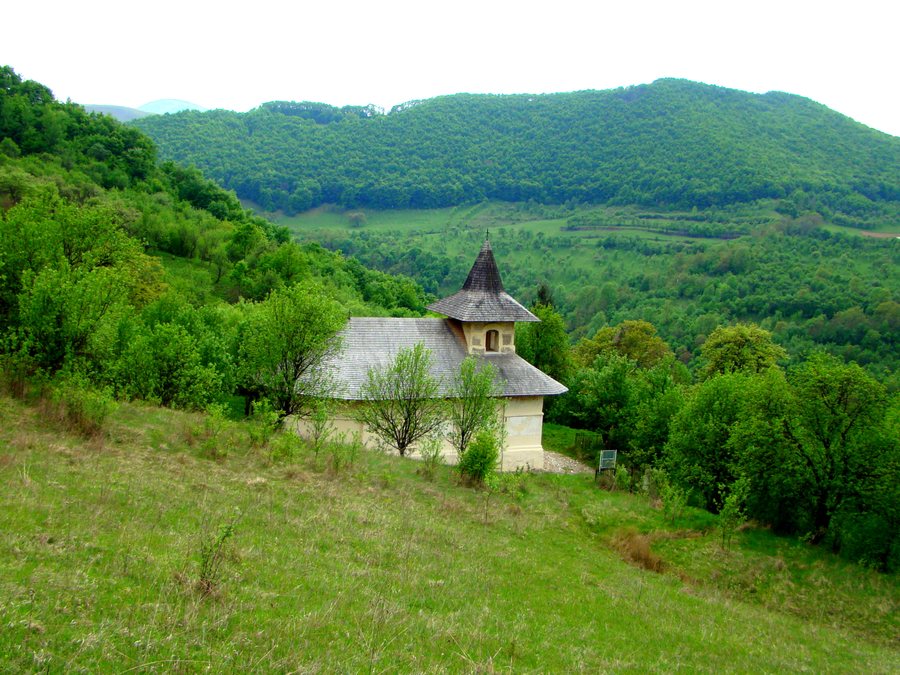 File:Biserica Intrarea în Biserică din Geoagiu de Sus.jpg
Photo: Țetcu Mircea Rareș via Wikimedia Commons, CC BY-SA 4.0
File:Biserica Intrarea în Biserică din Geoagiu de Sus.jpg
Photo: Țetcu Mircea Rareș via Wikimedia Commons, CC BY-SA 4.0
Roads as travel guides
The county road DJ 750C runs through Geoagiu de Sus, connecting the Râmeț area and Teiuș. Traseul 4 is a 30 km-long, fully paved road route. Thus, Geoagiu de Sus’s concrete road references include both a regional connection and a clearly numbered route with a specified road surface.
Watermills with historical significance
There are still functioning watermills in Geoagiu de Sus and Stremț, regarded as testimonies to the local tradition. The oldest of the watermills in Geoagiu de Sus is dated to the 14th century. Local history is reflected both in the mills’ continued function and in the dating of one particular example.
Churches between Wallachia and monastic history
The architecture of the Biserica „Intrarea în Biserică“ in Geoagiu de Sus is influenced by the Byzantine tradition of Wallachia. The Biserica Episcopală in Geoagiu de Sus dates from the 16th century. The Biserica Episcopală in Geoagiu de Sus was part of a former monastery founded by the Wallachian ruler Radu de la Afumați. The churches therefore highlight architectural influence, construction period and the history of a former monastery.
Hemp, crafts and ethnographic insights
By August 2025, the „Ziua Cânepii“ had been held annually in Geoagiu de Sus for ten years. The eighth edition of the „Ziua Cânepii“ in Geoagiu de Sus featured workshops on embroidering hemp fabric, painting on water and stone, making wooden toys and candles, braiding ropes and modeling with clay. The documented program therefore ranges from textile work and creative techniques to handicraft production.
Mariana Mereu set up an ethnographic exhibition in her courtyard. The museum in Geoagiu de Sus managed by the Mereu family displays exhibits. An ethnographic exhibition in a courtyard and a museum with exhibits address different forms of cultural heritage in Geoagiu de Sus.
Mariana Mereu also organized the „Școala bunicilor“, where interested participants could learn spinning, weaving and sewing, as well as the cultivation and processing of hemp and the manufacture of finished products. The topics mentioned range from traditional textile work and the handling of hemp to the production of finished goods.
An MTB route with multiple surfaces
The MTB route „Trascău pe MTB: Mănăstirea Râmeț & panorame deasupra cheilor“ runs over asphalt, gravel, forest roads, trails and other road sections. Its route description therefore covers various surfaces and types of path within a single route.
To the main travel overview: Stremț Commune.

