
Ștefănești: Archaeology, Museum and Nature on the Prut
Accommodation in Ștefănești
Culture and History
In Ștefănești, the Ștefănești – La Stârcea archaeological site is located outside the built-up area, on the southeastern edge of the city, on a terrace on the right bank of the Bașeu, opposite the Podul Bașeului point in the direction of the Prut. Its archaeological classification comprises an open settlement and a flat necropolis. It is associated with the La Tène period, the Migration Period and the Eneolithic. The combination of settlement and necropolis describes two different aspects of the same archaeological site: the place of human settlement and the associated form of burial. The three periods mentioned also place the site within several chronological contexts.
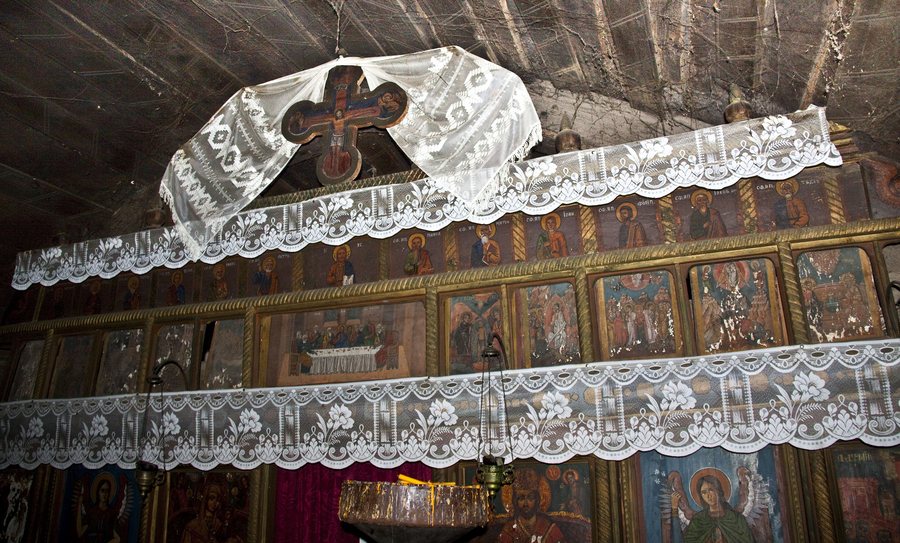 File:Stefanesti Scoala VL.bislemn.tâmpla.jpg
Photo: Alexandru Baboş Albabos via Wikimedia Commons, CC BY 3.0
File:Stefanesti Scoala VL.bislemn.tâmpla.jpg
Photo: Alexandru Baboş Albabos via Wikimedia Commons, CC BY 3.0
The church of Cuv. Parascheva in Ștefănești is part of the cultural heritage. It is considered the oldest religious monument in Moldavia to have been adapted for defensive purposes. Ștefănești is also home to the only museum in Romania dedicated to the painter Ștefan Luchian. It displays cultural assets from the painter’s family possessions; they form the exhibition space “Camera – atelier a lui Ștefan Luchian”. The church and museum thus represent different forms of cultural heritage: a religious building with a special historical classification and an exhibition dedicated to the painter through his family possessions.
Nature
The Stânca-Costești Reservoir lies on the Prut River, on the border between Romania and the Republic of Moldova. The reservoir area can be reached via the paved DN 24C Iași–Ștefănești and DN 29D Botoșani–Ștefănești roads. The two road references name different starting points and also position the reservoir area in relation to Iași, Botoșani and Ștefănești. For spatial planning, both the border location on the Prut and the separately mentioned road connections therefore remain relevant.
The lake in the ROSPA0058 Lacul Stânca-Costești Natura 2000 site is visited by ornithologists for birdwatching and because of the diversity of bird species found there. The protected area extends partly across the territory of Ștefănești and also across the territories of Manoleasa and Ripiceni. In addition to observing individual birds, the diversity of the species present is therefore also a central focus.
A separate botanical and geological dimension is represented by the Stânca Ștefănești geological and floristic nature reserve. It is the only place in Romania where Schivereckia podolica grows. The ROSCI0234 Stânca Ștefănești Natura 2000 site completely overlaps with the RONPA0243 Stânca Ștefănești nature reserve. The names thus refer to the area’s botanical distinctiveness as well as to its geological and nature-conservation classifications.
For a hotel in Ștefănești, travelers can compare travel dates, room categories and cancellation policies. This information helps organize the desired stay in terms of timing and room selection, without mixing the town’s cultural and natural highlights with accommodation features.
Other local pages in this selection: Mesteacăn, Costinești, Zăiceşti, Botoşani.
In the ROSPA0058 Lacul Stânca-Costești area, tourism, recreational, educational and scientific activities are permitted in compliance with the applicable visitor regulations.
To the higher-level travel overview: Botosani.

