
Brad: Gold Museum, Ethnography and Cultural Heritage
Accommodation in Brad
Culture
The Muzeul Aurului in Brad displays native gold, miners’ lamps, mineral formations, and mining tools. Of particular note are specimens of native gold from the Metaliferi Mountains. The mineral formations complement the natural forms of gold, while the miners’ lamps and mining tools point to the practical work of mining. Before visiting the museum, current opening hours should be checked prior to arrival.
The Muzeul de Etnografie Brad was founded in 1987 and displays exhibits representative of the ethnography of Țara Zarandului. The museum comprises around 1,800 objects, including more than 120 items of national cultural heritage. Its permanent exhibition is divided into a secular and a sacred section. Both sections belong to the permanent exhibition of the same institution and complement the ethnographic exhibits with a clear internal structure. Museum opening hours should be checked before arrival if several cultural attractions are included in the day’s itinerary.
History
The Casa de Cultură in Brad is located in the former headquarters of Societatea „Mica“. On Brad’s central square stands the “Noi Dacii” monument, created in 2006 by sculptor Ioan Vasile Grama. The statue of Horia stands in front of the post office. The three sites are among the named historic places in the city and link a former company building with monuments in public squares.
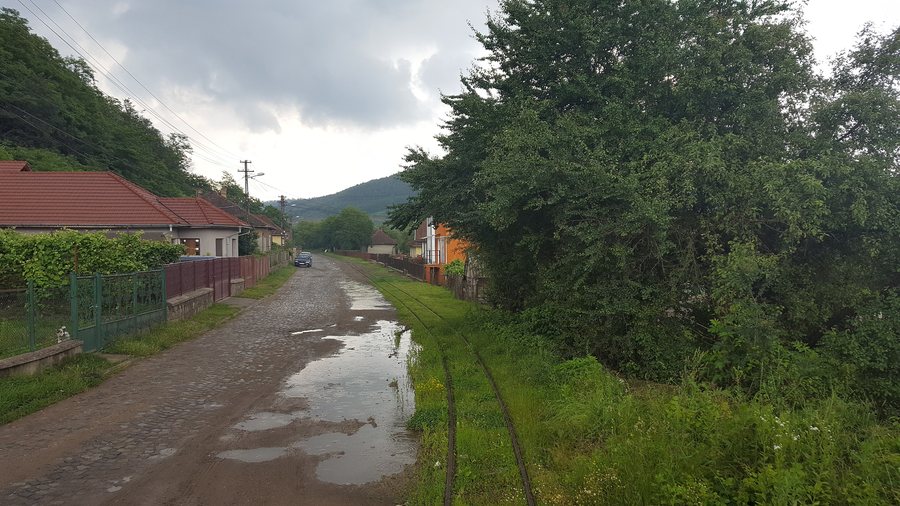
Railway history is also connected to identifiable locations. A standard-gauge steam locomotive that is part of the national cultural heritage and was brought to Brad from the Petroșani locomotive depot stands on Avram-Iancu Street at the intersection with Ion-Creangă Street, on a preserved section of the Brad–Deva railway line. The Gara CFR Brad building is a cultural heritage building in the Austrian style and was built 115 years ago based on the design of a railway station in Tyrol (Austria). When visiting historic railway lines, it is advisable to check current line conditions. For station buildings and railway attractions, current timetables can also be useful for practical preparation. Historic railway attractions thus combine a preserved technical installation, a specific street location, and a separate station building.
Two further named sites belong to the Roman past. The copy of the Lupa Capitolina in Brad is considered a symbol of the Latin identity of the Romanian people. The Muncelu–Brad necropolis, also called “Treptele Romane”, with 115 graves from the 2nd and 3rd centuries, attests to advanced ore extraction and processing as well as underground mining. At necropolises, it is advisable to check the current path conditions in advance. For historic sites with preserved paths or terrain sections, this check is part of the preparation before a visit.
Geographical Location
Near Brad, in Țebea, is the “Panteonul Moților” with the Gorunul lui Horea.
Further destinations: Orăştie, Ilia, Peştera, Simeria, Hărău, Râu Bărbat, Zeicani, Roșcani
For the higher-level travel overview: Eisenmarkt.

