
Simeria Between Nature and History
Accommodation in Simeria
Simeria combines natural landscapes and local history in a way that brings together different travel interests. Protected areas, cliffs, landforms, and castles each set their own focus.
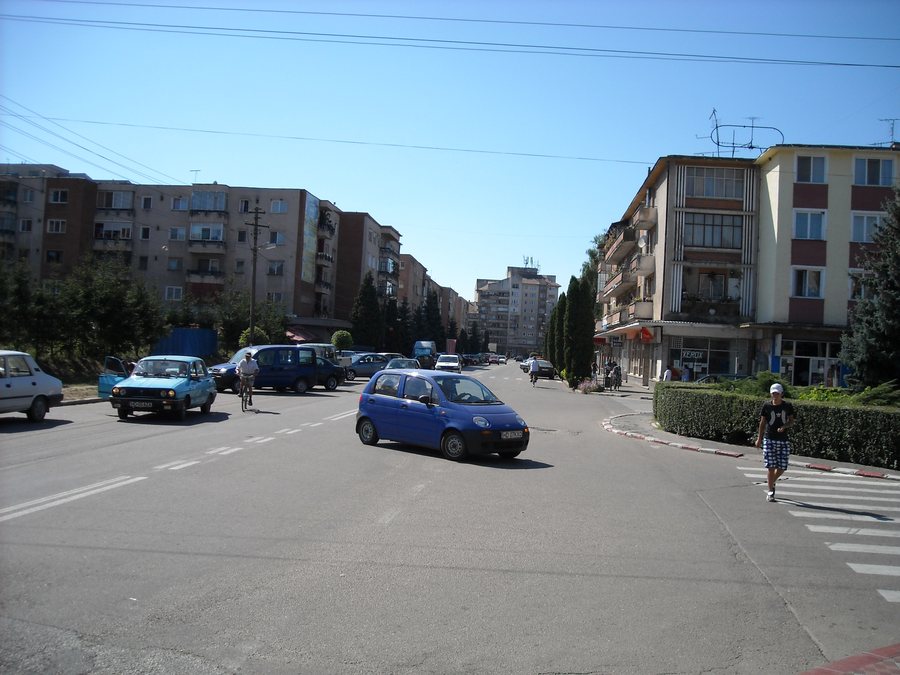
The 2.519 Măgura Uroiului Nature Reserve is included in the ROSPA0139 Piemontul Munților Metaliferi–Vințu Natura 2000 site. Simeria is one of the localities in this area in Hunedoara County. This places the town within a natural context that extends beyond its immediate surroundings and plays an important role in understanding the landscape.
The name of the Natura 2000 site and Simeria’s classification within it establish a clear regional connection. At the same time, it is useful to distinguish between the individual landscape and cultural themes. This allows you to weigh up more effectively during your travel planning whether you would like to focus on observing nature, historical connections, or a combination of both interests.
Which nature-related themes characterize the surroundings?
Peregrine falcons breed on the vertical cliffs of the volcanic neck area. This connection with nature links the landscape to a specific example of the wildlife found there. The cliffs form the birds’ described habitat; this does not imply any further statements about opportunities for observation or access to this area.
In the Piemontul Munților Metaliferi–Vințu Natura 2000 site, habitat type 6210* “dry, semi-natural grasslands and scrubland facies on calcareous substrates” is considered the most extensive habitat. The technical term refers to open, dry vegetation areas and scrubland on calcareous ground. Together with the peregrine falcons on the vertical cliffs, this creates a nature profile with different elements: cliff habitats alongside extensive dry grasslands and scrubland.
For travelers interested in nature, this information is particularly useful because it appeals to different interests without reducing the landscape to a single experience. Those interested in birds will find a specific connection to the peregrine falcon. Those who find landscape ecology or open vegetation formations more interesting can consider habitat type 6210* as a thematic focus in its own right.
Which landforms are located in the nearby area?
The hill Dealul Uroiului is located near Simeria. Hunyad Castle is also located nearby. The hill Dealul Archiei lies in the vicinity of Simeria.
In the wider regional surroundings of Simeria are the mountain Dealul Cutinului and the mountain Măgura Sârbii. This distinction between the nearby area, the vicinity, and the wider regional surroundings is helpful for your planning. The terms should not be combined into a single distance or a shared locality. Instead, they show which destinations appear directly in the comparison of the surroundings and which belong more to a broader regional perspective.
The landscape connections are therefore suitable for different forms of travel planning. As hills, Dealul Uroiului and Dealul Archiei represent a different spatial concept from Dealul Cutinului and Măgura Sârbii, which are mountains in the wider regional surroundings. This allows you to consider Simeria as a destination in its own right while also deciding which regional connections are relevant to your trip.
What cultural connections are there?
Béla Fáy Castle is of particular importance to the town’s history and Simeria’s local collective memory. The cultural connection is therefore directly linked to the history of the town. For travelers interested in the region’s past, the castle offers a different way of approaching Simeria than the protected areas and landforms.
Hunyad Castle is also located near Simeria. This gives you two different cultural perspectives: Béla Fáy Castle represents the town’s history and Simeria’s local collective memory, while Hunyad Castle can be classified as a castle in the town’s nearby surroundings. This distinction is important for comparison because it does not mix local history with the regional surroundings.
If you plan culture and nature together, the themes can be meaningfully considered side by side in Simeria. Béla Fáy Castle connects the town with its own history. The arboretum, protected areas, and landforms, by contrast, lead into nature-related topics. Hunyad Castle broadens the cultural perspective beyond Simeria. The appropriate weighting depends on your personal interests and the character of your trip.
Which other places can you compare?
If you would like to compare Simeria with other places, you can also include Sarmizegetusa, Hărău, Topliţa, Petrila, Kalan, Diemrich, Uricani and Hățăgel. This expands your travel planning to include additional destinations, while Simeria’s special natural and cultural connections remain as a distinct point of comparison.
FAQ
Where is Simeria Arboretum located?
Simeria Arboretum is located on the left bank of the Mureș in the town of Simeria in Hunedoara County and covers 69.15 ha.
What protected and heritage status does Simeria Arboretum have?
Simeria Arboretum is a dendrological and landscape protected area. In the Romanian list of historic monuments, it is associated with code HD-II-a-B-03448.02.
Where is the entrance to the grounds of Béla Fáy Castle and Simeria Arboretum?
At the end of Biscaria Street is the entrance to the grounds of Béla Fáy Castle and Simeria Arboretum.
To the higher-level travel overview: Eisenmarkt.

