
Peșteana – Nature, Churches and Village Museum
Accommodation in Peșteana
Peșteana combines a botanical nature reserve with churches and a village museum. The Mlaștina de la Peșteana is a national botanical nature reserve in IUCN Category IV and part of the „Țara Hațegului“ Dinosaur Geopark.
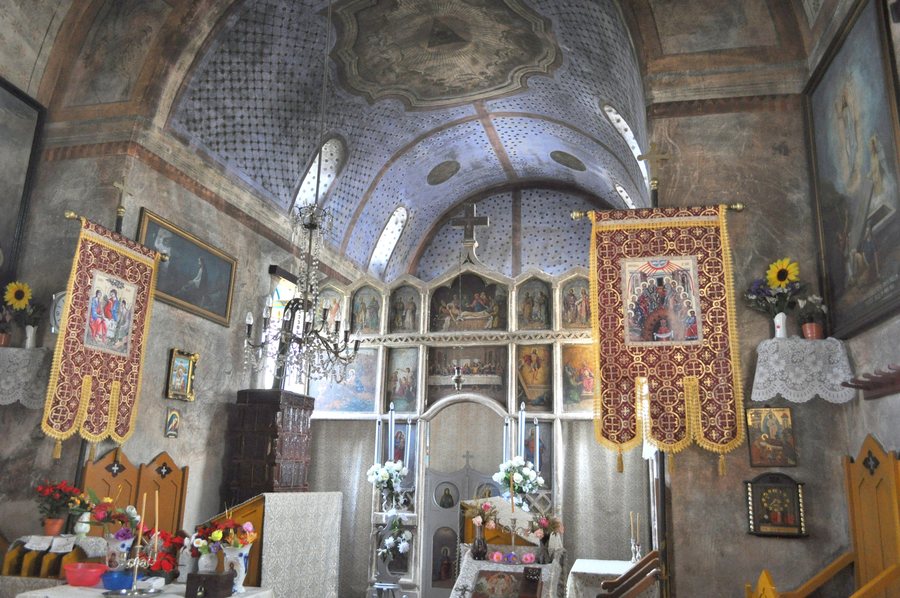 File:RO HD Biserica din Pesteana (1).JPG
Photo: Țetcu Mircea Rareș via Wikimedia Commons, CC BY-SA 4.0
File:RO HD Biserica din Pesteana (1).JPG
Photo: Țetcu Mircea Rareș via Wikimedia Commons, CC BY-SA 4.0
Nature
The Mlaștina de la Peșteana covers 2 hectares and is home to populations of Drosera rotundifolia and Eriophorum vaginatum. A route of approximately 2 kilometers to the Mlaștina de la Peșteana begins in the village of Peșteana. The route from Peșteana to the nature reserve is planned to include trail markers and information boards at five points of interest.
When planning a day in Peșteana, nature observation and sightseeing can be treated as separate focuses. The route to the nature reserve forms a section of its own, while the churches and village museum offer different content. This allows travelers to divide their available time between the landscape, the village center and the collection without combining the different destinations into a single point of interest.
Landscape
Several peaks are located around Peșteana. These include Măgura Zimbrului, Furcătura Clopotivei, Ciclodan and Cioaca Delertonilor. In the wider regional surroundings of Peșteana lies Hunyad Castle, a fortress.
The landscape destinations therefore differ primarily in their spatial relationship: the four peaks mentioned are in the vicinity of Peșteana, whereas Hunyad Castle is located in the wider regional surroundings. This distinction helps when arranging personal priorities, if the immediate surroundings are to be considered separately from regional destinations.
Culture and History
The Biserica Pogorârea Sfântului Duh is a historic monument in the center of Peșteana. Its rectangular nave measures 6.30 × 4.50 meters; a bell tower measuring 3.10 × 3.70 meters is attached to the west side. The church contains large stone blocks recovered from the walls of dilapidated Roman buildings.
The Biserica reformată din Peșteana was first mentioned in 1714.
The Muzeul Satului Hațegan Peșteana is housed in a nearly 120-year-old building that was covered with tiles from the outset. The museum comprises three rooms with household items, tools and agricultural equipment. The Muzeul Satului Hațegan Peșteana also includes a Roman sarcophagus originating from the nearby area.
The cultural attractions offer different points of interest for a visit: the churches represent historical and architectural evidence, while the museum focuses on household items, tools, agricultural equipment and a Roman object. This allows visitors to focus on sacred architecture, local history or the material culture of everyday life.
When choosing a hotel in Peșteana, travel dates, room category and cancellation conditions can be compared separately. This accommodation decision can complement the village’s nature trails, peaks, churches and museum collections.
More destinations
Hateg, Geoagiu Băi, Râu De Mori, Vălișoara, Geoagiu, Peștișu Mare, Ilia, Simeria
For the main travel overview: Iron Market.

.JPG)